
Scan retoucher
Regularly removes small dust spots by hand and wants to use a pen for local corrections in existing image-editing software. Adobe explains how to retouch dust spots in scanned photos, while GIMP’s documentation covers local repairs.


For removing dust spots from scans on an existing computer and monitor, a screenless pen tablet is usually the simplest option: use a pen to control your retouching software while looking at your monitor. Choose a pen display if you want to work directly on the image and have space for an extra screen. With either option, check that the exact model is compatible with your computer, connections and image-editing software.
Regularly removes small dust spots by hand and wants to use a pen for local corrections in existing image-editing software. Adobe explains how to retouch dust spots in scanned photos, while GIMP’s documentation covers local repairs.
Edits scans on an existing monitor and wants a compact input device that works with their computer. A model’s stated dimensions can help you decide whether you have enough space on your desk.
Wants to see the pen tip on the displayed scan and has room for an extra screen and the necessary connections.
Suitable if: you edit scans on an existing computer and monitor, and mainly want to use a pen for local retouching.
Bear in mind: you look at the monitor rather than your hand. Check that the exact model is compatible with your software, drivers and connections.
Suitable if: you want to position the pen tip directly on the displayed scan and have room for an extra screen.
Bear in mind: the image, pen input and power supply depend on the connections and cables required by the specific model; a pen display is not automatically a standalone computer.
Suitable if: you only remove a few spots now and then and want to see whether the repair tool in your current software is enough.
Bear in mind: you won’t have pen input; you’ll still make the edits in the software.
| Key consideration | What should you check? | Which consumers does this matter to? |
|---|---|---|
| Retouching individual dust spots | Try the repair or clone tool you want to use with your own scans; check that it works with pen input. | If I want to select and correct small spots individually, this manual approach is my priority. Around 40% of consumers in this use case give local retouching top priority. |
| Computer and software | Check the full model number, your operating system, available ports and pen input in your own retouching software. | If I want to work on my existing computer, the pen needs to be compatible with my software and system. Around 30% of consumers prioritise this compatibility. |
| Desk space and controls | Measure the space available and compare it with the tablet; also check which keys can be customised. | With limited desk space, I want the device and its controls to fit my workspace. Around 20% of consumers give space and controls top priority. |
| Pen directly on the scan | Check that your computer supports the video signal and connections required by the model and cable you’ve chosen. | If I want to position the pen tip directly on the displayed image, that matters more to me than a compact setup. Around 10% of consumers prioritise direct-on-screen control. |
For this task, the pen needs to control image-editing software on your computer; the product name alone won’t tell you whether it can.
Before choosing, check the computer connection, supported operating system and full model number.
A device that doesn’t provide pen input for your editing software may mean you need to buy another input device after all.
Connection and power options vary between pen displays and depend on how they connect to the computer.
Compare your computer’s ports with the connection requirements and included accessories for the exact model.
You may need a suitable cable or another connection solution.
A base model name may be used for separate versions with different stated features.
Compare the full model number with the product information for the version on offer. For example, GAOMON lists both the S620 and a separate S620 (16K).
The One by Wacom range is screenless; the Intuos S Bluetooth is a separate version with a different connection option.
The Deco 01 V3 is a screenless pen tablet with a generously sized active area, according to its specifications.
The Inspiroy H640P is a screenless model; the Kamvas 13 is a separate product range with a screen.
The S620 is a compact screenless pen tablet for pen input on a computer.
This selection includes screenless pen tablets, pen displays and tablets with a pen. For each model, check that your computer, operating system and scan-editing software support pen input.
 No image available
A pen display for anyone who wants to use the pen directly on the screen; the product description lists photo editing as a use.
The description lists an included pen, a USB-C connection and support for Windows, macOS and ChromeOS. Check that the connections are compatible with your computer.
 No image available
A screenless pen tablet for pen input on a computer; the product description mentions photo editing.
The active area is 152 × 95 mm. The description lists a battery-free pen and four customisable ExpressKeys.
 No image available
A screenless pen tablet for pen input when doing creative work on a computer.
The product description lists a battery-free pen and connectivity via Bluetooth 5.1 or USB-C. Check the connection and software compatibility for your computer.
 No image available
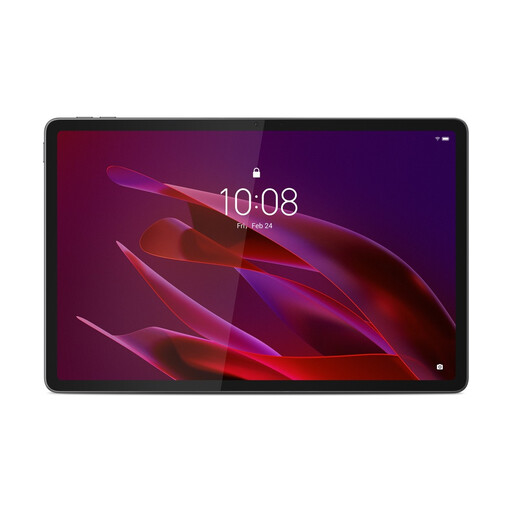
A tablet with a pen for drawing and creative work; check separately that your preferred scan-editing software works on this device.
The product description lists an included Tab Pen Pro with pressure sensitivity and tilt detection. The product name specifies an 11.1" 3.2K 144Hz touchscreen, Snapdragon 8 Gen 3, 12GB LPDDR5X, 256GB UFS 4.0 and Android 15.
 No image available
A tablet with a pen for drawing and sketching; check that your preferred image-editing software and pen input suit the way you plan to use it.
The product description lists a pressure-sensitive T-Pen and Android 15. The product name specifies a Helio G99 processor, 256GB of storage and a 10000mAh battery.
No, a graphics tablet is an input device; you edit the scan using software. Adobe lists dust spots in scanned photos as one use for the Spot Healing Brush. GIMP explains local repairs and a Despeckle filter; for this filter, its documentation recommends isolating defects to limit unwanted changes to other parts of the image.
First, check the full model number and your operating system. Wacom explains that you connect the USB cable to your computer and install the driver for One by Wacom; the steps may differ for other models.
If your software supports it, work on a separate layer or select the defective area. Adobe explains how to retouch on a blank layer using the Sample All Layers option; GIMP warns that the Despeckle filter can also change other areas of the image.
CE marking is required when the relevant EU rules stipulate it for that product category. Business.gov.nl and the European Union’s Your Europe explain that, in such cases, the manufacturer assesses compliance with the applicable requirements and draws up an EU Declaration of Conformity. Check the documentation for the exact model; a brand name or general product specification alone doesn’t show whether the applicable requirements have been met.
For a consumer purchase in the Netherlands, the seller is your point of contact for a solution if the product isn’t as it should be. The Dutch government explains that your statutory rights are separate from the manufacturer’s warranty; check any additional warranty terms to see what extra cover they offer.