
Marking at a bright, fixed workspace
You mainly mark work beside the same window and want to know whether an extra screen will help or simply add another reflective surface.


If you mainly work in one fixed spot and can read your existing computer screen clearly there, start with a screenless graphics tablet: you write on the tablet and read on your computer. If you want to write directly on the work in front of you, consider a pen display. For marking without a connected computer, a standalone tablet may be suitable, provided it supports your school app and storage method. A matte finish or stated brightness does not prove how readable a screen will be beside your window, so also check the software, connections and your school’s rules on pupil data.
You mainly mark work beside the same window and want to know whether an extra screen will help or simply add another reflective surface.
You regularly add comments or corrections directly to pupils’ digital work and are looking for a suitable writing surface with annotation software that works.
You also want to read and write away from your usual computer workspace, so your school app and data-handling rules matter too.
Suitable if: your existing computer screen is easy to read at your usual marking spot and you mainly work there.
Trade-off: you write on the tablet but look at the computer screen; you still need a computer, screen and suitable annotation software.
Suitable if: you want to write directly on the work you can see and have a suitable computer available at that spot.
Trade-off: you’ll have an extra screen in a bright workspace. A model’s matte finish and stated brightness do not prove how readable it will be beside your window.
Suitable if: you want to view and annotate pupils’ work away from your usual computer workspace.
Trade-off: you’ll be managing a complete device. Check that the required school app and storage method work on the version you choose.
Each row describes the main buying priority for consumers considering a graphics tablet for this marking scenario.
| What to consider | What should you check? | Who is this important to? |
|---|---|---|
| Readability beside a window | Assess the screen in your own workspace, paying attention to viewing angle and reflections. Don’t treat anti-glare features or stated brightness as a guarantee for these lighting conditions. | If I mark work beside a window, I want to know whether I can read it clearly without reflections getting in the way. Around 33% of consumers give readability beside a window their highest priority. |
| Handwritten comments | Open a permitted test document in your school app, add a comment and check that it is still there after saving. | If I often write corrections, I want to be sure my comments are retained in the file I use. Around 27% of consumers prioritise plenty of handwritten feedback. |
| Marking in different places | Decide whether you need a standalone app away from your desk and whether your school permits using and storing data on that device. | If I mark work in different places, I want to be able to open it without always relying on my usual computer. Around 20% of consumers prioritise being able to work on the move. |
| Connectivity and software | Check the ports, operating system and required school app for the exact version. Also test pen input, saving and reopening files. | If I want to keep using my existing computer and marking app, I want to know in advance that everything works together. Around 20% of consumers make connectivity and software their main buying priority. |
A matte finish and stated brightness describe the device, not the light levels or screen angle in your workspace.
Assess a screen in similar lighting conditions and see whether you can position an existing computer screen more favourably.
A screenless graphics tablet and a pen display are input devices for a computer; a standalone tablet works differently.
First decide which device you’ll use to open and save pupils’ work. Then choose the type of pen device.
A device supporting an operating system does not prove that comments will be saved in your specific school app.
Test a file approved by your school, from adding pen strokes through to saving and reopening the result.
Pupils’ work may contain personal data. The Dutch Data Protection Authority highlights privacy risks associated with digital learning resources.
Use the app and storage method approved by your school. Ask the responsible organisation to review any new arrangements with suppliers.
The Wacom One S is a screenless graphics tablet for pen input on an existing computer.
The Inspiroy 2 M is a screenless model with customisable keys and a scroll wheel.
The Deco 01 V3 is a screenless graphics tablet; the Artist 12 (2nd Gen) is a pen display that lets you write directly on screen.
The Galaxy Tab S10 FE series offers a standalone tablet with an S Pen for anyone who doesn’t want to work at a computer all the time.
The products below are suited to screenless pen input with a computer or annotating documents with a tablet pen. Check that your school app works with each model.
 Image unavailable
For pen input on a connected computer while you view the work on its screen.
The product description lists USB-C, Bluetooth, ExpressKeys and a touch ring.
Requires a connected computer for the described use.
 Image unavailable
For pen input on a connected computer, for example when marking work at a fixed computer desk.
The product description lists an active area of 187 × 105 mm, four customisable ExpressKeys, and USB-C and Bluetooth connectivity.
Requires a connected computer for the described use.
 Image unavailable
For annotating on your computer screen with pen input from a screenless tablet.
The product description lists USB-C and Bluetooth as connectivity options.
Requires a connected computer for the described use.
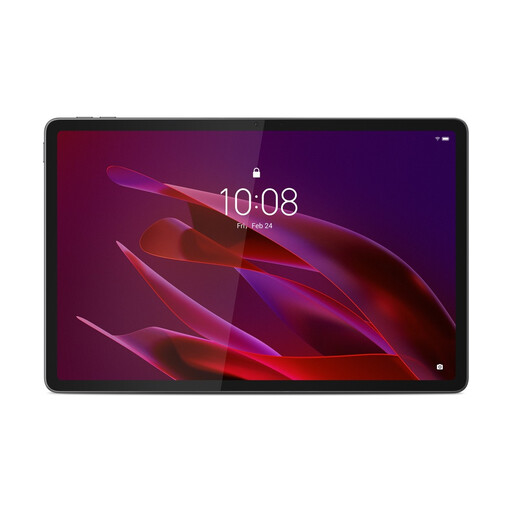 Image unavailable
A tablet option for using a pen to take notes and sketch; check that the school app works on the version you choose.
The product name lists an 11.1″ 3.2K touchscreen, Android 15 and an included Tab Pen Pro.
 Image unavailable
The product description mentions annotating documents with the included pen.
The product name lists a 12.1-inch 2.5K screen, 8 GB RAM and 256 GB storage.
You write on the graphics tablet while viewing the PDF on your computer screen. Adobe describes drawing freely and saving in a PDF; check separately whether your required school app supports the same actions and storage.
The specification alone can’t tell you. XPPen lists a matte anti-glare screen and 220 cd/m² brightness for the Artist 12 (2nd Gen), but these details don’t tell you how much glare you’ll get or how readable it will be in your particular window setup.
Before buying, check the connection and operating system for the exact model. Then test in the app you use to see whether pen strokes are retained after saving. Don’t assume every pen will fit: bear in mind that pens and replacement nibs can be model-specific.
According to the Government of the Netherlands, there is no fixed statutory warranty period in the Netherlands: you are entitled to a product that works as it should, and the retailer is your point of contact if there is a fault. For online purchases from a business, you generally have a 14-day cooling-off period; the terms and exceptions depend on the purchase.
Don’t assume you can. The Dutch Data Protection Authority highlights schools’ accountability obligations and the privacy risks of digital learning resources. If a supplier processes personal data on behalf of the school responsible for it, a data processing agreement is required according to the Dutch Data Protection Authority. Follow your school’s rules for handling pupils’ work.