
Organiser with limited fridge space
You want to store whole bunches of grapes temporarily without filling the workshop kitchen with appliances. First, compare the available space in your existing fridge with that of a compact table-top model.


Start by using an existing fridge if the grapes fit without getting wet, can be stored hygienically and there’s enough room. A table-top model could be a good option for a small amount of extra stock; for a professional workshop with lots of ingredients, commercial refrigeration may be more practical. Check the actual temperature, usable layout and space needed for installation.
You want to store whole bunches of grapes temporarily without filling the workshop kitchen with appliances. First, compare the available space in your existing fridge with that of a compact table-top model.
You store other fresh ingredients as well as grapes, and want them close to hand while preparing food. In that case, usable capacity and the layout of your workspace are also important.
You don’t want an extra fridge taking up space and using electricity when you rarely need it. First, consider whether your existing refrigeration is sufficient.
First, work out how much chilled stock you need to store at once and whether your existing fridge is suitable. Only then should you compare the capacity, layout and space needed for installation.
Choose this if: the grapes and other ingredients fit separately, and you can check the temperature.
Bear in mind: crowded shelves and frequent opening during the workshop can make it harder to access food and monitor the temperature.
Choose this if: you need extra fridge space but have limited floor space and don’t need a freezer compartment.
Bear in mind: the stated capacity won’t tell you whether your trays and bunches will fit comfortably.
Choose this if: you’ll actually use the freezer space during or outside the workshop.
Bear in mind: compare the fridge and freezer capacities separately; the freezer compartment takes up some of the total capacity.
Choose this if: you store lots of ingredients for a professional workshop or need chilled stock close to your workspace.
Bear in mind: the larger dimensions require suitable installation space; check the actual temperature too.
| What to consider | What should you check? | Who should pay particular attention? |
|---|---|---|
| Temperature and food safety | Check the actual temperature with a suitable thermometer. The Voedingscentrum recommends setting your fridge to 4 °C; if you’re handling food professionally, also follow the relevant NVWA product and hygiene requirements. | If I need to get ingredients out frequently during the workshop, I want to know that the refrigeration can be monitored properly. Around 25% of consumers put verifiable refrigeration at the top of their priorities. |
| Usable fridge space | Measure your trays and packaging, then compare them with the net fridge capacity and shelf layout. ETNA lists 133 litres of fridge space for the ETNA KKV956WIT; the Consumentenbond reports a usable volume of 108 litres. | If I want to store bunches of grapes and other ingredients at the same time, the layout needs to suit them. Around 25% of consumers put storage space at the top of their priorities. |
| Installation space and ventilation | Measure the height, width and depth, allow for the door opening and follow the model-specific instructions on ventilation clearance. Also check the climate class if the appliance will be kept somewhere other than a standard kitchen. | If my kitchen has little spare space, I want to be sure the fridge will fit properly and remain accessible. Around 20% of consumers put finding a suitable installation space at the top of their priorities. |
| Access and cleaning | Check whether the shelves and compartments suit what you use and whether they’re easy to clean. The Voedingscentrum recommends washing grapes under running water before use and not storing them while wet. | If I need quick access to the grapes while cooking, I want a well-organised layout that’s easy to keep clean. Around 15% of consumers put access and cleaning at the top of their priorities. |
| Use for occasional workshops | For suitable appliances, compare the energy label and stated annual consumption. Milieu Centraal recommends only switching on a second fridge when you need it. | If I only organise a workshop occasionally, I don’t want to run an extra appliance unnecessarily. Around 15% of consumers put the purchase price and electricity use at the top of their priorities. |
The stated capacity doesn’t tell you whether wide trays and whole bunches of grapes will fit comfortably. ETNA lists 133 litres of fridge space for the ETNA KKV956WIT, while the Consumentenbond reports a usable volume of 108 litres.
Measure your trays and compare shelf heights and layout before choosing a model.
If the fridge turns out to be too small, you may still need extra refrigeration.
The setting alone doesn’t show what temperature the grapes and other ingredients are actually kept at, especially if the fridge is opened frequently during the workshop.
Check the temperature with a thermometer and, if you’re handling food professionally, follow the relevant product and hygiene requirements.
As well as the appliance’s dimensions, you need to allow for the door opening and the specified ventilation clearance. Different depth measurements are also listed for the ETNA KKV956WIT.
Check the manual, the exact model version and the space required before ordering.
An unsuitable location may mean you need a different layout or another model.
A second appliance takes up space and uses electricity while it’s switched on. Milieu Centraal recommends only switching on a second fridge when you need it.
First, check whether your existing fridge can store the grapes and other ingredients practically.
Freestanding table-top models, including models without a freezer compartment.
Table-top models with and without freezer compartments, offering different stated fridge capacities.
Table-top fridge without a freezer compartment, with the Rd 1400 Pure as an example.
Freestanding table-top fridges without a freezer compartment, including the KTR15NWEB.
Commercial fridges and refrigerated counters for larger, professional workshops.
This selection of Joybuy products ranges from compact mini fridges to table-top models, with and without freezer compartments. Focus on comparing the stated capacity and layout with the grapes, trays and other ingredients you want to store.
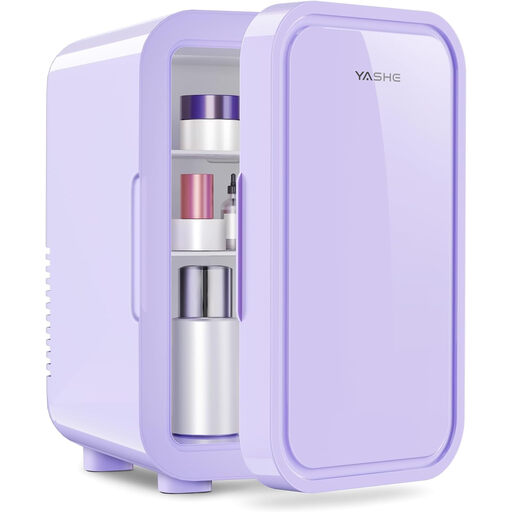 No image available
A compact option for a small amount of chilled stock; check that the bunches or packaging you want to store will fit inside.
6-litre capacity; stated capacity of 8 cans; 220–240 V AC/DC power supply.
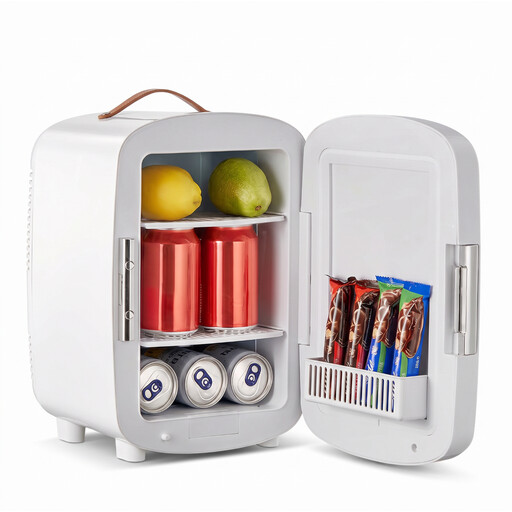 No image available
A small amount of extra fridge space; compare the capacity with the quantity of grapes and other ingredients you want to store at once.
10-litre capacity; the title lists a noise level of 38 dB and an AC/DC power supply.
 No image available
A table-top model for chilled stock in a small space; measure the trays you plan to use before assessing the layout.
88-litre capacity; energy rating E; three adjustable glass shelves, a salad drawer and interior lighting.
 No image available
An option if you need freezer space as well as chilled ingredients. The freezer compartment takes up some of the total capacity.
95 litres of fridge space and 14 litres of freezer space; energy rating C; adjustable glass shelves, a salad drawer and reversible door hinges.
 No image available
A table-top model for extra chilled storage; check that its external dimensions and shelf layout suit your workshop space.
129-litre capacity; 54 cm wide; two glass shelves, a salad drawer and two door shelves.
For opened grapes, the Voedingscentrum gives a storage guide of 1–2 weeks in the fridge, compared with 3–4 days in a fruit bowl; this isn’t a guarantee for every batch. Keep the bunches whole if possible, avoid storing them while wet, and remove any grapes that are clearly mouldy or rotten.
Wash raw fruit under running water before use. The Voedingscentrum advises against storing grapes while wet, so it’s best to wash them shortly before use rather than putting them back in the fridge wet.
Measure the actual temperature with a thermometer and don’t leave the door open for longer than necessary. The Voedingscentrum recommends setting your fridge to 4 °C; when preparing food professionally, you should also follow product labels and the relevant food safety rules.
If you prepare, handle or sell food professionally, the NVWA says you must work with an HACCP food safety plan; an approved hygiene code can be used for this. Simply calling an event a ‘cookery workshop’ doesn’t mean every private gathering falls under this professional requirement.
For a consumer purchase in the Netherlands, the Dutch government says the retailer is your point of contact if a product is faulty. When you buy a similar new appliance, a shop selling to private customers must take back your old appliance free of charge; the Dutch government notes that this take-back scheme doesn’t apply to businesses.