
A compact fridge for a small kitchen
You get home after your evening class with grapes and other fresh groceries, but space is limited. The external dimensions and usable fridge space are important factors when choosing.


If your current fridge has enough suitable space, there’s no need to buy a second appliance just for a bunch of grapes. If you do need a new fridge, start by checking the available space and usable fridge capacity. Only choose a freezer compartment if you also want to freeze food, then compare the stated annual energy consumption. The Netherlands Nutrition Centre recommends storing grapes dry and on the stem.
You get home after your evening class with grapes and other fresh groceries, but space is limited. The external dimensions and usable fridge space are important factors when choosing.
You want to store grapes properly without buying a second appliance for this one purpose. First check whether your current fridge has enough space and is set to the right temperature.
You want to keep grapes chilled, but also need to be able to freeze food. In that case, freezer space matters too, as does the fridge space left for fresh groceries.
| What to consider | What should you look for? | Who should pay particular attention? |
|---|---|---|
| Storing fresh food | Check the usable fridge capacity and layout; the Netherlands Nutrition Centre gives 4 °C as the ideal fridge temperature. | If I want to chill grapes and other fresh groceries after my evening class, I need to know whether there’s enough room and whether the layout is practical. Around 40% of consumers prioritise suitable storage for fresh food. |
| Suitable dimensions | Measure the height, width and depth of the space, and take the door and the model’s installation instructions into account. | In a small kitchen, I want to know in advance whether the fridge will fit without obstructing the walkway or access to the door. Around 30% of consumers prioritise suitable dimensions and layout. |
| Energy consumption | Compare the stated annual consumption in kWh for models with the right capacity and features; actual consumption may vary. | If I’m going to leave an appliance switched on all the time, I want to take its annual consumption into account before choosing a model. Around 20% of consumers prioritise energy consumption. |
| Freezer space | Check the fridge and freezer capacities separately, and make sure the freezer compartment suits what you want to freeze. | If I want to freeze food as well as store grapes, I’ll weigh up that extra feature against the space left for chilling. Around 10% of consumers prioritise freezing options. |
Grapes need to be stored properly, but they don’t necessarily need their own appliance. An extra fridge that’s switched on all the time will also use more electricity.
First check whether your grapes and other groceries will fit in your current fridge, and see what temperature it’s set to.
With a model that has a freezer compartment, not all of its capacity is available for chilled groceries.
Compare the fridge and freezer capacities separately, and check that the fridge layout suits what you want to store.
The energy rating takes the appliance’s size into account. So the letter alone doesn’t tell you how many kWh per year a model is rated to use.
For models that meet your needs, compare both the energy rating and the stated annual consumption.
The KK550 is a compact under-counter model with no freezer compartment, for anyone mainly looking for fridge space.
The KTR15NWEB and KTL15NWEB let you compare a model without a freezer compartment with one that has a freezer compartment.
The TSE1424N is a freestanding fridge worth considering if the width of your available space is important.
The Rc 1400 Pure is an under-counter model worth comparing if the stated noise level and temperature settings matter to you.
The GBBS322CEV is a larger fridge-freezer for a household that stores plenty of other groceries as well as grapes.
This selection ranges from very small mini fridges to under-counter models, with and without freezer compartments. Compare their capacity and layout with the grapes and other groceries you want to store; a small mini fridge offers limited storage space.
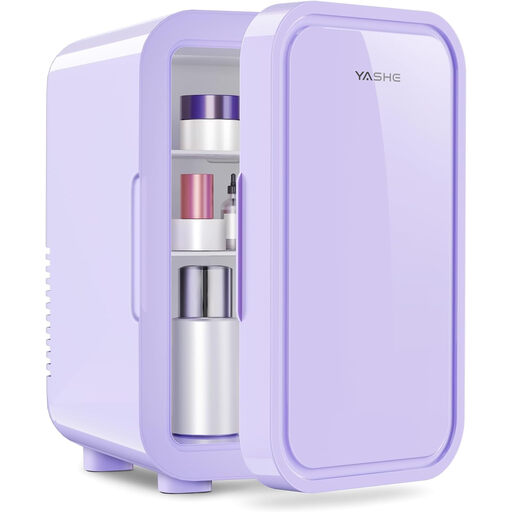 Image unavailable
An option for a very small space; check that the limited capacity is enough for your grapes and other chilled items.
The product name states 6 l, space for 8 cans and 220–240 V AC/DC power supply.
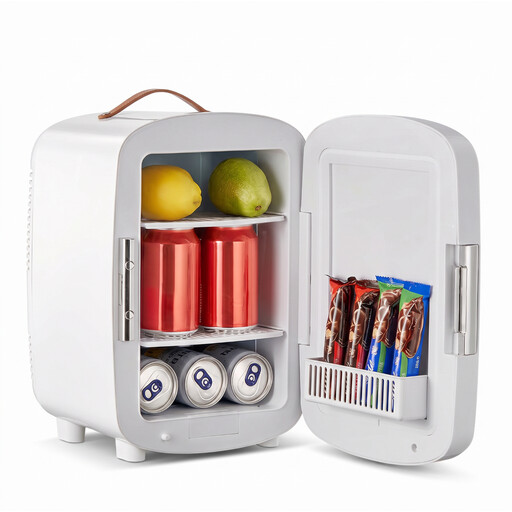 Image unavailable
Its compact capacity makes this an option for limited storage; check whether it has enough room for the amount of grapes you want to keep.
The product name states 10 l, 38 dB and AC/DC power supply.
 Image unavailable
For anyone looking for compact cooling without a freezer compartment; check that the stated capacity is enough for your grapes and other groceries.
The product name states 88 l and an E energy rating.
 Image unavailable
An option if you want to freeze small amounts as well as chill food. Check how much fridge space is left alongside the freezer compartment.
The product name states 109 l and a C energy rating; the total capacity includes the freezer compartment.
 Image unavailable
For anyone looking for an under-counter model with a freezer compartment; compare the separate fridge and freezer space with what you want to store.
The product name states a C energy rating and a capacity of 107 l. Check how that capacity is split between fridge and freezer space for the model you choose.
No, not if your current fridge has enough suitable space. The Netherlands Nutrition Centre recommends storing grapes dry and on the stem, and gives 4 °C as the ideal fridge temperature. An extra appliance that’s switched on all the time will also use electricity.
The Netherlands Nutrition Centre recommends storing them dry and on the stem, for example in a paper bag, their packaging or on a plate. Its advice to store them for 1–2 weeks applies to opened grapes kept in the fridge; check the fruit’s actual condition too.
Not for chilling grapes; a freezer compartment is only useful if you also want to freeze food. It can take up space that would otherwise be available for chilled items, so compare the fridge and freezer capacities separately.
As well as the energy rating, compare the stated annual consumption in kWh for models with the right capacity and features. The Consumers’ Association notes that actual consumption may differ from the figure on the energy label.
Measure the available height, width and depth, and check the installation instructions for the exact model, including the space needed to open the door. The required clearance can vary from model to model.