
If you count carbohydrates at breakfast
You want to know how many carbohydrates are in your chosen portion of granola, so you can compare it with your personal breakfast plan.


When choosing granola for a breakfast where diabetes is a consideration, don’t rely solely on the words ‘no added sugar’. According to the Netherlands Nutrition Centre, digestible carbohydrates from starch are also converted into glucose. So compare carbohydrates and sugars per 100 g and for the portion you plan to eat; also take ingredients, fibre and any sweeteners into account.
You want to know how many carbohydrates are in your chosen portion of granola, so you can compare it with your personal breakfast plan.
You’re looking for granola with no added sugar, but want to distinguish between that claim, naturally occurring sugars and the use of sweeteners.
You compare fibre and grains, while also considering portion size and ingredients you want or need to avoid, such as certain nuts or gluten-containing grains.
Start with the carbohydrates per 100 g and work out the amount for your planned portion. Then check what ‘no added sugar’ means for that particular product and review the other ingredients.
| What to consider | What to check before buying | Who it matters to |
|---|---|---|
| Carbohydrates per portion | Compare carbohydrates per 100 g and work out the amount for the portion you plan to eat. | If I plan my breakfast around carbohydrates, I want to know what my own portion adds up to. Around 36% of consumers put this portion calculation first. |
| Added sugar and sweeteners | Read the ingredients list alongside ‘of which sugars’ and total carbohydrates; also check whether the product contains sweeteners. | I want to avoid added sugar, but I don’t want to assume that a claim on the front also means ‘no sweeteners’. This is the most important factor for around 29% of consumers. |
| Fibre and grains | Compare fibre per 100 g and check which grains are listed in the ingredients. | Alongside portion size, I want to consider fibre and the grains used when choosing breakfast. This is the top priority for around 21% of consumers. |
| Ingredients and allergens | Check the latest allergen information and look out for ingredients such as nuts, peanuts, soya and polyols. | If I need to avoid certain ingredients, the packaging determines whether I can choose the granola in the first place. Around 14% of consumers prioritise this check. |
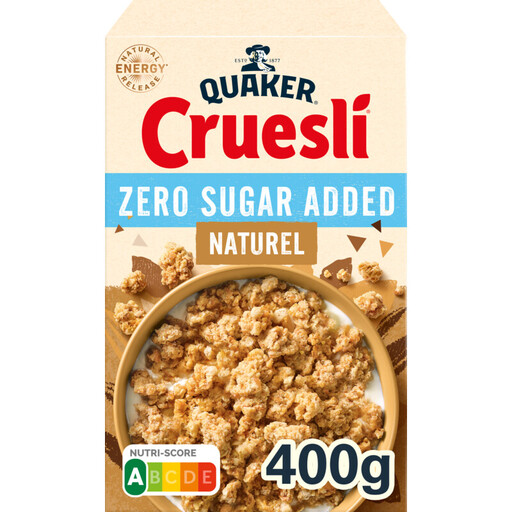
Even without added sugar, granola can contain starch and naturally occurring sugars. According to Jumbo’s product information, Quaker Zero Sugar Added Granola Naturel contains 47 g of carbohydrates per 100 g.
Compare total carbohydrates and work out the amount for the portion you plan to eat.
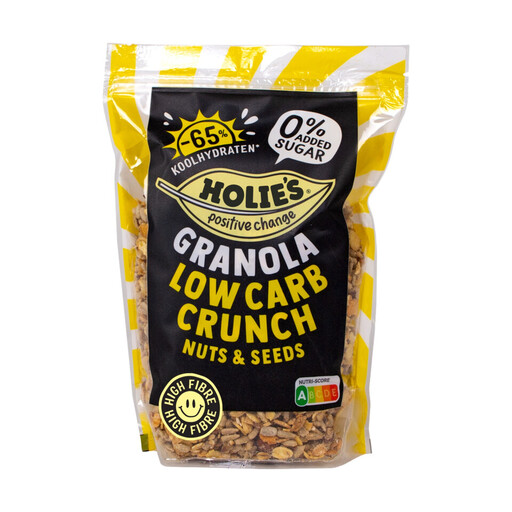
Other nutritional values are also relevant to your choice. Jumbo lists 490 kcal and 33 g of fat per 100 g for Holie Low Carb Granola, alongside 18 g of carbohydrates.
Compare products per 100 g for the nutritional values that matter to you, then consider your portion size.
A product with no added sugar doesn’t necessarily mean it contains no sweeteners. Albert Heijn lists maltitols in AH Krokante muesli noten 0% suiker and warns that excessive consumption may have a laxative effect.
Read the ingredients list and any warnings if you want to avoid sweeteners.
Ingredients can vary between products and recipes. The granolas described here include nuts, peanuts, soya or gluten-containing grains.
If you have an allergy or coeliac disease, check the allergen information on the pack you’re actually using.
Within the Zero Sugar Added range, the Naturel granola is worth considering if you’re also looking for an option without sweeteners.
Jumbo’s Granola Noten is an own-brand option for anyone comparing granola with nuts, kernels and seeds.
Holie Low Carb Granola is an option to compare if carbohydrates per 100 g are your main priority.
AH Krokante muesli noten 0% suiker is a crunchy muesli, not a granola, but it shows why the ingredients list matters alongside the claim on the front of the pack.
These granolas offer options to compare by carbohydrates, ingredients and portion size. Check the latest nutritional information for each variety; the product name alone doesn’t determine whether it’s right for your breakfast.
 No image available
An option to consider if you want to compare carbohydrates per portion. Check the nutritional information and ingredients on the latest packaging.
 No image available
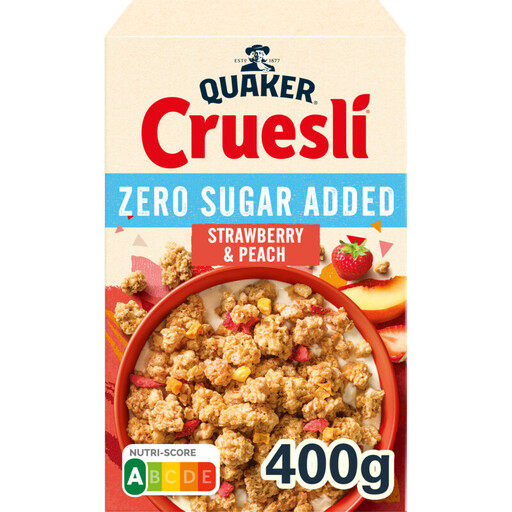
A strawberry and peach variety for anyone looking for granola with these flavours. As well as the Zero Sugar Added claim, check the carbohydrates, ingredients and the portion you plan to eat.
 No image available
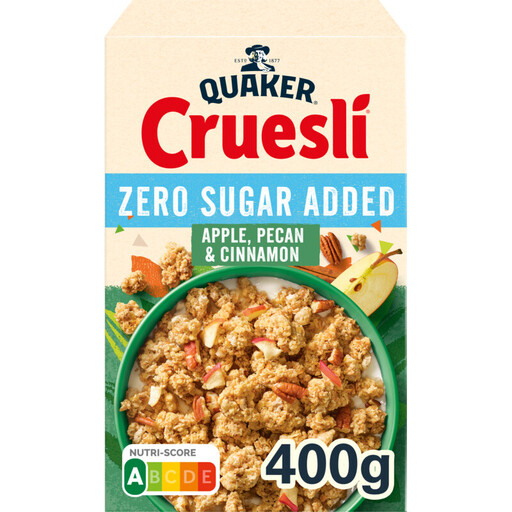
An apple, pecan and cinnamon variety. When comparing products, check the carbohydrates in your portion and read the allergen information if pecans or other ingredients are relevant to you.
 No image available
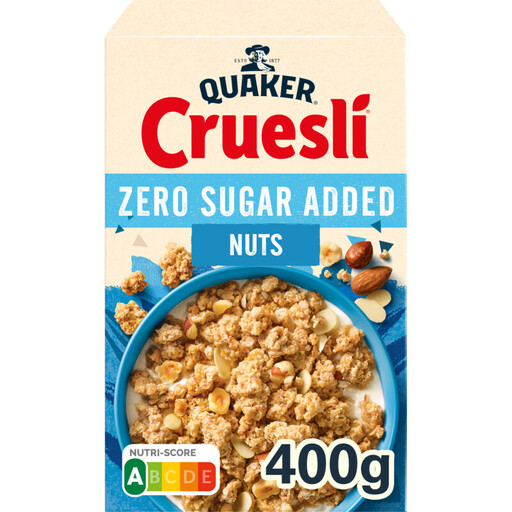
A nut variety for anyone who wants to compare ingredients and carbohydrates. Check the allergens and pack size on the packaging.
 No image available
A Natural variety for anyone considering granola with no added sugar. Read the nutritional information per 100 g and work out the carbohydrates in your own portion.
No, these terms don’t mean the same thing. A product can contain naturally occurring sugars and carbohydrates from starch. So compare both ‘carbohydrates’ and ‘of which sugars’ per 100 g and for your own portion on the label.
According to the Netherlands Nutrition Centre, digestible carbohydrates, including starch and sugars, are converted into glucose in the body. So a claim about added sugar doesn’t tell you how many carbohydrates are in your planned portion.
First compare the nutritional values per 100 g on a like-for-like basis. Then work out the carbohydrates for the amount you actually plan to eat and check the ingredients and allergens in both products.
No, fibre is just one of the factors to consider. Also compare the carbohydrates in your portion and check which grains and other ingredients the product contains.
Yes. For example, Albert Heijn lists maltitols in AH Krokante muesli noten 0% suiker, along with a warning that excessive consumption may have a laxative effect. Check the ingredients list if you want to avoid sweeteners.