
Families with a shared favourite
If several family members regularly eat the same crunchy breakfast cereal, a bag of around 720–900 g can be practical. Think about whether you’ll use it all and whether you can seal the pack securely after opening.


Choose a large pack of granola or cruesli if several members of your family regularly enjoy the same flavour, and you can store and use up the contents properly. Then compare the nutritional information per 100 g and check the ingredients and allergens: the size of the bag or its sweet flavour alone tells you very little about what’s inside.
If several family members regularly eat the same crunchy breakfast cereal, a bag of around 720–900 g can be practical. Think about whether you’ll use it all and whether you can seal the pack securely after opening.
If you want to keep a sweet breakfast on the menu, compare sugars, fibre, energy and salt per 100 g rather than relying on the flavour name or a stated serving size. The Netherlands Nutrition Centre highlights differences in the nutritional value of breakfast cereals.
If someone has a relevant allergy, the ingredients and warnings about the possible presence of other allergens are key. Check this information on the current packaging for the variety you’ve chosen; the product name alone isn’t enough.
First, decide whether everyone wants granola, cruesli or another type of crunchy muesli: these aren’t necessarily the same products. Then choose an amount that suits how you’ll use it and compare the nutritional information for the remaining options.
| What to consider | Check | Who it matters to |
|---|---|---|
| Quantity and storage | Check the net weight and how the pack should be sealed and stored after opening. | When several of us often eat the same breakfast, I want a bag we can finish before the contents lose their crunch. For around 36% of consumers, this is the main reason for choosing a large pack. |
| Nutritional value | Compare similar products per 100 g for sugars, fibre, energy and salt. | I want to choose a sweet variety, but also understand what the differences on the label mean for my choice. Around 29% of consumers give this comparison top priority. |
| Flavour and variety | Consider which flavour the household wants to eat and whether one large bag gives you the variety you’re looking for. | If not everyone likes the same flavour, I’d rather choose an amount that leaves room to switch things up. For around 21% of consumers, flavour is the most important consideration. |
| Ingredients and allergens | Read the current ingredients list for each variety, including the ‘contains’ and ‘may contain’ statements. | If someone at home needs to avoid a relevant allergen, the information on the pack determines which variety is suitable. For around 14% of consumers, checking this is their main concern. |
According to the Netherlands Nutrition Centre, breakfast cereals can vary in sugars, fibre, salt and fat. For example, Jumbo lists 16 g of sugars per 100 g for Quaker Cruesli Chocolade 850 g; that figure doesn’t tell you what’s in another variety.
Compare the nutritional information per 100 g for the varieties you’re actually considering, and read the ingredients list too.
The name doesn’t tell you which other allergens are in the product or what warnings apply. For Granola Amandel Cashew, Zonnatura lists wheat, almonds, cashews and soya, among other ingredients, and warns that other allergens may be present.
Before eating it, check the ingredients and allergen information on the current packaging for that exact variety.
If family members have different opinions about chocolate, fruit or nuts, a large pack could be left open for a long time.
If you’re unsure, try a smaller pack first or choose different flavours in quantities your household can use up. Seal an opened bag according to the storage instructions.
A bag left open for a long time may lose its crunch.
For each brand, compare the specific product type and variety: granola, cruesli and crunchy muesli aren’t interchangeable.
A range of crunchy breakfast cereals with sweet flavours and Zero Sugar Added varieties. Jumbo lists packs including 720 g and 850 g.
Jumbo lists its own 500 g granola alongside larger packs of crunchy muesli.
ALDI’s own-brand range includes 500 g granola and larger bags of crunchy muesli.
A granola range that includes varieties such as Amandel Cashew, for those who want to focus on the ingredients.
Lidl lists Super Berry and Super Nutty granola as in-store products.
These products are granola or crunchy muesli in a large bag or multipack, intended for regular shared use. The chocolate varieties have a different flavour profile from those with nuts and seeds; check that the flavour and quantity of each product suit your household.
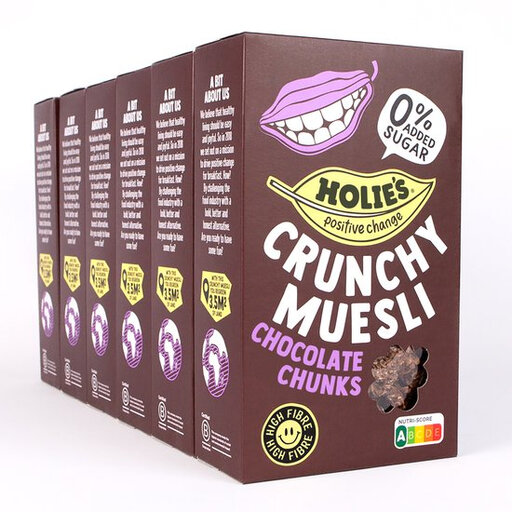 Image unavailable
A multipack for a household that regularly enjoys crunchy muesli with a chocolate flavour.
The pack contains six 400 g bags. Check the current packaging for the ingredients and allergen information.
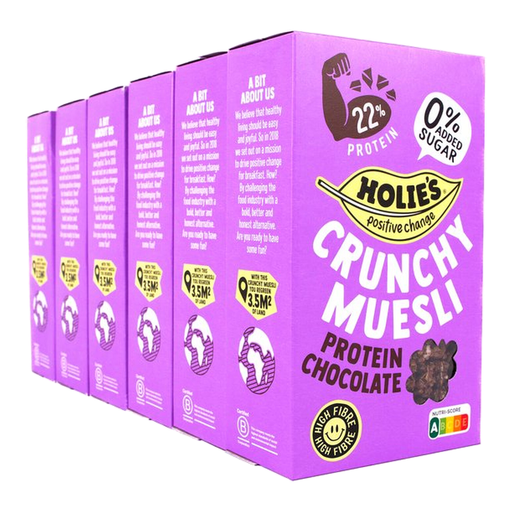 Image unavailable
A chocolate-flavoured crunchy muesli for several people who regularly choose the same flavour.
The multipack contains six 400 g bags. Check the current packaging for this variety’s nutritional information and allergen statements; the product name alone doesn’t tell you its nutritional value.
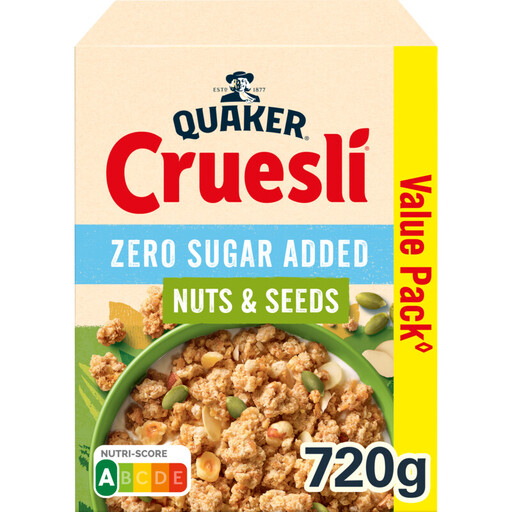 Image unavailable
A single larger bag of cruesli for a household that wants to share a nut and seed flavour.
The pack contains 720 g. If you have a relevant allergy, check the current information about the ingredients and the possible presence of other allergens.
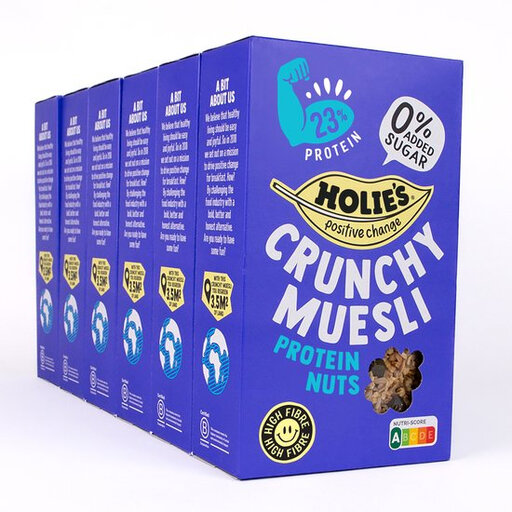 Image unavailable
A multipack of crunchy muesli for those who regularly share a nut variety with others; if a distinctly sweet flavour matters, don’t rely on the name alone.
The pack contains six 400 g bags. To compare sugars, fibre and energy, check the nutritional table on the current packaging and review the allergen information.
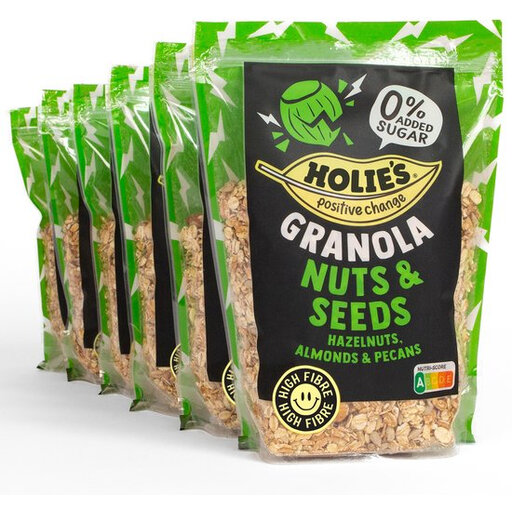 Image unavailable
A granola multipack for a household that wants to share nut and seed flavours; the product name doesn’t necessarily mean it has a distinctly sweet flavour.
The pack contains six 350 g bags. Use the nutritional table on the current packaging to compare fibre, and check the allergen information.
Start by comparing products of the type you want, then check their nutritional information per 100 g. For breakfast cereals, the Netherlands Nutrition Centre recommends looking at sugars and fibre, among other things; factor in energy, salt and the ingredients too.
No. A statement about added sugars doesn’t mean the product contains no sugars. Jumbo lists 3.7 g of sugars per 100 g for Quaker Cruesli Zero Sugar Added Naturel. Check the full nutritional table and ingredients list for the variety you want to buy.
Check the allergen information for the exact variety on the current packaging, including any warnings about possible traces. For Granola Amandel Cashew, Zonnatura lists wheat, almonds, cashews and soya, as well as possible traces of other nuts, milk and sesame.
Start with the flavour everyone wants to share: Lidl lists Super Berry and Super Nutty as granola varieties available in store. Before planning to buy a larger quantity, check the pack for its weight, nutritional information and allergens.