
Parents looking to avoid added sugar
You’re looking for breakfast cereal for your toddler and want to check the ingredients against the nutritional information, rather than relying on a word such as ‘zero’.


If you’re looking for an alternative to bread for your toddler, start by checking for wholegrain breakfast cereals with no added sugar or salt, as recommended by the Netherlands Nutrition Centre. Also check the allergens and the size of any hard pieces, especially in varieties containing nuts. ‘No added sugar’ does not mean ‘sugar-free’: the EU claim conditions published by EUR-Lex state that ‘sugar-free’ products can contain no more than 0.5 g of sugars per 100 g or 100 ml.
You’re looking for breakfast cereal for your toddler and want to check the ingredients against the nutritional information, rather than relying on a word such as ‘zero’.
You want to know whether it contains hard pieces of nuts and which allergens are listed on the label. If breakfast is going to nursery or school, you’ll also need to take its policy into account.
You’re considering cereal as an alternative to bread at breakfast. The Netherlands Nutrition Centre lists wholegrain breakfast cereals with no added sugar or salt as a possible alternative for children aged 1 to 3.
Start with the sugar claim and ingredients, then check whether the texture and allergens are suitable for your child. Finally, consider how the cereal fits into the rest of the day’s meals.
| What to consider | What to check when buying | Who should pay particular attention? |
|---|---|---|
| Added and total sugars | Read the exact claim, the ingredients and the ‘of which sugars’ figure per 100 g. Assess added salt separately. | I want to avoid added sugar without assuming that naturally occurring sugars are absent. This would be the main purchasing concern for around 46% of consumers. |
| Hard pieces and allergens | Check the size and hardness of any nut pieces and read the allergen information on the packaging. If breakfast is being sent in, also check the nursery or school’s rules. | If my toddler still finds hard pieces difficult to manage or allergens are a concern, I want to be able to assess this before serving. This would be the main concern for around 36% of consumers. |
| Variety at breakfast | Consider how the cereal fits into the day’s meals. The Netherlands Nutrition Centre lists wholegrain breakfast cereals with no added sugar or salt as an alternative to bread. | I’m looking for another breakfast option without losing sight of the rest of my child’s diet. Breakfast variety would be the first consideration for around 18% of consumers. |
A product with no added sugar can still contain naturally occurring sugars. The EU claim conditions on EUR-Lex set a maximum of 0.5 g of sugars per 100 g or 100 ml for a ‘sugar-free’ claim.
Read the claim on the packaging and the ‘of which sugars’ figure per 100 g; don’t rely on ‘zero’ in the product name alone.
The Netherlands Nutrition Centre warns that young children can choke on whole nuts. A product name won’t tell you whether the size of the pieces is suitable for your child.
Check the actual texture before serving and, if in doubt, choose an option without whole or hard pieces of nuts.
Albert Heijn points out that a product’s ingredients, nutritional values and allergen information can change. A product title is therefore not enough when choosing with allergens in mind.
Check the latest ingredients list, allergen information and nutritional details on the packaging.
The Netherlands Nutrition Centre describes breakfast cereal as an alternative to bread for children aged 1 to 3. A sugar claim alone doesn’t tell you how the breakfast fits into the rest of the day.
Consider breakfast alongside what else your child eats that day.
The Cruesli range includes varieties with ‘Zero Sugar’ or ‘Zero Sugar Added’ in the name, including Naturel and Noten & Zaden.
Albert Heijn sells its own-brand product called AH Granola noten 0% toegevoegd suiker.
Jumbo stocks products including Jumbo's Granola Noten 350 g.
Zonnatura sells granola varieties including Crunchy Cacao, Amandel Cashew and Classic Crunchy.
ALDI lists Golden Bridge Granola varieties with oat flakes, nuts and seeds, or red berries.
This selection is ordered according to how clearly the product pages published by Joybuy present the sugar claim, ingredients and nutritional values. It is not a ranking of suitability for toddlers.
| Position | Product | Key details | Why compare them? | Platform |
|---|---|---|---|---|
| 1 | Quaker Cruesli Zero Sugar Naturel 400 g | According to Joybuy’s product information: 3.8 g of sugars per 100 g; wholegrain oats and wheat. | The Joybuy product page states that it contains no added sugars or sweeteners. Compare this claim with the total sugars; for a toddler, also check the texture and allergens. | Joybuy |
| 2 | Quaker Cruesli Zero Sugar Noten & Zaden 400 g | According to Joybuy’s product information: 3.8 g of sugars per 100 g; pumpkin seeds, whole hazelnuts and pieces of almond. | The Joybuy product page states that it contains no added sugars or sweeteners. The listed pieces of nuts make it particularly important to assess the texture and allergens. | Joybuy |
These products are examples of granola or crunchy muesli to consider for a toddler’s breakfast. A name containing ‘Zero Sugar’ or ‘Zero Sugar Added’ doesn’t replace checking the current packaging, nutritional information, allergens and texture.
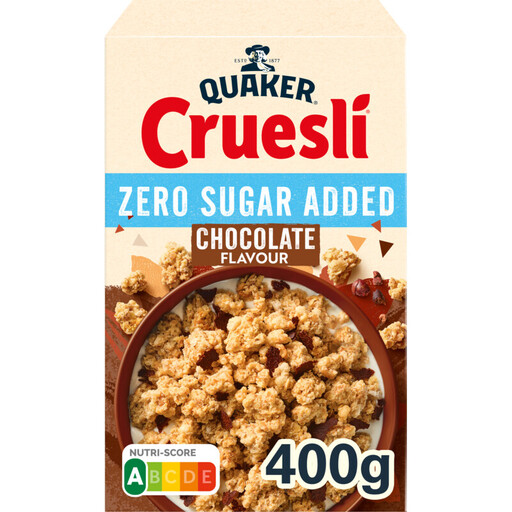 Image unavailable
A chocolate variety to consider if you want to check the label for added sugars. Before serving, also check the allergens and the size and hardness of the crunchy pieces; the name ‘Zero Sugar’ alone doesn’t prove that the product is sugar-free.
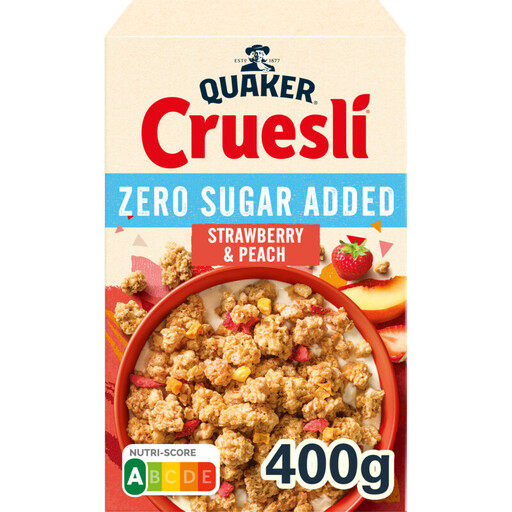 Image unavailable
A strawberry and peach variety for anyone looking to compare different breakfast cereals. Alongside ‘Zero Sugar Added’, check the total sugars and ingredients on the packaging, and assess the texture before serving it to a toddler.
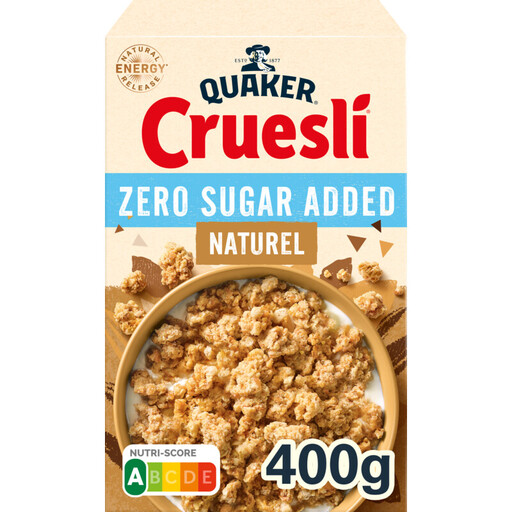 Image unavailable
A plain variety for anyone looking to avoid added sugars. Joybuy’s product information states that it contains no added sugars or sweeteners, but does contain 3.8 g of sugars per 100 g, as well as wholegrain oats and wheat. Check the latest allergen information and make sure the texture is suitable for your toddler.
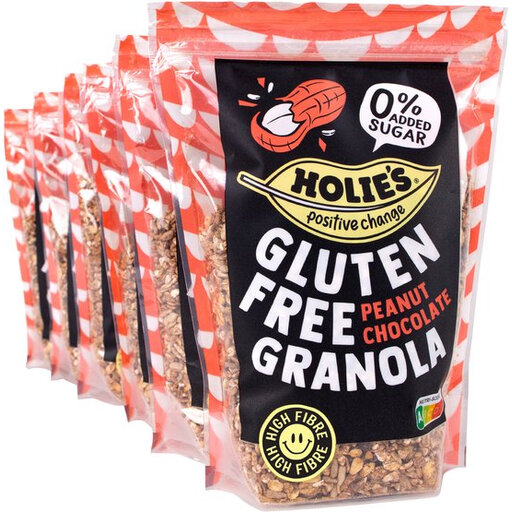 Image unavailable
A peanut chocolate variety in a pack of 6 x 330g. For a toddler, check the peanuts and other allergens on the current label, as well as the size and hardness of the pieces. If your child needs to avoid gluten, check the information on the packaging rather than relying on the product name alone.
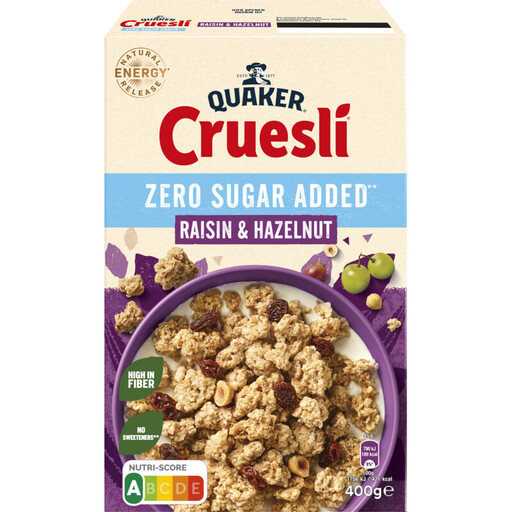 Image unavailable
A raisin and hazelnut variety for anyone considering granola with nuts. Carefully check the size and hardness of the hazelnut pieces before giving them to a toddler; also read the allergen information and total sugars on the packaging.
No. A product with no added sugar may still contain naturally occurring sugars. For example, Joybuy’s product information for Quaker Cruesli Zero Sugar Naturel lists 3.8 g of sugars per 100 g. The EU claim conditions published by EUR-Lex state that ‘sugar-free’ products can contain no more than 0.5 g of sugars per 100 g or 100 ml.
Yes. As an alternative, the Netherlands Nutrition Centre lists porridge oats, muesli and other wholegrain breakfast cereals with no added sugar or salt for children aged 1 to 3. Consider the whole day’s meals rather than just the sugar claim on the breakfast product.
Pay particular attention to the shape and size of the pieces of nuts. The Netherlands Nutrition Centre warns that children can choke on whole nuts. If in doubt, avoid products with whole or hard pieces of nuts, and stay with your toddler while they eat.
Read the allergen information on the current packaging and check the policy of the nursery or school too. The Netherlands Food and Consumer Product Safety Authority says allergens must be clearly listed on the labels of packaged foods; a product name or general assumption about granola isn’t enough.
Those terms don’t determine suitability. For the product you choose, also check the ingredients, nutritional information, allergens and any hard pieces of nuts, and consider whether the breakfast fits into the rest of the day’s meals.