
Consumers who read sugar claims carefully
You want to know whether a granola meets your requirements for sugar, and don’t automatically treat ‘no added sugars’ as ‘sugar-free’.


When choosing granola for a quick breakfast, don’t rely on the wording on the front of the pack alone: ‘sugar-free’, ‘low sugar’ and ‘no added sugars’ are different claims. Compare the sugars per 100 g and check the ingredients and allergens for the exact variant. If you eat your granola with yoghurt or fromage frais, also consider what portion suits your breakfast. No added sugars doesn’t mean the granola contains no sugars.
You want to know whether a granola meets your requirements for sugar, and don’t automatically treat ‘no added sugars’ as ‘sugar-free’.
You want to put together a quick breakfast bowl and consider the portion, flavour and nutritional information of the granola, as well as its sugar claim.
You only choose a grain, nut or seed mix after reading the ingredients and allergen information for the exact variant.
Start by understanding what the sugar claim means. Then consider whether the portion fits into your breakfast routine and check the ingredients of the flavour you’re actually choosing.
| What to consider | What to check | Who it matters most to |
|---|---|---|
| What the sugar claim means | Read the exact claim and compare ‘of which sugars’ per 100 g in the nutrition table. | If I want to strictly limit sugar, the claim needs to match what’s in the granola. An estimated 44% of consumers are thought to prioritise this check. |
| Suitability for a quick breakfast | Check the serving suggestion and nutritional information for the variant you want to eat with yoghurt or fromage frais. | For my morning routine, I want to quickly add a suitable portion to yoghurt or fromage frais. An estimated 33% of consumers are thought to prioritise this convenience at breakfast. |
| Ingredients and allergens | Check the ingredients, listed allergens and any ‘may contain’ warnings on the exact pack. | An appealing sugar claim is no use to me if I need to avoid an ingredient. An estimated 23% of consumers are thought to put this check first. |
Sugars that occur naturally in ingredients can still contribute to the total sugar content. So a granola with no added sugars doesn’t automatically meet a sugar-free requirement.
Read the full claim and the ‘of which sugars’ line on the pack. The Netherlands Food and Consumer Product Safety Authority treats ‘sugar-free’ as a separate nutrition claim.
A smaller portion may contain less sugar, even though the granola has a different sugar content per 100 g from an alternative.
Compare granola per 100 g first. Then consider how much you add to your own breakfast.
Ingredients vary by flavour. For Granola Amandel Cashew, Zonnatura lists wheat, almonds, cashew nuts and soya, among other ingredients, as well as warnings about the possible presence of other allergens.
Check the current ingredients list and allergen information for every variant you choose.
For example, Albert Heijn uses different sugar claims in the names of its granola variants. The claim on one pack doesn’t automatically apply to another.
Compare the full product name, claim and nutritional information for each variant.
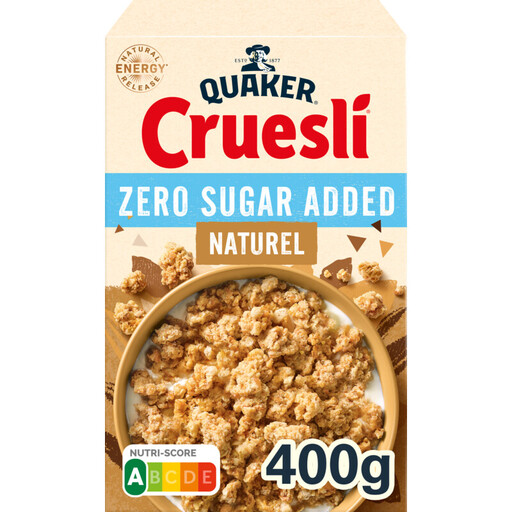
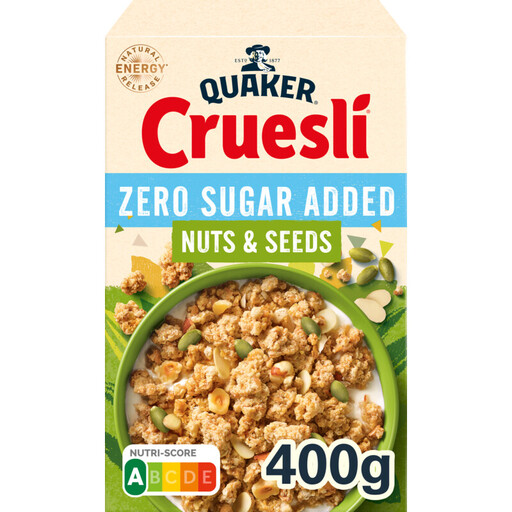
The Zero Sugar Added Naturel and Nuts & Seeds variants are worth considering if you’re looking for granola with no added sugars.
The own-brand range includes granola variants with ‘0% sugar’ and ‘0% added sugar’ in their product names.
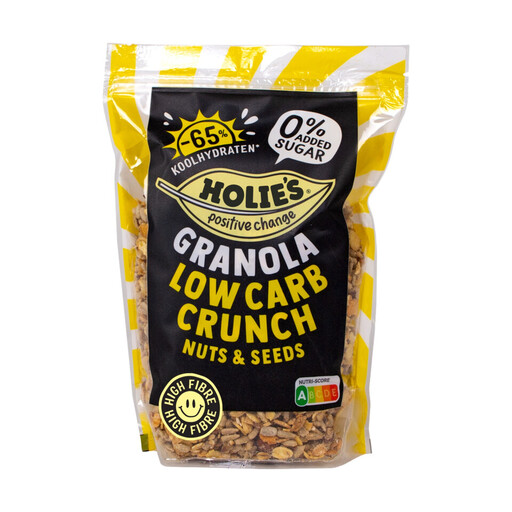
Low Carb Granola is a variant to consider if you’re mainly looking at added sugars.
Jumbo lists Low Sugar Granola with Almond & Hazelnut, as well as a chocolate variant.
The granola range includes several flavours, including Amandel Cashew.
These granola variants suit a quick breakfast if you’re mainly keeping an eye on added sugars. Don’t take their names as proof that they’re sugar-free: check the total sugars and allergens on the pack.
 No image available
A plain variant to consider if you like granola with yoghurt and are keeping an eye on added sugars.
Check the total sugar content on the pack: no added sugars isn’t the same as sugar-free. For allergens, note the wheat and oat information and the warning about the possible presence of milk and nuts.
 No image available
A nut and seed variant for anyone who likes granola with yoghurt or milk and is keeping an eye on added sugars.
The variant contains nuts, oats and wheat, among other ingredients; also check the warning about the possible presence of milk and other nuts. Read the sugar content separately from the claim about added sugars.
 No image available
A variant to compare if you’re looking for granola for a quick breakfast and added sugars are one of your selection criteria.
‘Low Carb’ doesn’t confirm that the granola is sugar-free. Check the sugars per 100 g and the allergen information; the product details list soya, almond, spelt, oats, barley, peanuts and wheat, among other ingredients.
 No image available
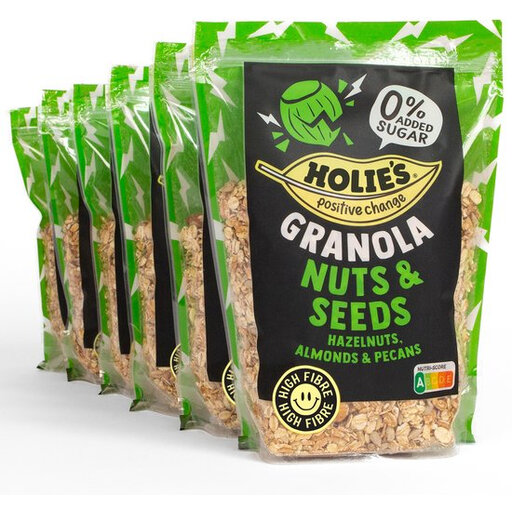
A nut and seed variant for anyone keeping an eye on added sugars at breakfast and looking for a multipack of six.
Check the total sugars and bear the multipack size in mind. The product details list oats, barley, spelt, almond, hazelnut and pecan, among other ingredients; read the current allergen and ‘may contain’ warnings.
 No image available
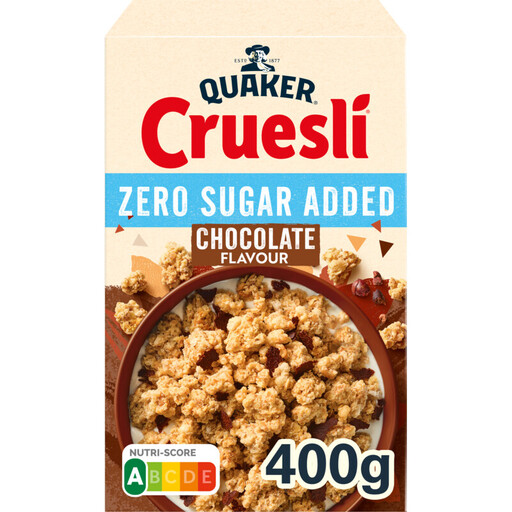
A cocoa-flavoured option to consider if you’d like that taste in your quick breakfast and are keeping an eye on added sugars.
For this variant, read the sugar content per 100 g on the pack; don’t rely on ‘Zero Sugar’ in the name alone. The product details list milk, wheat and oats and warn of the possible presence of nuts.
No, the two claims don’t mean the same thing: ingredients may contain naturally occurring sugars. The Netherlands Food and Consumer Product Safety Authority treats ‘sugar-free’ as a separate nutrition claim. So also check ‘of which sugars’ in the nutrition table for the exact variant.
First compare the sugars per 100 g, so differences in portion or pack size don’t skew the comparison. Then check the ingredients and how much you plan to add to your own breakfast.
Use the serving suggestion on the pack you’ve chosen as a starting point, then adjust the amount to suit your own breakfast. For example, Jumbo suggests 45 g of Quaker Cruesli Zero Sugar Added Nuts & Seeds with 100 ml of low-fat yoghurt. This is a serving suggestion, not a fixed portion for everyone.
Yes, check the full allergen information for the exact variant. For Granola Amandel Cashew, Zonnatura lists wheat and soya as well as almonds and cashew nuts, and notes the possible presence of milk and sesame seeds, among other allergens.