
People who want to avoid added sugar
You’re looking for breakfast granola and want to know whether ‘no added sugars’ also means the product is sugar-free. The exact claim and the ‘of which sugars’ figure can help you tell the difference.


If you’re looking for strictly sugar-free granola, check the sugar content: according to the Netherlands Nutrition Centre, ‘sugar-free’ means no more than 0.5 g of sugars per 100 g. If you mainly want to avoid added sugar, a product with no added sugars could suit you, but it may still contain sugars. For your weekly shop, also compare the ingredients, allergens, nutritional information and pack size of the exact product variant.
You’re looking for breakfast granola and want to know whether ‘no added sugars’ also means the product is sugar-free. The exact claim and the ‘of which sugars’ figure can help you tell the difference.
You don’t choose your breakfast cereal based on the sugar claim alone. You also compare fibre, protein and the portion you usually eat.
If gluten, nuts or soya are a concern for someone in your household, check the allergen information for the exact product variant, including any ‘may contain’ statements.
Start by understanding the difference between sugar-free and no added sugars. Then compare products per 100 g and check that the pack size and availability suit your weekly shop.
| What to consider | What should you check? | Who is this most important for? |
|---|---|---|
| Sugar claim | Read the exact claim and compare the ‘of which sugars’ figure per 100 g. According to the Netherlands Nutrition Centre, ‘sugar-free’ means no more than 0.5 g of sugars per 100 g. | I’m looking for a product that genuinely meets the ‘sugar-free’ threshold, not just a variant with no added sugar. Around 33% of consumers prioritise this precise sugar claim. |
| Nutritional information | Compare fibre, protein and sugars on the same per-100 g basis; also consider the portion you eat. | For breakfast, I want to weigh up the nutritional information of different granolas. For around 25% of consumers, this comparison is their main concern. |
| Weekly supplies | Check the pack weight and confirm shortly before buying that your preferred variant is available. | I’m buying for several breakfasts and want a pack that suits how I use it and that I can actually take home or order. Around 25% of consumers prioritise having enough for the week. |
| Allergens | Read the allergen declaration for the exact flavour, including information about possible traces. | If someone in my household needs to avoid certain ingredients, whether that specific pack is suitable matters more than the sugar claim. Around 17% of consumers prioritise this check. |
Granola with no added sugars can still contain sugars. For example, Albert Heijn lists 1.9 g of sugars per 100 g for AH Granola nuts 0% added sugar.
If you’re looking for strictly sugar-free granola, compare the ‘of which sugars’ figure with the maximum of 0.5 g per 100 g that the Netherlands Nutrition Centre gives for this claim.
A sugar claim doesn’t tell you whether granola contains nuts, cereals containing gluten or soya.
Before buying enough for the week, check the allergen declaration for the exact flavour and read any ‘may contain’ statements too.
Whether a product is available to order online or only in store could affect what you choose for your weekly shop. For example, Lidl describes its granola variants as available in store only.
Check current availability shortly before buying, and compare a second variant using its label in advance.
Always compare the specific variant: a brand name alone won’t tell you how much sugar a product contains or which allergens are in it.
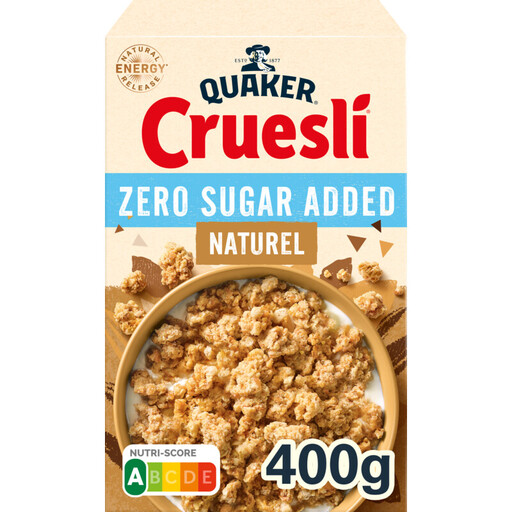
Quaker Zero Sugar Added Naturel is a variant worth considering if you want to avoid added sugars.
AH Granola nuts 0% added sugar is a nut-based variant to compare for its nutritional information and ingredients.
Jumbo Granola Protein is a variant for anyone who wants to compare protein content as well as sugars.
Lidl lists Super Berry and Super Nutty as granola variants to look for in store.
Golden Bridge Granola is a pack to look out for during your weekly shop.
Zonnatura Granola Almond Cashew is a variant to compare for its nutritional information and allergens.
These products are crunchy muesli, including Cruesli, for anyone who wants to compare other breakfast cereals as well as granola for their weekly shop. A name containing ‘Zero Sugar’ doesn’t on its own prove that a product meets the ‘sugar-free’ threshold; check the nutritional information on the pack you choose.
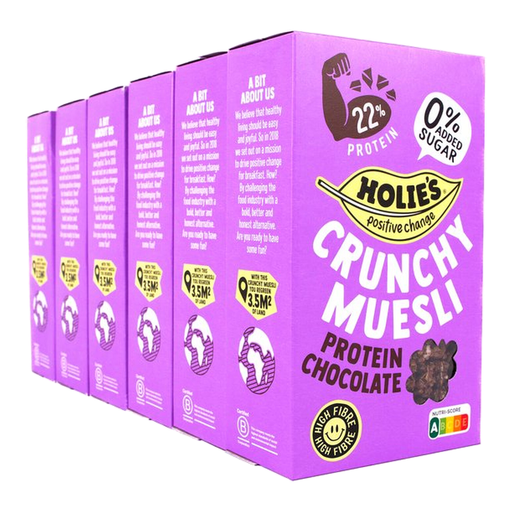 No image available
A multipack to consider if you’re buying for several breakfasts. For this chocolate muesli, compare the nutritional information per 100 g and the allergen declaration on the pack.
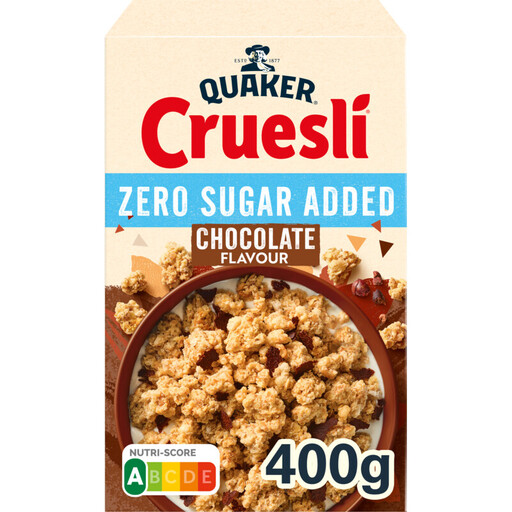 No image available
For anyone looking for a chocolate-flavoured crunchy muesli. Check the ‘of which sugars’ figure and allergens on this 400 g pack; don’t assume it’s sugar-free based on the product name alone.
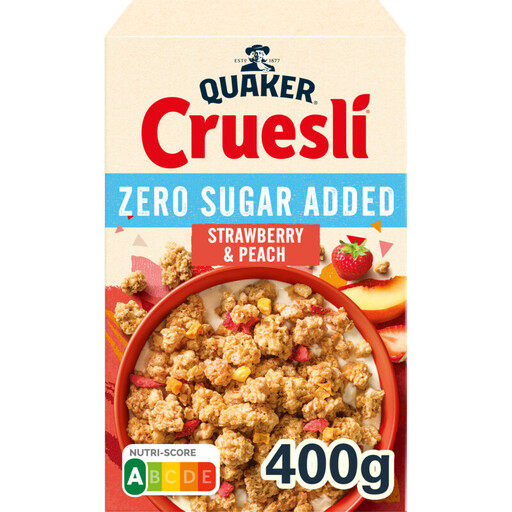 No image available
A fruity option for anyone who wants to take flavour into account when choosing breakfast cereal. For this 400 g pack, check both the added-sugar claim and the total sugars per 100 g.
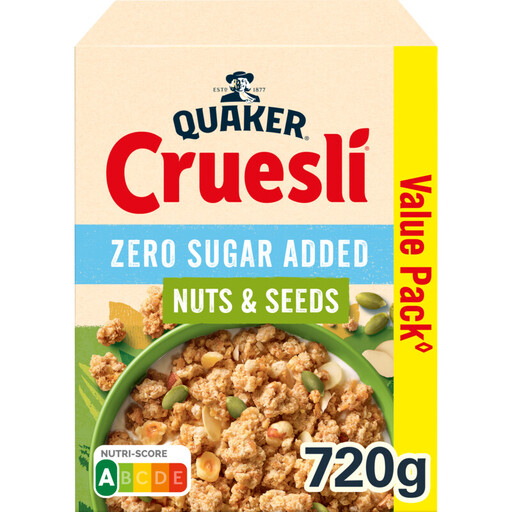 No image available
The 720 g pack could suit you if you’re buying enough for several breakfasts at once. Check the allergen declaration for this nut and seed variant, and compare its sugar content per 100 g.
 No image available
A plain variant for anyone comparing different types of crunchy muesli. Read the nutritional information and allergen declaration for this exact 400 g pack.
No. According to the Netherlands Nutrition Centre, ‘sugar-free’ means no more than 0.5 g of sugars per 100 g; a product with no added sugars may still contain naturally occurring sugars. So check the ‘of which sugars’ figure on the label too.
First compare the exact sugar claim and the amount of sugars per 100 g. Then check fibre, protein, ingredients, allergens, your usual portion size and the pack weight. Confirm that your chosen variant is available shortly before buying.
Not necessarily. The sugar claim tells you nothing about allergens: the Albert Heijn, Jumbo and Zonnatura variants described here contain or may contain nuts and cereals containing gluten, among other ingredients. Check the allergen declaration on the exact pack you’re buying.
Follow the storage instructions on the pack. The product information from Albert Heijn and Jumbo recommends storing the variants described in a cool, dark and dry place, and sealing the pack securely after use.