
Shoppers with a strict sugar-free requirement
For you, ‘no added sugars’ isn’t enough. You want to be able to check the nutrition table and see whether the granola meets the threshold for the ‘sugar-free’ claim.


If you need granola that is literally sugar-free, choose a product that meets the EU requirement for this claim: no more than 0.5 g of sugars per 100 g. If you mainly want a sweet breakfast without added sugars, you can also consider products containing naturally occurring sugars. Then compare the nutritional information per 100 g and check the ingredients and allergens.
For you, ‘no added sugars’ isn’t enough. You want to be able to check the nutrition table and see whether the granola meets the threshold for the ‘sugar-free’ claim.
You’re looking for something crunchy to add to breakfast and want to avoid added sugars or sweeteners. Naturally occurring sugars aren’t a reason for you to rule out a product straight away.
As well as sugars, you check the fibre or protein per 100 g. If a product contains grains, nuts or soya, you also read the allergen information before choosing.
First decide whether ‘sugar-free’ is a strict requirement or whether you mainly want to avoid added sugars. Only then compare the other nutritional values and ingredients. According to Voedingscentrum, the information per 100 g provides a useful common basis for comparison.
| What to consider | What to check when buying | Who should pay particular attention? |
|---|---|---|
| Strictly sugar-free | Check ‘of which sugars’ per 100 g. Under EU Regulation (EC) No 1924/2006, the ‘sugar-free’ claim may only be used when a product contains no more than 0.5 g of sugars per 100 g. | If I need a product that is literally sugar-free, I don’t want to rely on a claim about added sugars. For around 50% of these consumers, this strict requirement comes first. |
| No added sugars | Read the exact claim and the ingredients, then compare sugars and energy per 100 g. | I want crunchy granola for a sweet breakfast, but would rather avoid added sugars and am happy with naturally occurring sugars. For around 30% of consumers, this is the priority. |
| Fibre or protein | Compare fibre, protein and fat per 100 g, and read the allergen information. | If fibre or protein is a deciding factor for me, I also want to know which ingredients I’m choosing. Around 20% of consumers put this first. |
A product with no added sugars may still contain naturally occurring sugars. The EU requirement for the ‘sugar-free’ claim is no more than 0.5 g of sugars per 100 g.
If sugar-free is a strict requirement for you, check the ‘of which sugars’ value per 100 g rather than relying only on the wording on the front of the pack.
A prominent claim doesn’t tell you how the other nutritional values of two granolas compare. What counts as a serving can also vary between packs.
Compare sugars, energy, fat, fibre and protein per 100 g, and read the ingredients list too. Voedingscentrum recommends using the same per-100 g basis when comparing products.
Granola containing grains, nuts, peanuts or soya may not be suitable if you have a relevant allergy, even when the sugar information matches your goal.
Check the current packaging for both the allergens listed in the ingredients and any warnings about what the product may contain.
The sugar content alone doesn’t give you the full nutritional picture for granola containing ingredients such as nuts or seeds.
Compare fat and energy per 100 g as well as sugars. Don’t use a single nutritional value to judge the whole product.
These product ranges show why the exact variant and its label matter more than the brand name alone.
The Zero Sugar Added variants are worth considering if you mainly want to avoid added sugars.
Jumbo’s granola range includes nut and protein varieties that you can compare by their nutritional values.
Low Carb Granola gives you a useful comparison point if you’re looking at fibre and protein as well as sugars.
The granola range includes Amandel Cashew, which you can compare if you’re looking for a nut-based variety.
ALDI describes a 500 g Golden Bridge granola available in varieties made with ingredients including oat flakes, nuts and seeds, or red fruit.
These varieties are worth comparing if you’re looking at different flavours, pack sizes and sugar claims for a sweet breakfast. A name that includes ‘Zero Sugar’ doesn’t, by itself, confirm that a product meets the threshold for the ‘sugar-free’ claim. Check the nutritional information per 100 g on the pack.
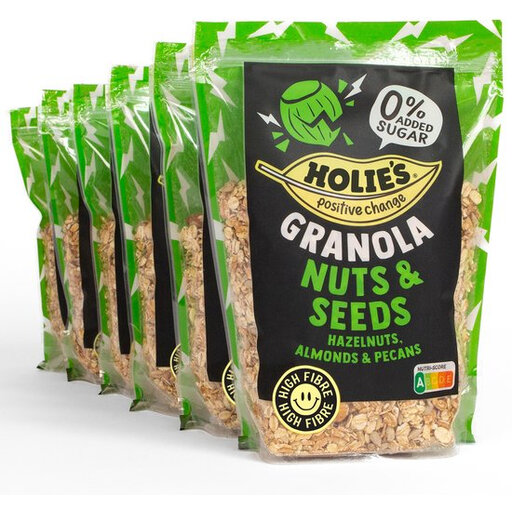 Image unavailable
A nut and seed variety to consider if you’re looking for this kind of flavour at breakfast. The product name indicates a bundle of six 350 g packs. Also check the sugar information per 100 g and the allergens on the pack.
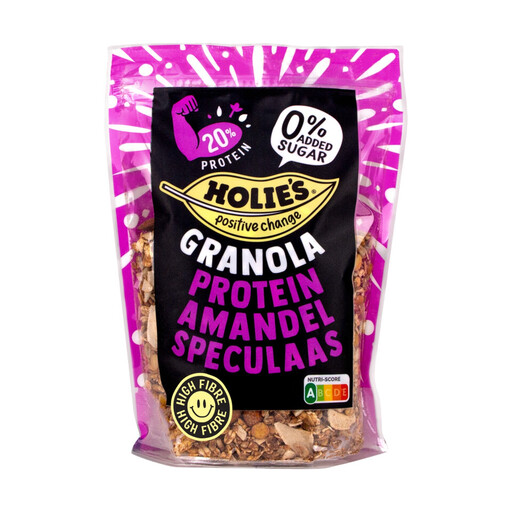 Image unavailable
An almond-speculaas variety to consider if you also want to compare protein and fibre. The product name states that the pack contains 350 g. Check the nutritional values per 100 g and the allergens before choosing.
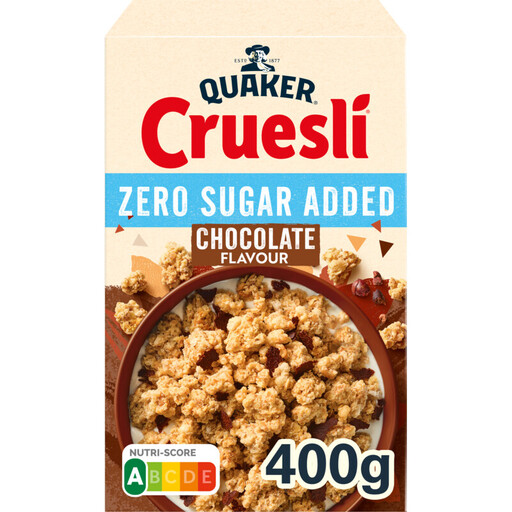 Image unavailable
A chocolate flavour to compare if you’re looking for crunchy muesli for breakfast. The product name states that the pack contains 400 g. Check the exact sugar claim against the ‘of which sugars’ value per 100 g on the pack.
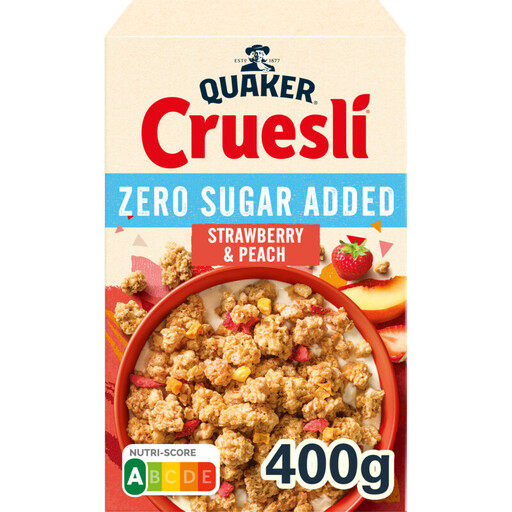 Image unavailable
A strawberry and peach variety if you fancy a fruity flavour at breakfast. The product name states that the pack contains 400 g. Check the sugars per 100 g in the nutritional information and read the allergen information on the pack.
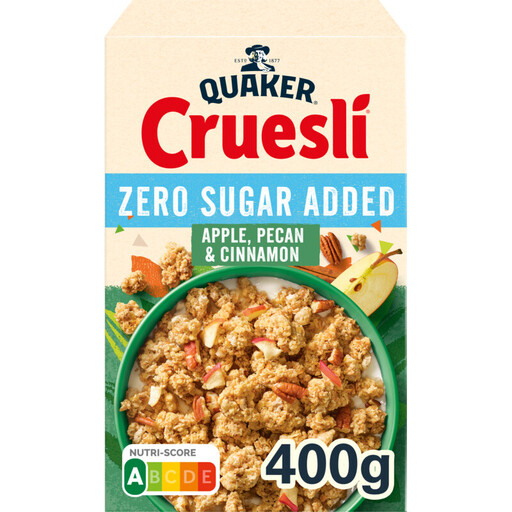 Image unavailable
An apple, pecan and cinnamon variety to compare by flavour. The product name states that the pack contains 400 g. Before buying, check the sugars per 100 g and read the allergen information, especially if nuts are relevant to you.
No. Under EU Regulation (EC) No 1924/2006, the ‘sugar-free’ claim may only be used if a product contains no more than 0.5 g of sugars per 100 g. A product with no added sugars may still contain naturally occurring sugars, so check the nutrition table.
Compare the nutritional values per 100 g so you’re using the same basis. Voedingscentrum recommends this approach for comparing products. Also consider the serving size you actually use and check the ingredients.
Read the allergen information for the specific variety, even if its sugar information matches your goal. Granola may contain grains, nuts, peanuts or soya, for example. Check both the ingredients and any ‘may contain’ warning on the current pack.
Follow the storage advice on the pack and seal it securely after use. That way, you can follow the storage instructions for the granola you’ve actually bought.