
Vandaag of morgen in huis

Kwaliteit gegarandeerd

Welkomstaanbiedingen ontgrendelen: GRATIS bezorging | Tot 80% korting | Gratis 30 dagen JoyPlus-proefperiode
Download de app
A packet labelled “zero sugar” or “no sugar” might seem straightforward, but it doesn’t always tell the full story. If you’re looking for granola with no added sugar, you probably want to eat less sugar, get more fibre, or find a breakfast that fits around exercise and a busy working day. However, there are a few pitfalls that can make a product less suitable than you might expect.
A product may have no added sugar or sweeteners, yet still contain naturally occurring sugars. This applies to ingredients such as fruit, grains or dates. Always check the nutrition table and look at “of which sugars” per 100 g.
“Sugar-free granola” is also not automatically the same as granola with no added sugar. Some products use sweeteners or polyols. Certain cereal bars, for example, explicitly state that excessive consumption may have a laxative effect. A breakfast cereal mix with no added sugar can therefore have a very different composition to a snack bar containing sweeteners.
Granola often contains oil, nuts and seeds. These ingredients can increase the fat and energy content, while also contributing to flavour and texture. So don’t just compare sugar — also look at energy, fats and portion size.
A small amount of granola stirred into yoghurt can be enough. The “30g per serving” label on some packets helps you assess the nutritional value more realistically than a generous bowl that unknowingly contains more than one portion.
If you’re looking for granola high in protein or protein-rich muesli, it’s worth checking the protein content per 100 g and per recommended serving. A product with 20 to 28 g of protein per 100 g will obviously provide less protein in a 30 g serving.
Also pay attention to the ingredients. Protein can come from soya, peas, wheat or nuts. This matters if you have allergies, follow a vegan diet, or want to avoid certain ingredients.
Use the nutrition table as a consistent point of comparison:
Terms like “65% fewer carbohydrates” or “70% fewer carbohydrates” are product comparisons made by the brand. According to product information from Holie and TastyBasics, this is based on a comparison with regular crunchy granola or cruesli. Always check the actual table: among the selected products, the carbohydrate content ranges from 17 to 50 g per 100 g.
For athletes or anyone wanting extra protein in their breakfast, products with around 20 g or more of protein per 100 g are a practical category to compare. Bolletje Crunchy Muesli Protein states 23 g of protein per 100 g. Holie’s chocolate or speculaas-spiced varieties state 20 to 22 g. TastyBasics Granola Nuts & Seeds states 28 g.
These are values from the product information. They don’t on their own mean a product is suitable for everyone. Combine the granola with yoghurt, quark or a plant-based alternative, depending on your own diet.
Look at the first ingredients on the list. These are usually the components with the highest proportion. Examples include wholemeal oats, wheat flakes, soya flakes, sunflower seeds, chicory root fibre and nuts.
Also check the allergen information. Many varieties contain or may contain traces of:
A granola with nuts and seeds can offer an interesting texture, but it isn’t automatically suitable if you have an allergy. Always read the current packaging with each order, as recipes and labels can change.
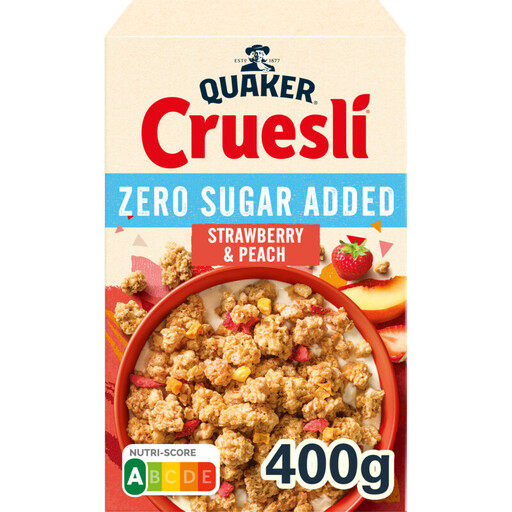
Why this fits the profile: A familiar crunchy muesli for anyone who wants to switch to a no-added-sugar option without complicated ingredients.
According to the product information, this variety contains no added sugars and no sweeteners. The table does state 4.4 g of sugars and 48 g of carbohydrates per 100 g.
24 g of fibre, 7.5 g of protein and a strawberry and peach flavour combination. Suitable for vegans according to the product description.
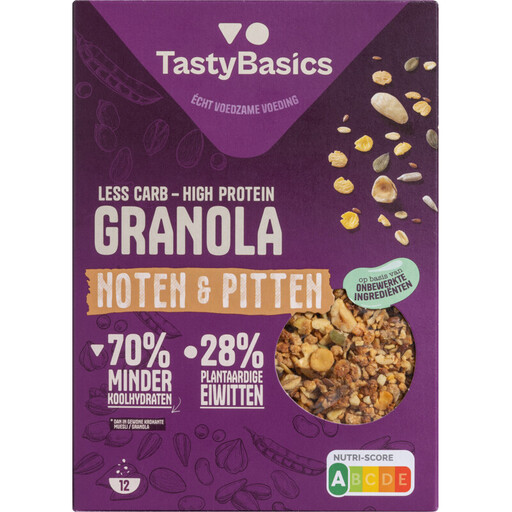
Why this fits the profile: For anyone who focuses mainly on protein, fibre and a lower carbohydrate content, and is happy to examine the ingredients list closely.
The nutrition table makes the balance clear: 17 g of carbohydrates, 28 g of protein and 22 g of fibre per 100 g. The product does contain 6.5 g of sugars.
A mix of soya, oatmeal, sunflower seeds, hazelnuts, linseed and pumpkin seeds. According to the product information, it contains no added sugar.
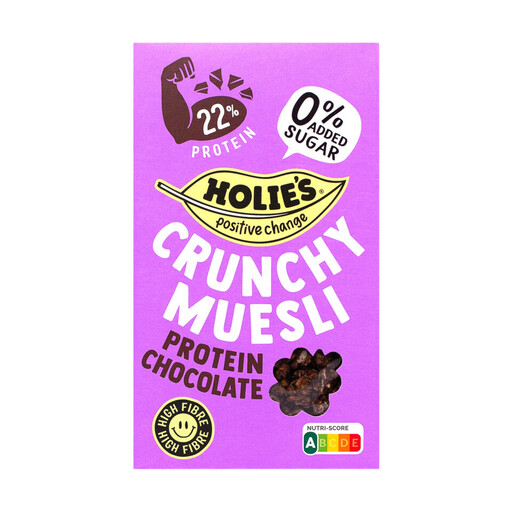
Why this fits the profile: An option for athletes and chocolate lovers who want to combine their breakfast with a higher protein and fibre content.
The product information states 0% added sugar. Do check the portion: per 100 g, this variety contains 38 g of carbohydrates and 2.1 g of sugars.
22 g of protein and 21 g of fibre per 100 g, with wholemeal oats, wheat protein, cocoa mass and cocoa powder.
We’ve put together a full, up-to-date list of products that fully meet these strict selection criteria and comply with current European safety regulations.
That depends on your overall diet, portion size and personal nutritional goals. Compare the nutritional value per 100 g and combine the granola with, for example, yoghurt, fruit or a plant-based alternative. “No added sugar” doesn’t mean the product is low in calories or carbohydrates.
Muesli with no added sugar often consists of flakes, seeds and nuts without a crunchy baked structure. Crunchy muesli or granola is usually toasted and therefore has a firmer texture. Pay particular attention to oil, carbohydrates, fibre and sugar in the table; the name alone doesn’t give you the full picture.
Compare the carbohydrate content per 100 g. In the selection mentioned, some varieties contain 17 to 18 g of carbohydrates, while classic crunchy muesli is around 48 to 50 g. Products with more nuts, seeds, soya or fibre can be lower, but may contain more fat and energy. The right choice therefore depends on all the nutritional values together.
