
Breakfast eater counting carbohydrates
You want to know how many carbohydrates you’re actually eating, so you need both the nutritional information and the weight of your portion.


Choose granola for your carbohydrate planning based on how much you actually eat, not just a claim about added sugars. Check whether a pack contains a single serving; with a larger bag, you can weigh out a portion and calculate the carbohydrates from the label. The right amount varies from person to person.
You want to know how many carbohydrates you’re actually eating, so you need both the nutritional information and the weight of your portion.
You want a single breakfast portion rather than having to scoop from a large bag each time. A pack containing several regular bags won’t necessarily meet that need.
As well as portion size, you look at ingredients, sugars and fibre. A claim about added sugars doesn’t tell you how much sugar or how many carbohydrates are in the portion you eat.
When: You want to use a single sachet or cup with its weight clearly stated on the pack.
Trade-off: Several items in one pack aren’t automatically separate breakfast portions; check exactly what each pack contains.
When: You want to choose how much granola to have for breakfast from a larger bag.
Trade-off: You’ll need scales and will have to calculate the amount using the label; the bag doesn’t provide a pre-measured serving.
| What to consider | What to check when buying | Who it matters to |
|---|---|---|
| Carbohydrates per portion eaten | Check the carbohydrates per 100 g and the weight you’re actually going to eat. | If I want to count my carbohydrates at breakfast, I need to be able to work out the amount in my own portion. For around 42% of consumers, being confident about carbohydrate content matters most. |
| A genuine single portion | Check the number of individual sachets or cups and the net weight of each; a four-pack could also contain four large bags. | If you want to grab a set portion without weighing it, a multipack of regular packs isn’t much help. Portion control comes first for around 33% of consumers. |
| Ingredients and nutritional information | Read the ingredients and compare sugars and fibre on the same basis, for example per 100 g. | If the ingredients are the deciding factor for me, I want to look beyond a claim about added sugars. For around 25% of consumers, comparing labels this way is the top priority. |
For the granola four-packs reviewed, Albert Heijn lists four separate regular packs of 350 g or 400 g. So the number of items doesn’t mean each one is a single breakfast portion.
Before buying, check that the pack really contains individual servings and how many grams are in each sachet or cup.
Granola with no added sugars can still contain sugars, for example from fruit. The total carbohydrates in the portion you eat are therefore still relevant.
Read both the ingredients list and the nutritional information, and calculate the stated carbohydrates for your own portion.
There isn’t one amount of carbohydrates that has the same effect on everyone with diabetes. A product description can’t tell you which portion is right for your situation.
Use the label to work out your own intake, and discuss any major changes to your carbohydrate intake with your healthcare professional or dietitian.
These brands offer granola that you can compare by label and pack format; a brand name or sugar claim doesn’t confirm that a pack contains a single serving.
Albert Heijn has granola four-packs with claims about added sugars or carbohydrates.
Jumbo offers granola in larger packs, including a 500 g variety.
ALDI lists Golden Bridge Granola in a 500 g pack.
Lidl lists granola in varieties including super berry and super nutty.
These Joybuy products suit you if you want to weigh out your own granola portions. Use the weight of the portion you eat and the nutritional information on the pack; don’t assume a bag or multipack contains a single breakfast portion.
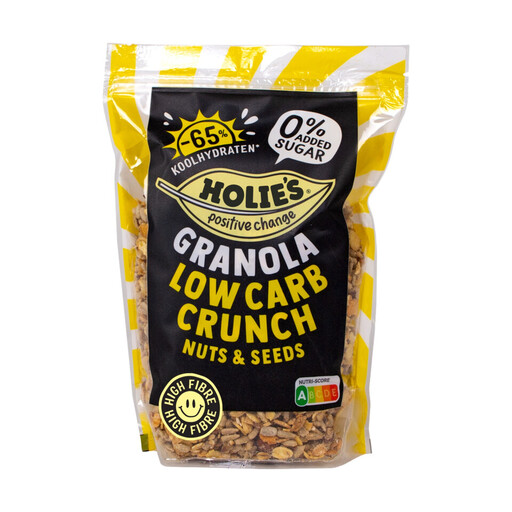 Image unavailable
For anyone who wants to weigh out a breakfast portion and calculate the carbohydrates on the label for that amount.
Check whether the pack contains smaller individual portions before choosing it as a single-serve option.
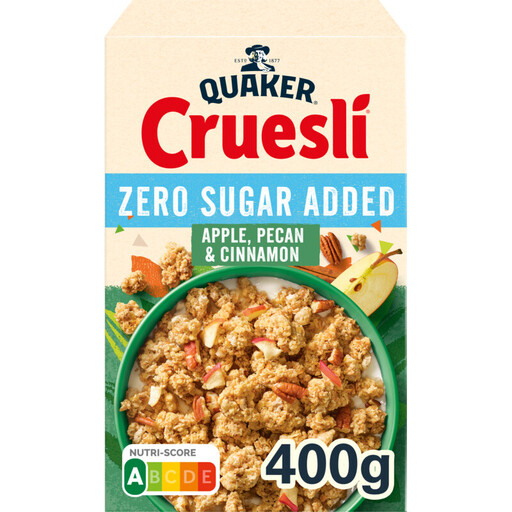 Image unavailable
For anyone who weighs out their own portion and wants to check total carbohydrates as well as the claim about added sugars.
Check the label per 100 g and separately confirm whether the pack contains individual portion sachets.
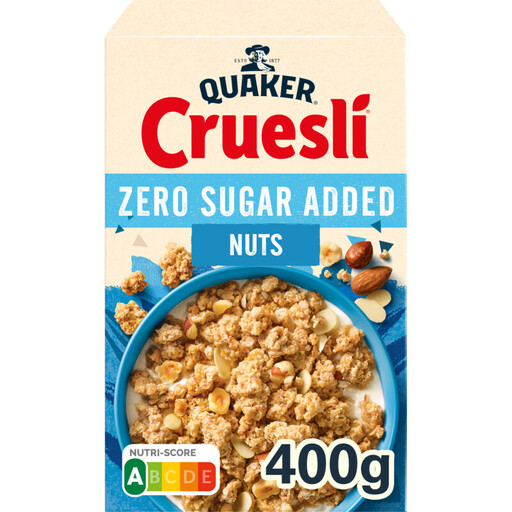 Image unavailable
For anyone who chooses how much cruesli to have at breakfast rather than relying on a set serving size.
As well as the product name, read the stated sugars and carbohydrates; check the contents if you’re looking for individual portions.
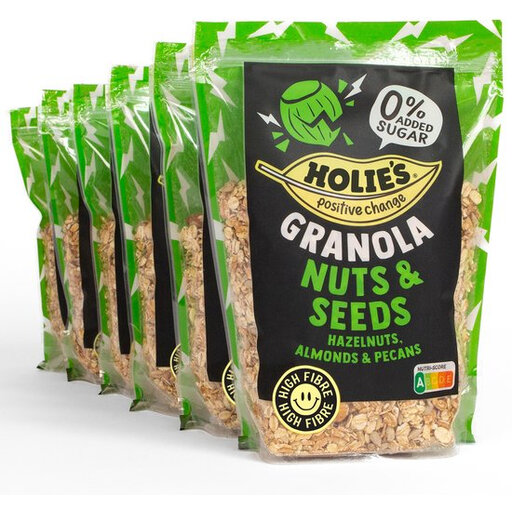 Image unavailable
For anyone who wants to weigh out granola from a multipack for each breakfast.
Six 350 g packs don’t mean six breakfast portions. Check the label and work out the weight of the portion you eat.
No, it may still contain sugars from ingredients such as fruit. For carbohydrate planning, check the nutritional information for the amount you actually eat.
According to Albert Heijn, the four-packs reviewed contain four separate regular items weighing 350 g or 400 g each, not confirmed individual breakfast portions. For any other pack, always check the weight of each inner pack.
There’s no set amount that’s right for everyone with diabetes. Base your calculations on the portion you actually eat, and discuss any major changes to your carbohydrate intake with your healthcare professional or dietitian, especially if you take diabetes medication.
Compare the ingredients and nutritional information on the same basis, preferably per 100 g, and check the carbohydrates, sugars and fibre. Then see how many grams you eat or how much is in a single sachet.