For your Easter brunch, first decide which sugar claim matters to you: according to the Voedingscentrum, ‘sugar-free’ means no more than 0.5 g of sugars per 100 g, while granola with no added sugar may still contain naturally occurring sugars. Then compare ‘of which sugars’ per 100 g, the nutritional values and the allergens on the current packaging. If you’re serving brunch to a group, what’s in the product may matter more than the wording on the front.
Who is this relevant to?
Brunch shoppers looking to avoid added sugars
You’re looking for granola to serve with yoghurt, quark or in a brunch bowl. You don’t necessarily mind naturally occurring sugars, but you want to see the difference between the sugar claim and the total sugar content.
Shoppers comparing nutritional values too
As well as sugars, you check carbohydrates, protein, fibre and energy per 100 g. The amount you actually serve then helps you assess the nutritional information per portion.
Brunch hosts catering for guests with allergies
You’re choosing for several guests, so you need to check the ingredients, allergens and any ‘may contain’ statements on each pack. The Netherlands Food and Consumer Product Safety Authority highlights the importance of allergen information on labels.
What should you look for when choosing?
Start by reading the exact sugar claim and the ‘of which sugars’ figure. Then check whether the ingredients are suitable for your guests, and only then compare the other nutritional values on the same basis.
| What to look for | What to check when buying | Who it matters to |
|---|
| Sugar claim and total sugars |
Compare ‘no added sugar’ with ‘of which sugars’ per 100 g. The Voedingscentrum sets a limit of no more than 0.5 g of sugars per 100 g for the ‘sugar-free’ claim. |
If I’m looking for granola with no added sugar, I want to know how much sugar it contains overall. This is the top priority for around 42% of consumers. |
| Ingredients and allergens |
Read the current allergen information and any ‘may contain’ statements before choosing granola for guests. |
When I’m hosting a brunch, I want to check whether a guest with an allergy can eat the granola. This is the main concern for around 33% of consumers. |
| Nutritional values and portion size |
Compare carbohydrates, protein, fibre and energy per 100 g, then consider how much you’ll serve. |
If I’m using granola as a topping, I want to assess the nutritional value of my portion. Around 25% of consumers give this the highest priority. |
Common mistakes
-
Assuming ‘no added sugar’ means ‘sugar-free’
A product can have no added sugars and still contain naturally occurring sugars. For example, Albert Heijn lists 1.9 g of sugars per 100 g for AH Granola noten 0% toegevoegd suiker. The Voedingscentrum sets a limit of no more than 0.5 g per 100 g for the ‘sugar-free’ claim.
Is the total sugar content a deciding factor? Don’t just read the front of the pack; compare the ‘of which sugars’ figure on the packaging.
-
Assuming a low-carb name means it’s low in energy
Carbohydrates and energy are different values. Albert Heijn’s product pages list 532 kcal per 100 g for AH Granola koolhydraat verlaagd and 493 kcal per 100 g for Holie’s Low Carb Cacao Nuts & Seeds.
Compare nutritional values per 100 g, then consider how many grams you use as a topping or breakfast portion.
-
Leaving allergen checks until serving time
A sugar claim doesn’t tell you whether a product is suitable for someone with an allergy. Albert Heijn’s information for AH Granola noten and Holie’s Low Carb Cacao Nuts & Seeds lists, among other things, cereals containing gluten and nuts; ingredients vary between products.
Check the current packaging before buying, including any possible traces, and keep the ingredients information available when you serve the granola.
Brands to consider
Albert Heijn
The own-label range includes granola varieties with claims about added sugars, including a nut variety and a reduced-carbohydrate variety.
- Albert Heijn lists 1.9 g of sugars, 14 g of fibre and 13 g of protein per 100 g for its nut variety.
- This means the nut variety doesn’t meet the Voedingscentrum’s limit for the ‘sugar-free’ claim. Check the allergens for the variety you choose too.
Cruesli (Quaker)
Quaker uses the Zero Sugar Added label on Cruesli varieties that are grain mixes with no added sugars.
- This label makes it clear which sugar claim to look for on the packaging.
- Zero Sugar Added doesn’t mean ‘sugar-free’. Check the total sugars, allergens and current availability for each variety.
Holie’s
Low Carb Cacao Nuts & Seeds granola is an option to compare if carbohydrates and protein matter alongside the sugar claim.
- Albert Heijn’s product information lists 18 g of carbohydrates, 21 g of protein and 16 g of fibre per 100 g for this variety.
- The same variety contains 3.1 g of sugars per 100 g and includes allergens. Read the ingredients and nutritional information on the current packaging.
Jumbo
Jumbo’s Granola Proteïne is an own-label variety you can compare by its sugar claim and other nutritional values.
- Jumbo’s product information says this variety contains no added sugars.
- The product page reported that it was temporarily unavailable for delivery. Check current availability before planning your brunch around this variety.
Zonnatura
Granola Amandel Cashew is a nut variety for shoppers who mainly want to compare ingredients and nutritional values.
- Zonnatura lists 1.9 g of sugars and 21 g of fibre per 100 g for this variety.
- Don’t assume from the sugar figure that it’s labelled ‘no added sugar’. Check the current packaging and read the allergen information too.
Products on Joybuy
This selection includes Cruesli grain mixes, a crunchy muesli and a granola that could work for an Easter brunch with yoghurt or as a topping. Their names make different claims about sugar and nutrition, so always check the nutritional information and allergens on the exact pack before choosing.
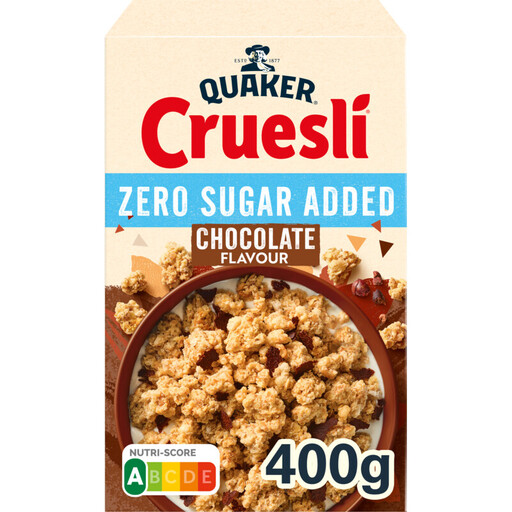 Image unavailable
Quaker Cruesli Choco Zero Sugar 400 g
A chocolate variety to consider if you’re looking for a crunchy grain mix for brunch. The name Zero Sugar doesn’t tell you the total sugar content, so check the nutritional information and allergens on the pack.
View on Joybuy
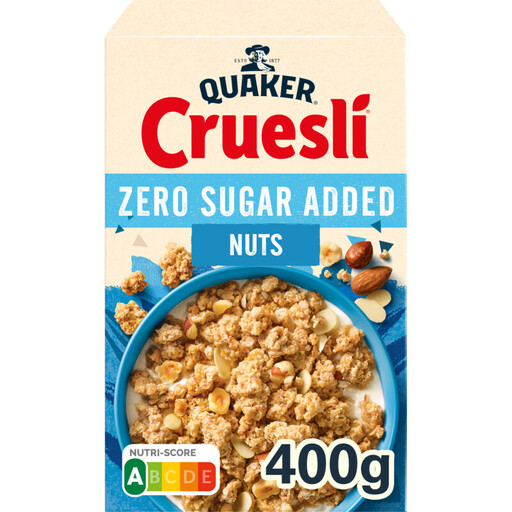 Image unavailable
Quaker Cruesli Nuts Zero Sugar 400 g
The nut variety could work for a brunch where you want to serve a crunchy grain mix. If you have guests with allergies, check the ingredients and any ‘may contain’ statements. Also compare the total sugars per 100 g.
View on Joybuy
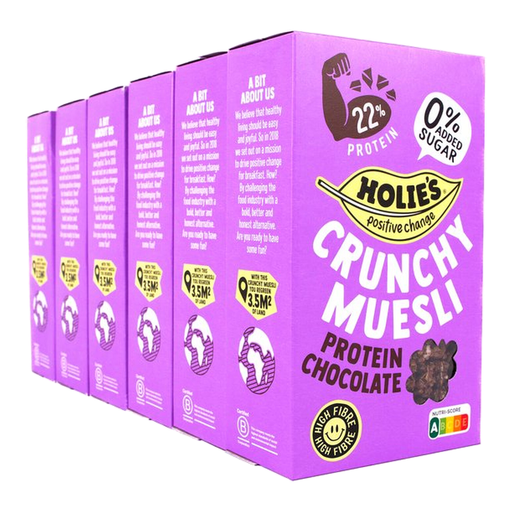 Image unavailable
Holie's Crunchy Muesli Protein Chocolate 6 x 400 g
This is crunchy muesli, not granola, and the multipack contains six 400 g packs. Before choosing it as an alternative to granola, compare the sugar claim, nutritional values and allergens for this exact variety.
View on Joybuy
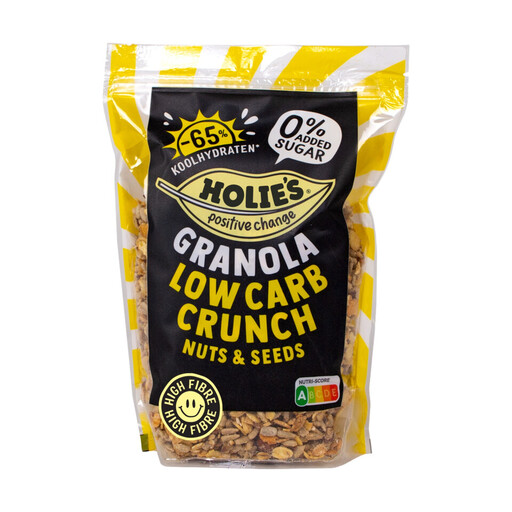 Image unavailable
Holie's Granola Low Carb Crunch 350 g
If carbohydrates matter for your brunch portion, you can compare this granola with other varieties using the values per 100 g. The name Low Carb doesn’t tell you how much sugar or energy is in your portion, so check the current nutritional information.
View on Joybuy
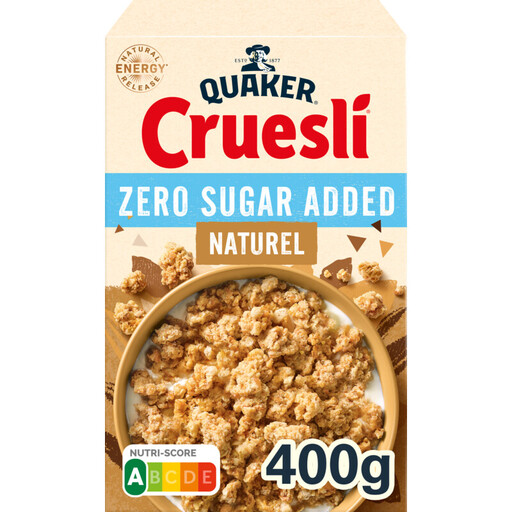 Image unavailable
Quaker Zs Cruesli Natural 400 g
A plain Cruesli variety to compare if you’re not looking for chocolate or nuts. Check the pack to see what the Zs label means for this variety, and read the total sugars and allergen information before serving.
View on Joybuy
Frequently asked questions
Is granola with no added sugar also sugar-free?
No, those labels don’t mean the same thing. The Voedingscentrum sets a limit of no more than 0.5 g of sugars per 100 g for ‘sugar-free’. A product with no added sugars may still contain naturally occurring sugars. For example, Albert Heijn lists 1.9 g of sugars per 100 g for AH Granola noten 0% toegevoegd suiker.
How do I work out a portion of granola to use as a topping?
Use the portion size on the pack as a starting point, then decide how much you’ll actually serve. Compare products per 100 g first; you can then use your chosen amount to assess the nutritional values per portion.
Can I serve nut granola to guests with an allergy?
Only if the current ingredients and allergen information show it’s suitable for them. Check any ‘may contain’ statements too, and keep the packaging available when serving. The Netherlands Food and Consumer Product Safety Authority highlights the importance of clear allergen information on labels.
Does low-carb tell me anything about the sugar content?
No. Compare carbohydrates and sugars as separate values on the packaging. Albert Heijn’s product information lists 18 g of carbohydrates and 3.1 g of sugars per 100 g for Holie’s Low Carb Cacao Nuts & Seeds, and 22 g of carbohydrates and 1.9 g of sugars per 100 g for AH Granola koolhydraat verlaagd. Bear in mind that these figures are for two specific varieties, not general values for the brands.
Can I plan my Easter brunch around Jumbo’s Granola Proteïne?
Check current availability first. Jumbo’s product page said the manufacturer was temporarily unable to supply this variety. Only add it to your shopping list after checking the latest product information too.


