
If fibre is your priority
You want to choose granola based on the fibre content listed per 100 g. The ingredients list can also help you see which wholegrain cereals or sources of fibre it contains.


Compare granola options for your Easter brunch by their fibre and sugar content per 100 g, then choose a flavour to suit your guests. Before serving, check the ingredients and allergen information on the packaging. A variety that meets your fibre preferences may not be suitable for someone who needs to avoid certain cereals, nuts or soya.
You want to choose granola based on the fibre content listed per 100 g. The ingredients list can also help you see which wholegrain cereals or sources of fibre it contains.
You’re looking for a crunchy addition to your brunch, but you also want to know how much sugar the product contains and whether sugar, syrup or honey has been added.
You’re serving granola to guests who need to be mindful of certain cereals, nuts, soya or milk. In that case, the allergen information on the exact packaging matters more than the flavour name or a general product description.
First, decide which feature matters most for your Easter brunch. The Netherlands Nutrition Centre recommends comparing breakfast cereals per 100 g; then check the ingredients of the variety you plan to serve.
| What to consider | What should you check? | Who is this important for? |
|---|---|---|
| Fibre | Compare the fibre content per 100 g and check which wholegrain cereals or sources of fibre are listed in the ingredients. | If fibre is my main reason for choosing granola, I want to be able to compare products on the same basis. Around 36% of consumers would put fibre first. |
| Sugars | Check the sugars per 100 g and the ingredients list; no added sugar does not mean sugar-free. | I want to serve crunchy granola, but also choose how much sugar and how many added sources of sugar it contains. For around 29% of consumers, this would be the main consideration. |
| Allergens | Read the allergen information and any ‘may contain’ statements on the current packaging of the exact variety. | If a guest needs to avoid certain ingredients, I want to know whether this granola is suitable before serving it. Around 21% of consumers would make suitability their priority. |
| Quantity | Compare the pack weight with the amount you want to serve for the number of guests. | For a larger brunch, I want to put out enough granola without losing track of how much I need. Around 14% of consumers would consider this first. |
A product name or a fibre claim doesn’t also tell you how much sugar the granola contains. The Netherlands Nutrition Centre recommends comparing breakfast cereals per 100 g.
Compare the nutrition tables, then read the ingredients list.
A fibre-focused choice may contain ingredients that a guest needs to avoid. The Netherlands Food and Consumer Product Safety Authority highlights the importance of clear allergen information on prepacked foods.
Check the exact packaging before serving. If a guest has a relevant allergy, agree on a suitable alternative with them.
Granola packs come in different weights. The weight of a pack alone doesn’t tell you how much you’ll want to serve each guest.
Decide how much you need for the brunch, then work out how many packs you’ll need.
Ingredients and allergens can vary between varieties or change over time. If you’re serving guests with allergies, the information on the pack you’ve bought is what matters.
When your order arrives or when you’re in the shop, check the nutrition information, ingredients, allergens and best-before date.
The examples below show why checking the label of a specific variety is more useful than relying on a general impression of a brand or retailer.
The Granola Original variety is a crunchy option made with wholegrain oats.
The granola range includes own-brand products as well as varieties from other brands.
Granola Rood Fruit is an own-brand variety with nutrition values listed per 100 g.
The brand offers several granola varieties, including Amandel Cashew.
ALDI shows a Golden Bridge granola in a 500 g pack.
These products include a range of granola flavours and one crunchy muesli for your Easter brunch. Treat granola and muesli as separate product types, and check the label for each variety before choosing for your guests.
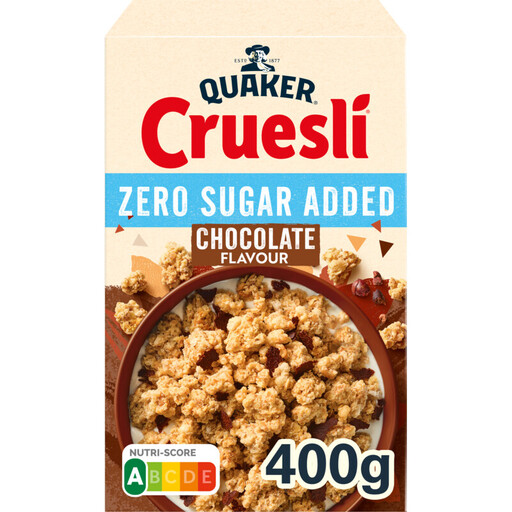 Image unavailable
A granola variety for anyone who fancies chocolate at brunch. Compare its fibre and sugar content on the label with the other flavours.
Before serving, check the allergen information, including details about milk, cereals containing gluten and the possible presence of nuts.
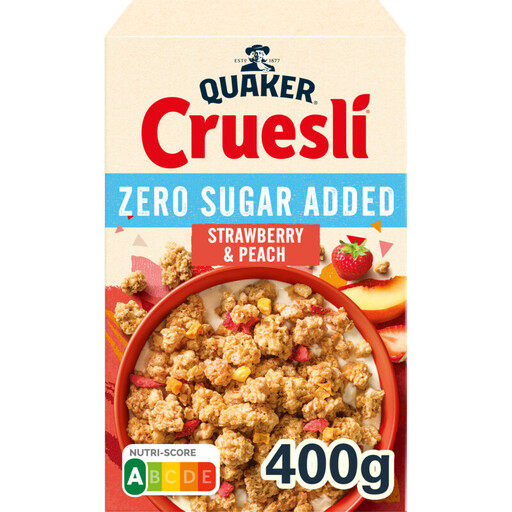 Image unavailable
A fruity granola variety for anyone who wants to serve strawberry and peach. Check the nutrition information per 100 g to see the total sugar content, whatever the name of the variety suggests.
Check the information about cereals containing gluten and the possible presence of milk and nuts if these are relevant to your guests.
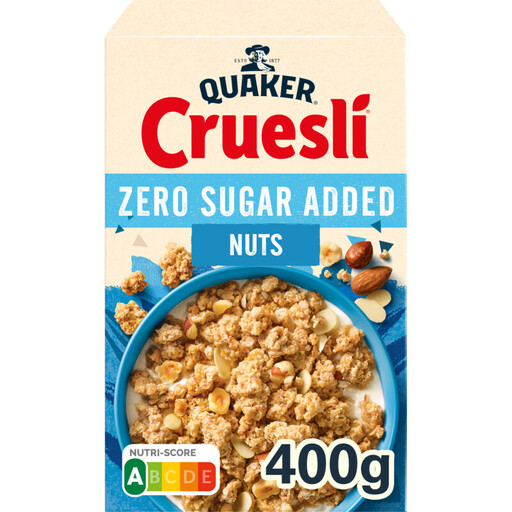 Image unavailable
A nut variety for a brunch where nuts are suitable for all your guests. Include its fibre and sugar values in your comparison per 100 g.
Take extra care with this choice if anyone needs to avoid nuts or cereals containing gluten. Also read the warnings about the possible presence of other allergens.
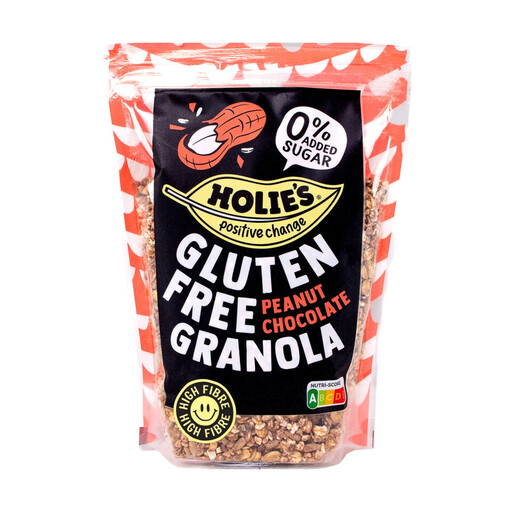 Image unavailable
A granola variety with peanuts and chocolate. If a guest needs to eat gluten-free, check the gluten-free claim and allergen information on the current packaging before serving this variety.
Also check the peanut information and any warnings about nuts and soya.
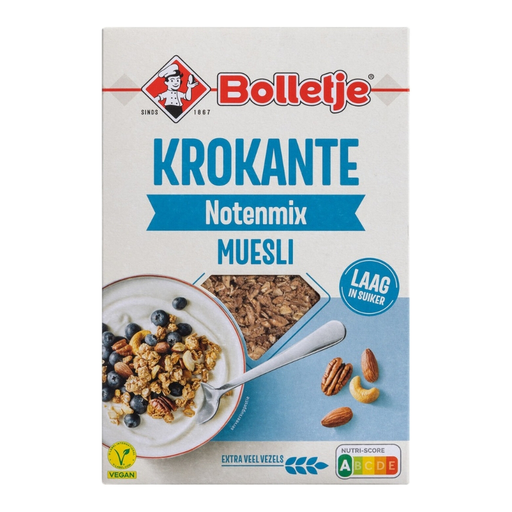 Image unavailable
This is crunchy muesli, not granola. It’s a separate option if you’d like to serve a nut mix at your Easter brunch; compare its label per 100 g with those of the granola varieties.
Before serving the muesli to guests, check the information about nuts, cereals containing gluten and any other allergens.
Compare the fibre content listed per 100 g for similar products. Then check the sugars and ingredients so you can also see which wholegrain cereals or sources of fibre your chosen variety contains.
No. Granola with no added sugar may still contain sugars that occur naturally in its ingredients. Always check the total sugar content per 100 g on the label.
Don’t rely on the type of cereal or the product name alone. Check that the exact packaging is labelled gluten-free and ask your guest whether the product is suitable for them; also read the rest of the allergen information.
Read the ingredients information and any warnings on the packaging of the exact variety. The Netherlands Food and Consumer Product Safety Authority says that the allergens required by law must be clearly identified in the ingredients information; also check any details that are relevant to your guests.