
Vandaag of morgen in huis

Kwaliteit gegarandeerd

Welkomstaanbiedingen ontgrendelen: GRATIS bezorging | Tot 80% korting | Gratis 30 dagen JoyPlus-proefperiode
Download de app
Granola might seem like a straightforward purchase, but there are big differences between crunchy granola, muesli and muesli bars. A pack featuring nuts or chocolate, or making claims such as “no added sugar”, can look appealing, while the nutritional values or allergens may not suit your needs as well.
So focus on the label, not just the front of the pack. These three pitfalls are particularly common:
Muesli usually consists of flakes, seeds, nuts and dried fruit that haven’t been baked together. This gives it a softer texture, and it may contain less oil.
Granola is usually baked. This creates crunchy clusters, but it can also mean that oil, syrup or sugar has been added to the recipe. So a product can be crunchy without necessarily being low in sugar.
Crunchy muesli is a commercial name for a crunchy grain mix. Check the ingredients to find out what gives it its crunch. This could be toasted grains, fibre, oil, flour or a sweetening ingredient.
Muesli bars are mainly designed as convenient portions to take on the go. They’re practical, but their nutritional values per 100g can differ considerably from those of breakfast cereals.
Compare the nutritional values per 100g, not just per portion. A portion may be small, making a high sugar content less noticeable.
If you’re looking for granola with no added sugar, check the ingredients list too. “No added sugar” doesn’t rule out naturally occurring sugars. Some muesli bars contain sweeteners; for example, maltitol is listed in the Hero B’Tween Muesli Bar Zero White Chocolate. The packaging also warns that excessive consumption may have a laxative effect.
Fibre is a useful point of comparison. Across the range, values vary from around 5g per 100g in some bars to more than 20g in various crunchy muesli products. A high fibre content doesn’t mean a product is suitable for everyone. If you’re not used to eating much fibre, increase your intake gradually.
For sportspeople or anyone looking to consciously eat more protein, high-protein granola is a useful search term. Don’t just look at a claim on the front of the pack: check the protein content per 100g and where the protein comes from.
Holie’s Crunchy Muesli Protein Chocolate lists 22g of protein per 100g. The ingredients include wheat protein and wheat gluten. This makes it less suitable for people avoiding gluten, but it could be an interesting choice if you’re looking for a high-protein breakfast option.
TastyBasics Granola Nuts & Seeds lists 28g of protein and 22g of fibre per 100g. According to the product description, it contains ingredients including soya flakes, peanut butter, sunflower seeds and oats. The claim “70% fewer carbohydrates” should always be considered in relation to the basis of comparison, so check the actual value too: 17g of carbohydrates per 100g.
A gluten-free granola should be clearly labelled as such, and the ingredients and allergen information should support the claim. According to the product description, Holie’s Granola Glutenfree Peanut Chocolate uses gluten-free wholegrain oat flakes, buckwheat and peanuts. It does contain peanuts and may contain traces of various nuts and soya.
When choosing granola with nuts and seeds, check the exact ingredients. Quaker Cruesli 4 Nuts contains almonds, hazelnuts, pecans and Brazil nuts, among other ingredients. Bio+ B+ Muesli Nuts and Seeds contains grains, raisins, hazelnuts, almonds and various seeds.
It’s also worth checking what “organic” means on the pack. For organic granola, check which ingredients are actually listed as organic and whether the packaging displays an appropriate certification mark. A product made with organic ingredients isn’t automatically low in sugar or calories.
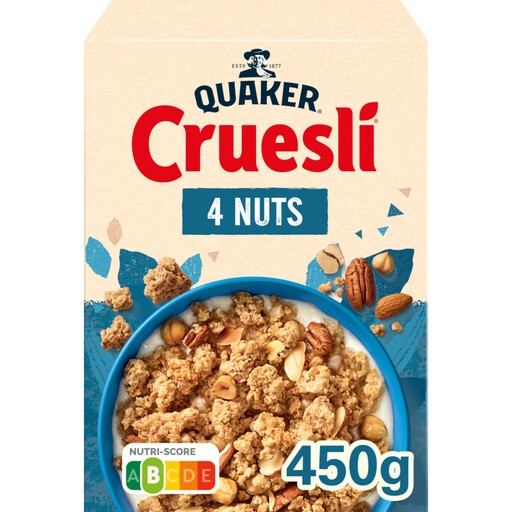
Why it suits this profile: A familiar crunchy muesli for everyday breakfasts, with four types of nuts and a 450g pack.
The nutritional information lists 10g of fibre and 12g of sugars per 100g, so you can factor in the sweetness for yourself.
95% wholegrain according to the product description, with 10.7% nuts and natural flavourings.
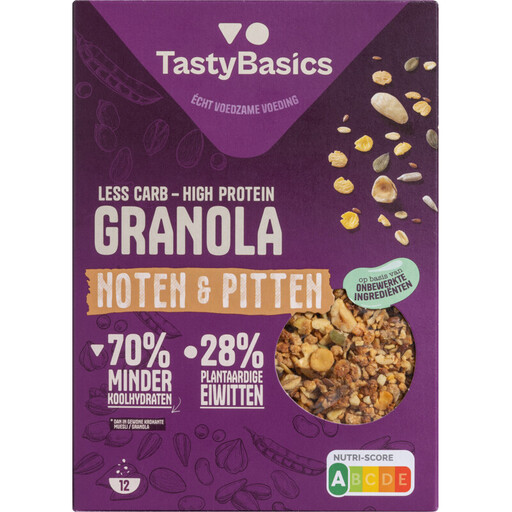
Why it suits this profile: For anyone who chooses granola mainly based on its protein and fibre content, and a short list of recognisable ingredients.
The product description says no sugar is added; the ingredients list and 6.5g of sugars per 100g are still worth checking.
28g of protein, 22g of fibre and 17g of carbohydrates per 100g, according to the product information.
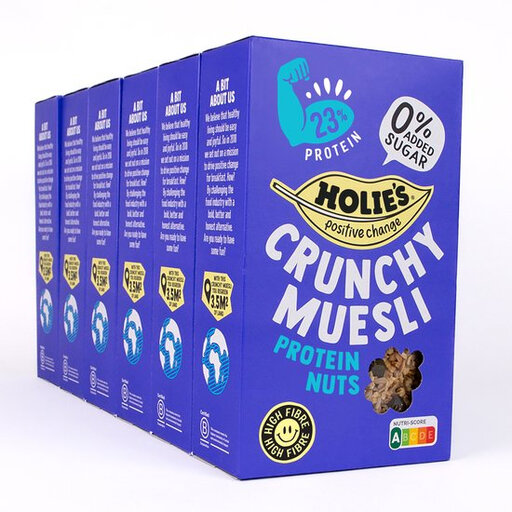
Why it suits this profile: The multipack is handy for regular use and, according to the product information, contains 23g of protein per 100g.
The nutritional information clearly shows the protein and sugar content: 23g of protein and 2.3g of sugars per 100g.
19g of fibre per 100g; the mix contains oats, wheat protein, sunflower seeds and pumpkin seeds.
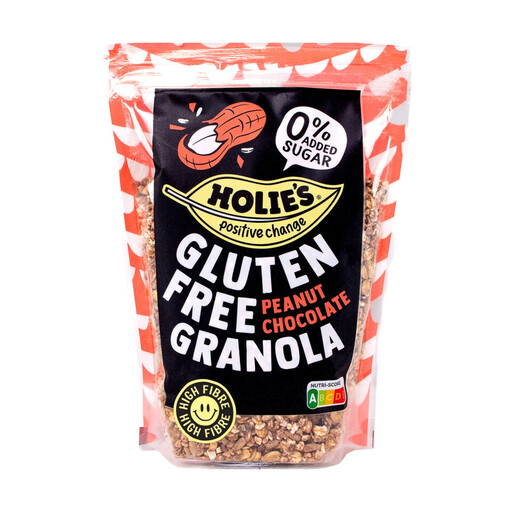
Why it suits this profile: Made with gluten-free wholegrain oat flakes, buckwheat, peanuts and cocoa, for anyone looking to avoid grains containing gluten.
The product information explicitly states that the oats are gluten-free; if you need to avoid gluten for medical reasons, always check the current packaging too.
15g of protein, 14g of fibre and 4g of sugars per 100g; the product description says it contains no added sugar.
We’ve put together a complete, up-to-date list of products that meet these strict selection criteria and the applicable European safety regulations.
That depends on its ingredients and your diet. Pay particular attention to sugars, fibre, protein, fat and portion size per 100g. Granola with little added sugar can still be relatively high in energy because of the oil, nuts and seeds. Enjoy it as part of a varied diet.
Store granola in a tightly sealed container in a cool, dry place, away from sunlight and moisture. Reseal the bag or storage jar after each use. If the packaging is damaged, check the storage instructions and use the product according to the label.
No. “No added sugar” means that, according to the product information, no sugar has been added to the recipe. The product may still contain naturally occurring sugars. “Sugar-free” is a different nutrition claim with specific conditions. So always read the nutritional information and ingredients list.
