
Vandaag of morgen in huis

Kwaliteit gegarandeerd

Welkomstaanbiedingen ontgrendelen: GRATIS bezorging | Tot 80% korting | Gratis 30 dagen JoyPlus-proefperiode
Download de app
Looking for grain-free fish dog food? You’ll soon come across terms such as “low allergen”, “rich in omega 3” and “high in animal protein”. These descriptions may sound clear, but they do not always tell the whole story. The ingredients, life stage and portion size determine whether a product is genuinely suitable for your dog.
This guide will help you compare dog food with fish without relying solely on the packaging. It covers key considerations for puppies, adult dogs, senior dogs and dogs with sensitive digestion.
Grain-free dog food contains no wheat, maize, rice or other grains, but it may still contain other sources of protein or carbohydrates. These could include chicken, egg, peas, chickpeas or sweet potato. Grain-free therefore does not automatically mean hypoallergenic dog food.
If your dog has a sensitive stomach, always check the full ingredients list. If your dog has persistent symptoms or a diagnosed food allergy, consult a vet before changing its diet.
Some packaging features a large salmon or cod, even though the proportion of fish in the recipe may be limited. Always check the first ingredients and the percentages. A recipe containing both fresh fish and dehydrated fish protein often lists several fish ingredients separately.
For example, according to the product description, Farmina N&D Ocean Salmon Adult Medi/Maxi contains 20% salmon, 20% dehydrated salmon protein, 10% cod and 10% dehydrated cod protein.
A 12 kg bag often has a lower price per kilo, but food can lose flavour and freshness after opening. First calculate the daily portion and check whether you can use the bag within the recommended period. For a small dog, a 2 or 3 kg pack may be more practical.
Choose food that matches your dog’s life stage:
The age range varies by brand. According to the product description, Eukanuba Grain Free puppy ocean fish is intended for small and medium-sized puppies aged 1 to 12 months. The senior version is intended for small and medium-sized dogs aged 7 years and over.
Compare the analytical constituents on the label, not just the marketing copy. For example, Farmina N&D Ocean Salmon Adult Medi/Maxi lists 30% crude protein, 18% fat and 2,30% omega 3. Orijen Original Prey lists 38% crude protein and 18% fat, with chicken, turkey, herring and cod in the recipe.
More protein is not automatically better for every dog. An active large dog may have different energy requirements from a relaxed senior dog. So also check the kilocalories, feeding guide and your dog’s body condition.
Grain-free recipes often use sweet potato, peas, potato or pulses as alternatives. Check which of these your dog tolerates well. Also check whether “with fish” means that one fish species is used or whether the recipe combines salmon, cod, herring and ocean fish.
Omega 3 from fish oil is often mentioned in connection with skin and coat. Phrase this carefully: according to the brand’s own research or the product description, the product may contain omega 3, DHA or EPA. These nutrients are not a substitute for treatment or veterinary advice.
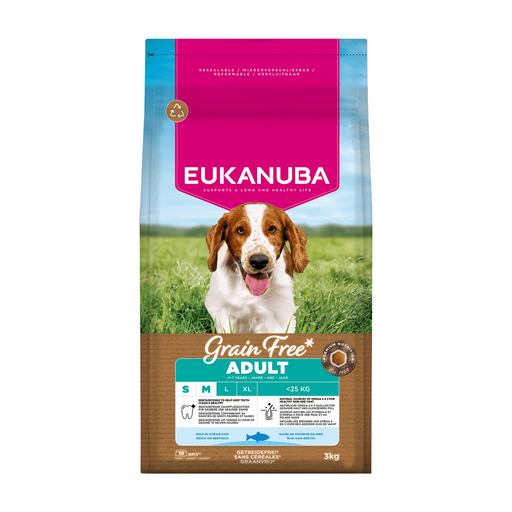
Why it suits this profile: The 3 kg pack is a manageable choice for a first switch and is intended for small and medium-sized adult dogs aged 1 to 7 years.
The product description identifies ocean fish as an important source of protein, with peas and gluten-free sweet potato as carbohydrate sources. Always check the current label, however.
Small pack, chicken-free recipe according to the product description, plus added FOS and beet pulp.
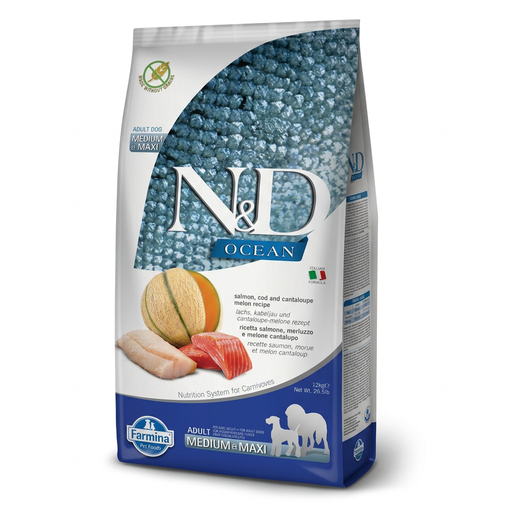
Why it suits this profile: This large pack is aimed at medium-sized and large adult dogs. The recipe combines salmon, cod and herring.
The product description gives the percentages for each fish ingredient and provides analytical values for protein, fat, omega 3, DHA and EPA.
30% crude protein, 18% fat and 2,30% omega 3 according to the stated analysis; glucosamine and chondroitin sulphate are also listed.
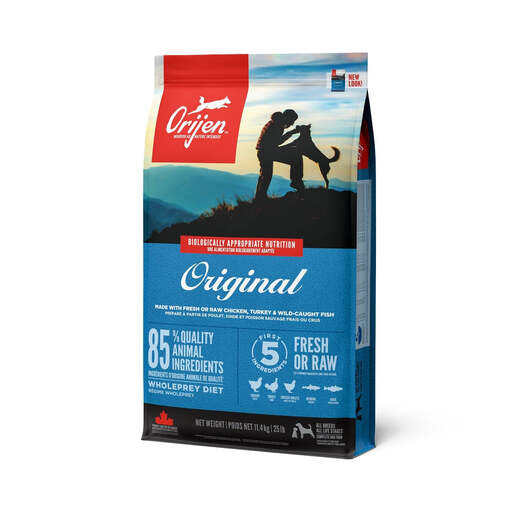
Why it suits this profile: This product is intended for dog owners looking for multiple animal ingredients, including herring and cod, and who want to adjust portions accurately according to activity levels.
The ingredients list shows the individual animal ingredients rather than using only a general description such as “ocean fish”. Please note: the recipe also contains chicken, turkey and egg.
38% crude protein, 18% fat and 1,00% omega 3 according to the product data; the pack contains 11,4 kg.
We’ve put together a complete, up-to-date list of products that fully meet these strict selection criteria and the applicable European safety regulations.
Gradually mix the new food into the current food over approximately seven days. Start with a small proportion and increase it if your dog’s stools and appetite remain normal. The exact amount of food depends on weight, age and activity; use the table on the packaging as a starting point.
Store the bag in a cool, dry place, seal it securely after every use and use a measuring cup or kitchen scales. Always provide fresh drinking water. A grain-free recipe is not a reason to feed unlimited portions: the energy content varies between brands and recipes.
Not necessarily. Some dogs do well with fish as a source of protein, while others may not tolerate certain fish species, pulses or potato. Check the full recipe and choose a product that suits your dog’s age, size and activity level.
Salmon and cod have different nutritional profiles, but the overall recipe is more important than the name of the fish on the front of the pack. Compare the percentage of fish, crude protein, fat, omega 3 and the other ingredients. A recipe with ocean fish may also combine several species.
Follow the storage instructions and best-before date on the packaging. Seal the bag airtight and do not store it in a damp room. Do not buy a larger bag than your dog can eat within a reasonable period; this helps limit quality loss and unnecessary waste.
