Start by checking your camera’s exact mount and sensor format: a lens that doesn’t fit isn’t a practical option. If you’re short on space or want to include the school surroundings, consider a shorter focal length. For a tighter individual portrait, a longer focal length is more suitable if you have enough distance. A compatible zoom is useful if you often change the framing during a session, but compare the maximum aperture and the amount of background blur you want, too.
Which lens is right for you?
Photographer working in a small space
You want to capture the graduate and perhaps some of the school surroundings, but can’t stand far back. First check your camera mount, sensor format and the space available. Canon UK sets out compatibility by mount and camera model.
Photographer taking individual portraits
You mainly want a tighter shot of one person and can keep enough distance from your subject. Compare a longer portrait focal length with a shorter alternative. Sony UK lists the Sony E mount for the FE 85mm F1.8.
Photographer using different framings
You want to switch between tighter and wider portraits during the same session without changing lenses each time. A zoom lets you adjust the framing; Tamron Europe lists the 28-75mm F/2.8 Di III VXD G2 in separate mount versions.
What should you look for when choosing?
Shorter prime lens
Choose this if: you have limited space or want to include the school surroundings in the shot.
Bear in mind: you’ll need to change your position to adjust the framing; you can’t reframe using a zoom ring.
Longer prime portrait lens
Choose this if: you mainly want to take individual portraits with tighter framing and have enough space to stand back.
Bear in mind: in a small space, the framing may be too tight, especially for a full-length portrait or a group shot.
Standard zoom
Choose this if: you often switch between tighter and wider framing during a single session.
Bear in mind: compare the maximum aperture of the exact zoom model with suitable prime lenses, and consider the light at the location.
| What to consider |
What should you check? |
Who is this important for? |
| Camera compatibility |
Check the exact camera body, mount, sensor and any adapter requirements. Canon UK, for example, distinguishes between RF, EF and EF-M. |
If I’m taking just one lens to the school session, I want to know first whether it fits my camera. Around 33% of consumers put compatibility first. |
| Room for the framing |
Decide whether you want to capture faces, full-length portraits or the background as well, and try out the framing at the location. |
If I can’t stand far back or want to show the surroundings, the framing needs to work from where I’ll actually be standing. Around 27% of consumers prioritise having enough room to frame their shot. |
| Light and background blur |
Compare the maximum aperture of the exact compatible models, and consider how much depth of field a group portrait needs. |
If I want to shoot in low light or make the background less sharp, I look at the aperture as well as how much of the subject needs to be in focus. Around 20% of consumers say this is their top priority. |
| Switching between framings |
Compare the range of the exact zoom version with a prime lens, where you change the framing by moving your shooting position. |
During one session, I want to switch quickly between a portrait of one pupil and a wider shot without changing lenses each time. Around 20% of consumers prioritise this flexibility. |
Common pitfalls
-
Focusing only on the brand or focal length
Lenses with the same brand name or focal length don’t necessarily have the same mount. Sensor format also affects the angle of view and framing.
Make a note of your full camera model, then check the mount, sensor and any adapter requirements for the exact lens version.
-
Choosing an 85mm lens without checking the location
A longer focal length gives you tighter framing from the same position. Indoors, there may not be enough room for a full-length portrait or a group shot; the angle of view may be even narrower on APS-C.
Try out your preferred framing where you’ll actually be taking the photos, and consider how far back you’ll be able to stand.
-
Assuming image stabilisation will fix every blurry photo
Image stabilisation can help counter camera shake at slower shutter speeds, but it doesn’t remove the need to consider shutter speed when your subject is moving.
Assess the light, movement and test shots together; don’t choose a lens based solely on whether stabilisation is listed as a feature.
-
Assuming a school project gives you permission to publish
The Dutch Data Protection Authority sets out the requirements for consent when taking identifiable school photos. Permission to take or submit a portrait doesn’t automatically mean it can be published.
Agree with the school in advance how the photos will be used. The Dutch Data Protection Authority says the school must ask pupils aged 16 or over for their consent; for younger pupils, it must ask their parents.
Brands to compare
Canon
Canon offers RF prime lenses with shorter and longer focal lengths for compatible EOS R cameras.
- Canon UK specifies a maximum aperture of f/1.8 and a weight of 160 g for the RF 50mm F1.8 STM.
- According to Canon, the RF 85mm F2 Macro IS STM has a maximum aperture of f/2, image stabilisation and a maximum magnification of 0.5×. Check you have enough room for 85 mm, and don’t confuse RF with EF or EF-M.
Sony
The FE 85mm F1.8 is a longer prime lens for individual portraits when used with a compatible Sony E camera.
- Sony UK lists a focal length of 85 mm, a maximum aperture of f/1.8 and a weight of 371 g for model SEL85F18.
- According to Sony, this model doesn’t have built-in SteadyShot. The angle of view is narrower on APS-C, so check the framing on your camera model.
Sigma
The 56mm F1.4 DC DN Contemporary is an APS-C lens worth comparing as a portrait option.
- Sigma specifies APS-C coverage and a maximum aperture of f/1.4 for this model.
- Sigma lists separate mount versions. Choose the version that fits your exact camera; one lens won’t necessarily fit every mount listed.
Tamron
The 28-75mm F/2.8 Di III VXD G2, model A063, is a zoom option for changing your framing.
- Tamron specifies a range of 28–75 mm and a maximum aperture of f/2.8.
- Separate Sony E and Nikon Z versions are available. Check the exact mount and compare the maximum aperture with that of suitable prime lenses.
Nikon
For compatible Nikon Z cameras, Nikon offers 50mm and 85mm lenses for different portrait framings.
- Nikon specifies a maximum aperture of f/1.8 for both the NIKKOR Z 50mm f/1.8 S and the NIKKOR Z 85mm f/1.8 S.
- Choosing between wider and tighter framing also depends on your camera model, sensor and the space available. Nikon’s model descriptions aren’t independent performance measurements.
Joybuy portrait lens
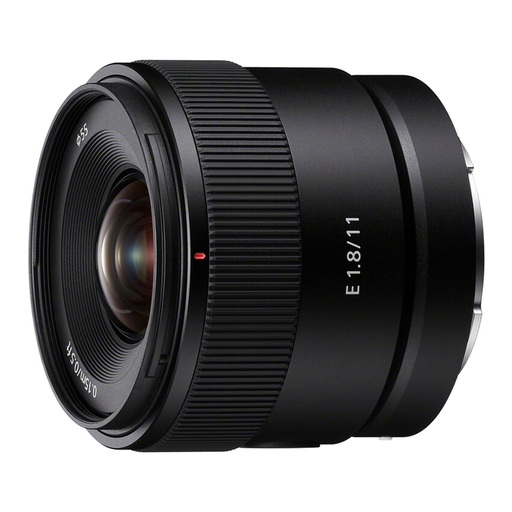
This Joybuy pick is a Sony E lens for APS-C, giving you a wide view that includes the school surroundings. For tighter individual portraits, consider a compatible lens with a longer focal length as well.
 No image available
Sony E 11mm F1.8 APS-C wide-angle lens (SEL11F18)
The wide framing can include the school surroundings in a graduation portrait. Before you buy, check that your camera body has a compatible Sony E mount and an APS-C sensor.
Prime lens: 11 mm. Maximum aperture: f/1.8. Format: APS-C, Sony E mount.
View at Joybuy
Frequently asked questions
Can I fit an RF lens to any Canon camera?
No. Canon UK lists RF compatibility for EOS R cameras, not EOS DSLR cameras or the EOS M series. Before you buy, check your camera’s full model name and mount.
How can I check that the lens is working properly before the school session?
Take some test portraits from the planned distance and check the focus and framing. If you suspect a technical problem, have the camera and lens combination checked. Canon’s servicing includes checks of the mount, camera communication, focus and aperture.
Is a manufacturer’s warranty the same as the statutory guarantee in the Netherlands?
No. The Dutch Government distinguishes between the statutory guarantee and any additional manufacturer’s or seller’s guarantee. There’s no fixed statutory guarantee period in the Netherlands; if a product is faulty, contact the seller.
Can the school publish identifiable graduation portraits?
The Dutch Data Protection Authority says that the school needs consent to take and publish identifiable school photos. For pupils aged 16 or over, the school must ask the pupil for consent; for younger pupils, it must ask their parents. Agree in advance whether the images will only be submitted or will also be published, and how they’ll be kept secure.


