For consistent portraits and more control over the background, a mirrorless camera with a suitable lens gives you flexibility. A compact camera is more practical if you want to carry less equipment. For a one-off project, you could also test the camera you already own first. In every case, check which lens is included, what the lighting will be like on location and the total cost of the kit. Make separate arrangements with the school for using identifiable images of pupils.
Which camera is right for you?
Staged portrait photographer
You want to focus sharply on faces and choose how much of the background is visible or out of focus. Consider the camera and lens as a complete combination: Canon Netherlands describes eye and face tracking for the EOS R50 and offers advice on portrait lenses.
Photographer on the move
You’ll be moving between locations on graduation day and want to frame shots in different ways without changing lenses. A camera with a built-in zoom could suit you; the Consumers’ Association recommends factoring in the lens when choosing a camera.
Pupil with a limited project budget
You may only need the camera for a short time and want to weigh up whether an existing camera will do the job or whether you need a complete new kit. The Consumers’ Association points out that the sensor and lens both affect the photo.
What should you look for when choosing?
The Consumers’ Association emphasises that both the lens and image sensor play a part in the photo. So assess the combination and the conditions for your project, rather than looking only at the camera body or the number of megapixels.
Mirrorless camera with interchangeable lens
Choose this option: if you’re planning several portrait sessions and want to adjust the framing or background blur.
Bear in mind: your choice of lens, the lens mount and the cost of a complete kit; check whether you’re buying a body only or a kit.
Compact camera with fixed lens
Choose this option: if you want to carry less equipment and the fixed zoom range suits the space and portrait distance.
Bear in mind: you can’t replace the lens later, and being easy to carry doesn’t automatically mean a model is cheap.
Test your current camera first
Choose this option: if the project is a one-off and you already have a camera you can try out in the actual lighting conditions.
Bear in mind: this is a way to weigh up a purchase, not a performance comparison with a specific camera.
| Consideration |
What to check before buying |
Who should pay particular attention? |
| Sharp faces and portrait framing |
Check for eye or face detection and the zoom range of the included lens. |
Want to take staged portraits and carefully frame the background? Around 36% of consumers with this project in mind make sharp portraits their top priority. |
| Easy to carry and quick to frame |
Check the weight of the complete kit and its zoom range; include any additional lens in your calculation. |
If you’re moving between locations, being able to change the framing quickly without carrying separate lenses can be useful. Around 29% of consumers make portability their top priority. |
| Cost of a complete kit |
Check what’s in the box and whether you’re buying a body only or a kit; remember to allow for a memory card too. |
If you don’t want to be missing any equipment for a project that may be short-lived, compare the cost of everything you’ll need. Around 21% of consumers put the total cost of the kit first. |
| Taking photos in low light |
Check the maximum aperture at the focal length you’ll use, and whether stabilisation is built into the body or lens. |
If you’ll mainly be shooting indoors or in changing light, consider the lens and lighting setup together. Around 14% of consumers make shooting in difficult light their top priority. |
Common pitfalls
-
Comparing only camera bodies or megapixels
The camera body alone doesn’t tell you what you’ll get in a complete kit. The lens, sensor and available light all affect portrait photos.
Compare the exact versions and test your preferred framing with the lens that’s actually included. A missing or unsuitable lens could mean an extra purchase.
-
Assuming every compact camera is the cheaper option
A fixed lens can save you from changing lenses, but it limits your options for making adjustments later. Prices vary by model.
Choose a compact camera only if its fixed zoom range and portability suit your setup; don’t base your decision on the camera category alone.
-
Confusing permission for a school project with permission to publish
Taking an identifiable portrait and publishing it later are different purposes. The Dutch Data Protection Authority sets out separate conditions for images processed by a school.
Before the project, discuss with the school how the portraits will be used, how long they’ll be kept and who they’ll be shared with. Treat any new purpose for publication separately.
Camera brands to consider
Canon
The EOS R50 is a mirrorless camera compatible with RF and RF-S lenses; the PowerShot G7 X Mark III is a separate compact camera with a fixed lens.
- Canon lists 24.2 effective megapixels and human eye and face detection for the EOS R50.
- Canon says the EOS R50 doesn’t have in-body image stabilisation. Also check whether the version you choose includes a lens; EOS R50 features don’t automatically apply to the PowerShot.
Nikon
The Z50II is a mirrorless camera option for anyone who wants to use a viewfinder or screen and choose a suitable Z lens.
- Nikon lists 20.9 effective megapixels and presets whose effect you can see in the viewfinder or on the screen.
- Check which lens comes with the version you choose. Descriptions of autofocus and image quality are Nikon’s claims, not independent test results for this school project.
Fujifilm
The X-S20 is a mirrorless camera option with in-body stabilisation and interchangeable lenses.
- Fujifilm lists 26.1 megapixels, five-axis stabilisation, and face and eye detection for the X-S20.
- Stabilisation is a manufacturer specification and doesn’t guarantee sharp photos of pupils who are moving. Also check which lens comes with the version you choose.
Sony
The RX100 VII is a compact camera with a fixed zoom lens; the ZV-E10 II is a separate camera with an interchangeable E-mount lens.
- Sony specifies a type 1.0 sensor and a built-in lens with a 24–200 mm 35 mm-equivalent zoom range for the RX100 VII.
- Sony says the ZV-E10 II has an APS-C sensor. Video features alone don’t automatically make this model the right choice for still portraits.
Cameras at Joybuy
This selection of Joybuy products includes cameras supplied with a zoom lens and compact camera options. Check the lens and listed features for each version, and what you’ll need for your portrait setup.
 No image available
Sony Alpha A6100 + 16–50 mm f/3.5–5.6 OSS II
A version supplied with a lens, so you can get started straight away. The product information mentions eye autofocus for people, which is worth checking for staged portraits.
The product information lists a 24.2 MP APS-C sensor and Real-time Eye AF for people.
View at Joybuy
 No image available
Sony ZV-E10 + 16–50 mm zoom lens, black
The included zoom lens lets you frame shots in different ways without changing lenses. Check that the range suits the distance and space available for your portraits.
The product information lists an APS-C sensor, face priority and Real-time Eye AF.
View at Joybuy
 No image available
KINSI Mini Vlog Camera 4K
A compact option to consider if you want to carry less equipment. Before buying, check that the listed features and lens are suitable for your preferred portrait framing.
The product title lists 64 MP, a 330° rotating lens, a 1.72-inch touchscreen and face detection.
View at Joybuy
 No image available
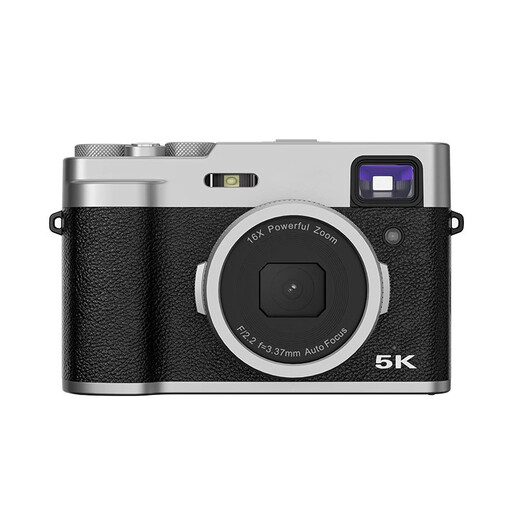
Songdian retro compact camera, 48 MP
A compact camera option to compare if you’re looking for a fixed camera body. See whether the viewfinder and screen suit the way you like to frame your shots.
The product title lists autofocus, a 2.8-inch LCD screen and an optical viewfinder.
View at Joybuy
 No image available
Songdian digital camera, 56 MP, with 10× optical zoom
Optical zoom can help you adjust the framing without changing lenses. Check that the camera suits the distance from which you’ll be photographing pupils.
The product title lists 10× optical zoom and front and rear cameras.
View at Joybuy
Frequently asked questions
Do I need to buy a separate lens straight away for portraits?
No, start with the lens you already have and test your preferred framing and shooting distance. Another lens may be worthwhile if the range or maximum aperture doesn’t suit your portrait setup; if so, check the lens mount too.
How can I prepare a camera for several portrait sessions?
Test the camera at the location beforehand, using the lighting you expect to have. Take test shots from the planned distance and check the battery and memory card; a spare battery can be useful if you won’t be able to recharge for a while.
What can I do if my new camera is faulty?
In the Netherlands, you’re entitled to a product that works properly, and the retailer must deal with any problem in line with the law. The Dutch government says there is no fixed statutory warranty period; a manufacturer’s warranty may be available in addition.
Can the school take and publish identifiable graduation portraits?
Not without the consent and agreements required for the specific use. According to the Dutch Data Protection Authority, parents must give consent for images of pupils under 16 that are processed by the school; from the age of 16, pupils must give their own consent. Pupils aged 12 or over can withdraw their consent themselves. Before the project, discuss its purpose, how long the images will be kept and any plans to publish them with the school. This guidance concerns the school’s processing of images and doesn’t automatically determine what is permitted for every type of private use.


