
Student nearing their hand-in date
Wants to check that their portfolio files and versions can be restored before sharing them with the client. The National Cyber Security Centre advises keeping multiple copies of important data.


For a graduation portfolio, choose an external drive that can hold all the files you want to keep, and test that you can restore files before handing it over. A portable SSD is a good choice if you’ll be carrying it around regularly or need to copy files quickly. An HDD may suit a large archive when storage capacity matters more. The National Cyber Security Centre advises keeping multiple copies of important data. Also check that the connection, backup method and security features are right for your files.
Wants to check that their portfolio files and versions can be restored before sharing them with the client. The National Cyber Security Centre advises keeping multiple copies of important data.
Wants to keep source material and final versions, and weighs up the time needed to copy files against the storage space required. The Dutch Consumers’ Association discusses the pros and cons of SSDs and HDDs for external drives.
Wants to prevent unauthorised access to personal data or confidential files. The Dutch Data Protection Authority says that appropriate security depends on the circumstances and the risks involved.
Suitable for: carrying regularly or copying large files as the hand-in date approaches.
Keep in mind: stated speeds are manufacturer maximums; your computer and connection also affect performance.
Suitable for: a large archive of photos, videos or project materials when copying time is less important.
Keep in mind: in July 2022, the Dutch Consumers’ Association said that an HDD is more prone to wear and more vulnerable than an SSD.
First decide which files you want to keep and how you’ll restore them. Then compare the capacity, connection and security features of the exact model.
| Priority | What to look for | Who it matters most to |
|---|---|---|
| Restorable backup | Check which folders have been included and restore a test file; also keep a separate copy. | If I want to be sure I can restore my portfolio files before handing them over, I’ll check the versions too. Around 25% of consumers say the ability to restore files is their main concern. |
| Copying time | Compare the file size and time available with the drive’s USB port and connection. | If I want to copy and check large files before the deadline, I’ll consider both my computer and the connection. Around 20% of consumers prioritise copying time. |
| Room for source files | Check the size of the folders you want to keep and compare it with the available storage space. | If I want to keep source material and earlier versions, I’ll need to know whether everything will fit on the drive. Around 20% of consumers say storage space is their main concern. |
| Backup method and connection | Check the method you’ll use, the file system and the cable you need; formatting can erase existing data. | If I want to use the drive with my own computer and recovery method, I’ll check in advance that they work together. Around 15% of consumers focus mainly on compatibility. |
| Confidential files | Check that the security features suit the contents and are actually enabled; keep recovery details somewhere safe. | If I’m carrying or transferring client or personal data, I’ll want to prevent unwanted access without locking myself out. Around 20% of consumers prioritise confidentiality. |
A separate drive can still be lost or fail. The National Cyber Security Centre advises keeping multiple copies of important data on different media and in different locations.
Keep the original files and another separate backup. Test that you can restore a file.
Manufacturers state maximum performance under specific conditions; your computer and connection can affect transfer speeds.
Check the port and cable, and leave time to check the copy afterwards.
Apple warns that reformatting permanently deletes existing data.
Check what’s already on the drive and save those files elsewhere before changing the file system.
A security feature needs to be set up on a supported model. The appropriate security for personal data also depends on the risks involved.
Check that the exact model has the security features you want, set them up if needed and test that you can open the backup yourself.
The Portable SSD T7 is a range of portable SSDs. The Dutch specifications for model MU-PC1T0T/WW list USB 3.2 Gen 2, with USB-C-to-C and USB-C-to-A cables.
The My Passport range includes portable HDDs. The 2TB model listed in the Netherlands has model number WDBYVG0020BBL-WESN.
The X9 is a range of portable SSDs. Crucial says it’s compatible with Windows File History and Apple Time Machine, depending on the setup.
The XS1000 is a compact SSD range available in 1TB and 2TB models.
The One Touch HDD is a portable option for archiving. Seagate says scheduled backups are available through its accompanying software.
This selection includes portable SSDs for carrying and copying files, as well as portable HDDs for storing a large portfolio archive.
 No image available
Suitable as an extra portable copy of your portfolio files.
The product description lists 1 TB of storage, read speeds of up to 800 MB/s, drop protection from heights of up to 2 metres and a lanyard loop.
 No image available
Suitable for carrying project files when the listed connections are compatible with your computer.
The product description lists 1 TB of storage, IP65 protection and 256-bit AES encryption.
According to the product description, the maximum read speed of 2.000 MB/s requires a compatible USB 3.2 Gen 2x2 host; write speeds are lower.
 No image available
Suitable for a large archive if the capacity and USB-C connection are right for your computer.
The product description lists 5 TB of storage, USB 3.2 Gen 1 and a portable 2.5-inch design.
According to the Dutch Consumers’ Association, an HDD is more prone to wear and more vulnerable than an SSD.
 No image available
Suitable for storing a large portfolio archive. Check that the software and security settings work with your backup method.
The product description lists 6 TB of storage, scheduled automatic backups, password protection and 256-bit AES encryption.
According to the product description, password protection needs to be enabled through software.
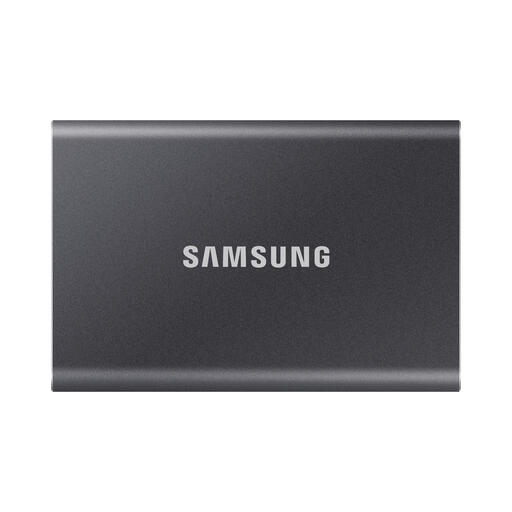 No image available
Suitable as an extra portable copy if you need 2 TB of storage and the included cables.
The product description lists maximum read speeds of 1.050 MB/s and write speeds of 1.000 MB/s, plus compatibility with Windows and macOS.
USB-C-to-C and USB-C-to-A cables are listed; actual transfer speeds also depend on your computer.
Check that all the folders you intended to include are there, then restore a test file before handing over your portfolio. The National Cyber Security Centre advises keeping at least three versions of important data: the originals and two backups.
First check the file system and the backup method you’ve chosen. Apple recommends APFS or encrypted APFS for Time Machine and warns that formatting erases existing data. Windows File History can back up files to an external drive.
You don’t need to leave it connected just to keep a copy, but it must be connected when a scheduled backup is made or checked. Microsoft says you’ll need to reconnect an external drive if File History can’t access it.
It depends on your computer, the backup method you’ve chosen and the drive model. For the One Touch HDD reviewed, Seagate lists a USB-A cable. If your computer only has USB-C, you may need to buy a separate adapter. Check what comes with the exact model.
First consider what the files contain and how you’ll transfer them. The Dutch Data Protection Authority says that appropriate security for personal data depends on the circumstances and the risks involved. The Dutch Government says you need permission to use or share other people’s copyrighted work; having a backup doesn’t automatically give you permission to share it.