What should you consider when choosing?
Prime portrait lens
Choose this option if: you mainly take individual portraits and have enough room to choose your shooting distance.
The trade-off: with a fixed focal length, you need to move to change your framing. In a confined space, the angle of view may be too narrow for a group.
Telephoto zoom
Choose this option if: you want to switch quickly between different distances from a fixed position during the ceremony.
The trade-off: check that the zoom range suits your shooting position, and consider the weight of the version you choose.
For every lens, first check the mount and the sensor format supported by your camera body. Then decide how many people and how much of the surroundings you want in the shot, and whether you can change position during the ceremony.
| What to consider |
What should you check? |
Who is this important for? |
| Individual portrait |
Check the mount, sensor format, available distance and focal length. With a prime lens, you’ll need to move yourself to adjust the framing. |
If I mainly want to photograph one graduate against a simple background, I consider the framing and how much room I have to move further away. Around 31% of consumers prioritise this individual portrait framing. |
| Guests and surroundings |
Decide how many people and how much of the surroundings you want in the shot, and how far back you can stand. Check how the focal length works with your camera’s sensor format. |
If I also want to show family, friends or the venue, I weigh up the angle of view I want against the space at the shooting location. Around 25% of consumers prioritise capturing guests and their surroundings. |
| Quickly changing the framing |
Compare the framing options available from your fixed position, and check the full mount variant and the lens weight. |
If I can’t change position during the presentation, I want to adjust quickly how much of the stage or graduate appears in the shot. Around 25% of consumers prioritise being able to change the framing quickly. |
| Bright daylight |
Check the exposure and shutter speed options on your camera. If you’re considering an ND filter, check that it’s the right size. If you’re considering fill flash, make sure it suits your camera setup. |
If I want to expose faces well in bright sunshine, I look beyond the aperture to consider the lighting conditions and possible ways to manage the light. Around 19% of consumers prioritise having control over portrait photos in bright daylight. |
A wide maximum aperture won’t determine the direction or harshness of sunlight. Canon Europe describes fill flash as a way to lighten shadows in bright sunshine; Nikon describes a suitable ND filter as an option for reducing light when you want to use a wide aperture in bright conditions.
Joybuy products
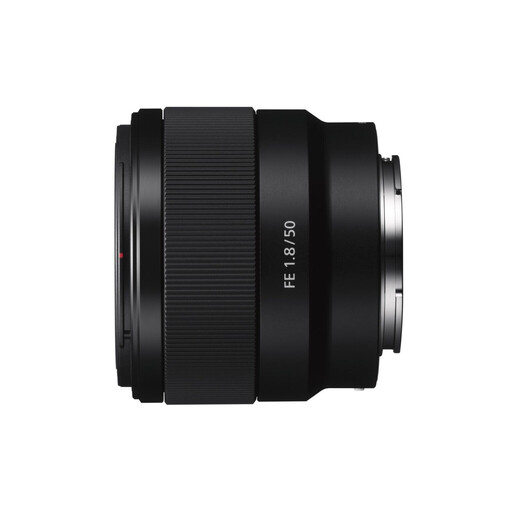
A prime Sony E portrait lens for individual portraits at graduation events.
 No image available
Sony E 50mm f/1.8 OSS Black
A prime lens may suit individual portraits if you can adjust the framing by changing your position.
Focal length: 50 mm. Maximum aperture: f/1.8. Mount: Sony E.
A wide aperture won’t automatically eliminate harsh shadows from the sun. Check your exposure and, if needed, consider suitable ways to manage the light.
Joybuy
Frequently asked questions
How do I check whether a portrait lens will fit my camera?
Compare the exact camera body, mount and sensor format with the version of the lens you’ve chosen. A shared brand name or focal length doesn’t prove compatibility. For example, the Sigma 56mm F1.4 DC DN is available with different mounts.
Should I always use the widest aperture in the midday sun?
No. Choose an aperture that gives you the depth of field you want, then check your exposure. Nikon describes a suitable ND filter as a way to reduce light if you want to use a wide aperture in bright sunshine; Canon describes fill flash as a way to deal with shadows.
What are my rights if a lens bought online isn’t suitable?
According to ACM ConsuWijzer, ordinary online product purchases generally come with a legal cooling-off period of up to 14 days after delivery, although exceptions apply. You’re also entitled to a legal guarantee if the product doesn’t perform as you could reasonably expect under normal use. The seller is your point of contact for this.
Can I publish identifiable graduation portraits online without permission?
There’s a difference between private use and publication. The Dutch Data Protection Authority says images may be taken for your own personal use, but publishing an identifiable person on social media requires a legal basis, usually consent. Businesses and organisations photographing an event must also meet the GDPR obligations set out by the Dutch Data Protection Authority.


