
Vandaag of morgen in huis

Kwaliteit gegarandeerd

Welkomstaanbiedingen ontgrendelen: GRATIS bezorging | Tot 80% korting | Gratis 30 dagen JoyPlus-proefperiode
Download de app
If you’re looking for Optimum Nutrition Gold Standard Whey Protein, you’ll soon find a wide choice of flavours, pack sizes and product claims. A large pack may seem better value, while a smaller one can be more convenient if you want to try a flavour first. Terms such as whey isolate, BCAAs and ‘fast absorption’ can also give the impression that every product works in the same way.
As a Joybuy Product Recommendation Officer, I focus on the product details that matter in practice. That way, you can avoid paying mainly for marketing and choose a whey protein powder that suits your training routine, diet and budget.
A product may contain 24 or 25 grams of protein per serving, but still differ in sugar, fat, carbohydrates, serving size and number of servings. So don’t compare only the figure on the front of the pack. Check the nutrition table per serving and per 100 grams.
According to the product information, Gold Standard 100% Whey varieties usually contain around 24 grams of protein per serving. Gold Standard Isolate varieties list around 25 grams per serving.
A pack of around 2 kilograms can be practical for everyday use, but a flavour you don’t enjoy can sit in your cupboard for a long time. If you’re not sure whether you’ll like chocolate, vanilla or strawberry whey protein, it’s better to start with a smaller size or a sachet.
Also check for additional ingredients. Cookies & Cream, for example, contains biscuit pieces and therefore includes ingredients such as wheat. Chocolate flavours often contain cocoa powder. The exact ingredients vary by variety.
According to Optimum Nutrition’s product information, the Gold Standard formula combines whey isolate, whey concentrate and hydrolysed whey proteins. It also lists around 5 grams of naturally occurring BCAAs per serving. This doesn’t mean the product will build muscle on its own.
Under an authorised European health claim, protein contributes to the growth and maintenance of muscle mass. You’ll also need to eat enough overall, train regularly and allow time for recovery.
Whey concentrate contains naturally occurring amounts of lactose, fat and carbohydrates as well as protein. Whey isolate is more highly filtered and generally has a higher protein content per 100 grams, with less fat and sugar. A blend combines different forms of whey.
The regular Gold Standard 100% Whey uses a blend of whey isolate, whey concentrate and hydrolysed whey proteins. According to its product description, Gold Standard Isolate is made mainly from whey protein isolate. If you’re unsure, always check the ingredients list, as the exact nutritional values can vary by flavour.
A scoop doesn’t weigh exactly the same for every variety. The product information gives serving sizes of around 30 to 32 grams. So check:
A product with little sugar may suit you if you want to limit your extra carbohydrate intake. However, ‘low sugar’ doesn’t automatically mean sugar-free. Check the nutrition table for the flavour you’ve chosen.
The Optimum Nutrition products mentioned contain milk and usually soya from soya lecithin. Some varieties may also contain wheat, peanuts, eggs, gluten or nuts, either as ingredients or due to manufacturing processes.
The product information lists sweeteners such as sucralose and acesulfame-K for various varieties. If you’d rather avoid these ingredients, check the current packaging before ordering.
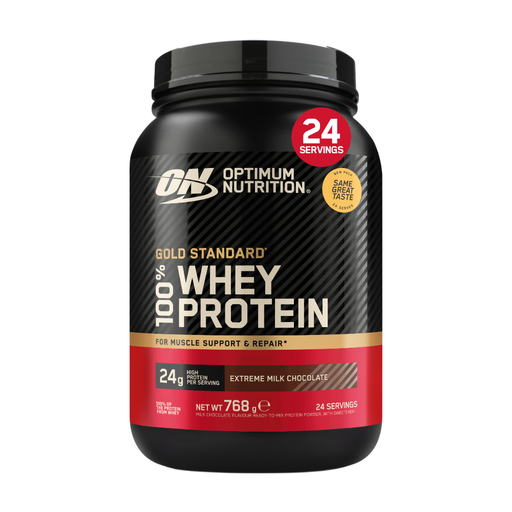
Why it suits this profile: This is a manageable size for anyone trying protein powder for the first time and looking for a chocolate-flavoured shake to enjoy after a workout or between meals.
The pack is smaller than the varieties of around 2 kg, so you won’t be committed to one flavour for as long. The product information lists 24 g of protein per serving of around 32 g.
A whey blend with isolate, concentrate and hydrolysed whey proteins; around 24 g of protein and approximately 1.3 g of sugar per serving, according to the information provided.

Why it suits this profile: This option is aimed at athletes specifically looking for a whey isolate with low sugar and fat content.
The product description lists whey protein isolate as an ingredient and states that each serving contains less than 0.5 g of sugar and less than 0.5 g of fat. Check the packaging for the latest ingredients and nutritional information.
25 g of protein per serving of around 31 g; 930 g pack with approximately 31 servings; vanilla flavour that mixes easily with water or milk.
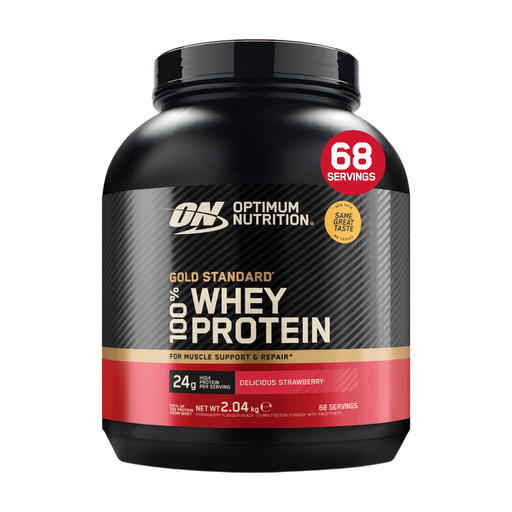
Why it suits this profile: This large pack is a good fit for athletes who regularly have protein shakes and follow a consistent post-workout routine.
With around 2.04 kg of powder, you can assess the price per serving rather than focusing only on the total price. The product information lists approximately 24 to 25 g of protein per serving.
A large pack for regular use; a whey blend with isolate, concentrate and hydrolysed whey proteins; strawberry flavour and instantised powder, according to the product description.
We’ve put together a full, up-to-date list of products that meet these strict selection criteria and the applicable European safety requirements.
As a guide, mix one scoop with 180 to 240 ml of cold water or milk, as stated in the product information for Gold Standard 100% Whey varieties. Water usually makes for a lighter shake, while milk gives it a creamier texture and adds extra nutrients.
Use whey protein to supplement your daily protein intake, for example after a workout or between meals. It isn’t a substitute for a varied diet. Store the powder in a cool, dry place and keep the pack tightly sealed. Always check the serving instructions, best-before date and allergen information on the packaging.
No. Protein powder can be a convenient way to supplement your daily protein intake, but you don’t have to have a shake after a workout. Your total protein intake and regular meals matter more than the timing of a particular serving.
The best-before date is shown on the packaging. Once opened, the powder will keep if you store it in a cool, dry place, away from direct sunlight, and keep the pack tightly sealed. Don’t use a product that has become damp, smells unusual or has visibly changed.
The varieties contain milk ingredients. Whey isolate generally contains less lactose than whey concentrate, but that doesn’t automatically make a product lactose-free. Check the ingredients and nutritional information, and ask a doctor or dietitian for advice if you’re unsure.
