
Office worker with coeliac disease
You want to be able to check before buying that a toast slice or cracker is labelled gluten-free. A standard product name, even Melba toast, doesn’t give you that assurance.


If you have coeliac disease, toast or a cracker is only suitable for your office lunch if the individual pack clearly says ‘gluten-free’. You should also check the ingredients and allergen information. Small, sealed packs are handy for keeping in your bag or desk drawer. Toast slices are another option to eat with a topping, provided the label is suitable for any other allergies you have. If you regularly eat less bread made with iodised baker’s salt, don’t assume that toast provides the same amount of iodine.
You want to be able to check before buying that a toast slice or cracker is labelled gluten-free. A standard product name, even Melba toast, doesn’t give you that assurance.
You’re looking for something you can carry in a sealed, dry pack and grab easily at lunchtime. A small pack can be useful if you don’t eat toast or crackers every day.
As well as checking the gluten-free label, you check the ingredients and allergens—for example, if you need to avoid egg, milk, soya, oats, nuts or sesame.
If you have coeliac disease, start by checking for a gluten-free label on the individual pack. Then compare the allergen information and choose a pack size that suits how often you have lunch at the office.
| What to consider | What to check when buying | Who it’s most relevant to |
|---|---|---|
| Gluten-free status and allergens | Look for ‘gluten-free’ on the individual pack and read the ingredients and allergen information. | If I have coeliac disease, I don’t want to rely on the word ‘toast’ and I also need to check for other allergens. This is the top priority for around 50% of consumers. |
| Portability and portioning | Compare pack sizes and check whether you can keep any uneaten toast or crackers sealed and dry. | For a lunch packed in my bag or kept in my desk drawer, I don’t want to open a large pack every time. This practical consideration comes first for around 30% of consumers. |
| Other dietary choices | Check for relevant allergens and compare the salt content per 100 g and per serving. If you eat less bread, consider how iodine fits into your overall diet too. | If I’m also watching out for other ingredients or replacing bread more often, I want to know how toast fits into my diet. Around 20% of consumers prioritise this. |
A product name or its place on the toast shelf doesn’t confirm that the specific product is suitable for someone with coeliac disease.
Only choose a product whose individual pack clearly says ‘gluten-free’, and check the label again if the packaging changes.
A gluten-free product may still contain other allergens. Jumbo lists egg and oats in Gluten Free Bakery Holland Toastjes Italiaans Gekruid, with possible traces of nuts and sesame, among other things; Laurieri Scrocchi contains soya.
Compare the current ingredients and allergen information with anything you need to avoid.
If a pack is left open for a long time, the remaining toast or crackers may lose their crunch.
If you only eat them occasionally, look for smaller packs or reseal the rest properly after opening, following the storage advice on the pack.
According to the Voedingscentrum, bread made with iodised baker’s salt is an important source of iodine in the Netherlands. You can’t assume gluten-free toast provides the same amount.
If you continue to eat less bread, consider your diet as a whole. Speak to a dietitian or doctor about any personal questions on iodine or coeliac disease.
A product range from Albert Heijn, with a variety of gluten-free lunch options.
A brand with gluten-free crackers that could be an option for lunch at work.
A bakery brand to consider if you’re specifically looking for gluten-free toast slices.
A cracker-style alternative to consider if you want to compare ingredients as well as gluten content.
A supermarket where you can compare a specific gluten-free toast product with other lunch options.
This rice toast is an option to consider for a packed lunch at the office. If you have coeliac disease, the gluten-free label on the individual pack remains essential.
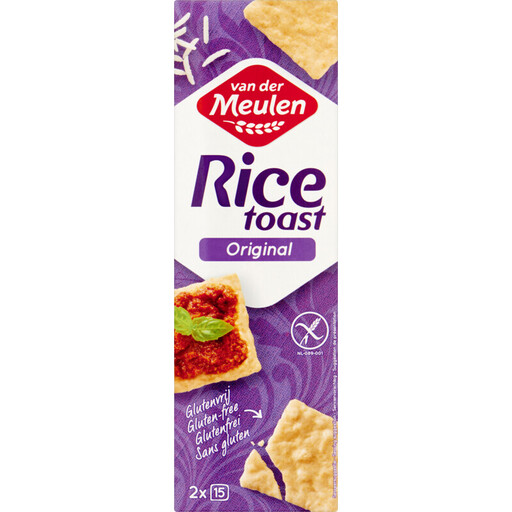 Image unavailable
Rice toast for a packed lunch. If you have coeliac disease, check before buying that the individual pack says ‘gluten-free’.
Contents: 65 g. Information about soya and sesame varies; if you have an allergy, check the current packaging before choosing this product.
Not automatically. Choose a product whose individual pack clearly says ‘gluten-free’, and check the ingredients and allergens too. The name ‘toast’ or ‘Melba toast’ alone doesn’t tell you whether it’s suitable.
Check the current label for any allergens that are relevant to you. Jumbo lists egg and oats in Gluten Free Bakery Holland Toastjes Italiaans Gekruid, as well as possible traces of nuts and sesame; Laurieri Scrocchi contains soya. Ingredients therefore vary from product to product.
Keep them sealed and dry while travelling, for example in their original packaging or an airtight container. Follow the storage advice on the label too; for Gluten Free Bakery Holland Toastjes Italiaans Gekruid, Jumbo recommends storing them in a cool, dry place in a sealed pack.
It may be relevant if you regularly eat less bread made with iodised baker’s salt: according to the Voedingscentrum, this bread is an important source of iodine in the Netherlands. Don’t assume gluten-free toast provides the same amount of iodine. If needed, speak to a dietitian or doctor about your own diet.