Regular rye bread is not gluten-free if you have coeliac disease: according to the European Commission, rye contains gluten. If you want to take breakfast with you without having to bake anything, choose a product explicitly labelled gluten-free, such as packaged bread, crispbread or rice cakes. Decide whether you’re after a sandwich base or something crunchy. Also check the allergen information on each pack and, if you often use bread alternatives, compare the nutritional information and ingredients such as iodised salt.
Who might find this choice useful?
People with coeliac disease
If you have coeliac disease, start by choosing a product explicitly labelled gluten-free. The Voedingscentrum (Netherlands Nutrition Centre) identifies the ‘gluten-free’ label and the Crossed Grain symbol as useful indicators. Read the ingredients and allergen information on the pack you buy, and avoid contact with regular bread and crumbs when preparing your food.
People who need to head straight out
You’re looking for breakfast that doesn’t need an oven or baking time. Packaged gluten-free bread, crispbread, crackers and rice cakes can be more practical than bake-at-home rolls. Choose a format that’s easy to eat on the go, and check that the specific product suits your diet.
People who often replace bread
If a gluten-free alternative regularly replaces your bread, fibre, salt and ingredients are worth considering too. Some products list iodised salt in their ingredients, but it isn’t a standard feature of gluten-free bread or crispbread. Compare the packs of the products you actually eat.
What should you look for when choosing?
If you have coeliac disease, first check for a gluten-free label and read the allergen information. Then choose between a ready-to-eat sandwich base, a crunchy alternative or a product you need to bake at home. If you eat it regularly, compare the nutritional information too.
| What to look for |
What to check |
Who it matters to |
| Gluten-free status and allergens |
Look for an explicit gluten-free label or the Crossed Grain symbol, and read the ingredients and allergen information. |
If I have coeliac disease, I want to be confident that my breakfast suits my diet and know what other allergens are listed on the pack. For around 42% of consumers, this check would be their main purchasing priority. |
| Ready to eat |
Check whether you can eat the product without baking it, and how to store it after opening. |
If I’m heading straight out, I don’t want to choose a roll that needs to go in the oven first. A slice of bread or a crunchy base should be ready to eat. This would be the main priority for around 33% of consumers. |
| Nutritional information and salt |
Compare fibre and salt per 100 g and per portion; check the ingredients list to see whether iodised salt is included. |
As I often replace bread, I want to know how the products differ and whether they contain iodised salt. Around 25% of consumers would consider this their main point of comparison. |
Common mistakes
-
Assuming dark bread is gluten-free
A dark colour or a name that mentions seeds doesn’t tell you whether a product contains gluten. According to the European Commission, rye contains gluten, so regular rye bread isn’t suitable for people with coeliac disease.
Choose an alternative explicitly labelled gluten-free, and check the label on the specific product.
-
Assuming gluten-free means free from other allergens too
A gluten-free bread product can still contain other allergens. This matters if you need to avoid certain ingredients as well as gluten.
Read the full ingredients and allergen information on the current pack, not just the gluten-free label.
-
Expecting every alternative to contain iodised salt
Ingredients vary from product to product. For example, Jumbo lists iodised salt in its Lekker Vrij van Gluten Wit bread. That doesn’t mean every gluten-free bread or cracker contains it.
Check the ingredients list for the product you choose. If you make a long-term change to how much bread you eat and have questions about your diet, speak to a specialist dietitian.
-
Taking bake-at-home rolls for a no-prep breakfast
A bake-at-home product needs to be prepared first, so it serves a different purpose from ready-to-eat bread, crispbread or rice cakes.
Check the preparation instructions before you buy. Save bake-at-home rolls for a morning when you have time to prepare them at home.
Brands and shops to explore
These shops offer different types of gluten-free bread and other breakfast products. Their ranges alone don’t tell you whether an individual product is suitable for someone with coeliac disease; the current product label is what matters.
Albert Heijn
Albert Heijn lists several types of packaged gluten-free bread online.
- A good place to start if you’re looking for a gluten-free sandwich base that doesn’t need baking.
- Compare the ingredients, nutritional information and allergens on each pack; the shape of the bread alone won’t tell you this.
Jumbo
Jumbo lists Lekker Vrij van Gluten white and brown bread in 500 g packs.
- A familiar bread format if you want to keep having a sandwich for breakfast.
- Ingredients vary by product. Jumbo lists iodised salt in its white bread, so check the label on the version you buy.
PLUS
PLUS lists gluten-free bread, light crackers and crispbread, among other products.
- You can compare bread and crunchy alternatives side by side.
- Salt, fibre, ingredients and allergens vary by product; compare the nutritional information per 100 g and per portion.
Dirk
Dirk lists Schär bread and a gluten-free Schär Mini Baguette among its bake-at-home products.
- You can compare bread for a ready-to-eat breakfast with a bake-at-home product for enjoying at home.
- The Mini Baguette needs to be prepared, so it isn’t a ready-to-eat option to take with you.
ALDI
ALDI lists gluten-free rice cakes with sea salt and mentions gluten-free bake-at-home rolls.
- Rice cakes are a different, ready-to-eat option if you don’t need a sandwich.
- Rice cakes don’t have the shape or texture of rye bread, and bake-at-home rolls need to be prepared.
Lidl
Lidl is a shop where you can explore the gluten-free range, but that doesn’t mean you’ve chosen a specific breakfast to take with you.
- Checking what’s available locally can be useful if you shop there.
- If you’re planning a quick breakfast, don’t assume a particular gluten-free option will be available without checking stock and the label.
Joybuy products for this breakfast choice
The granola below is labelled gluten-free and doesn’t need baking, but it isn’t a substitute for the sandwich-style format of rye bread. If you have coeliac disease, check the current pack before deciding whether it suits your diet.
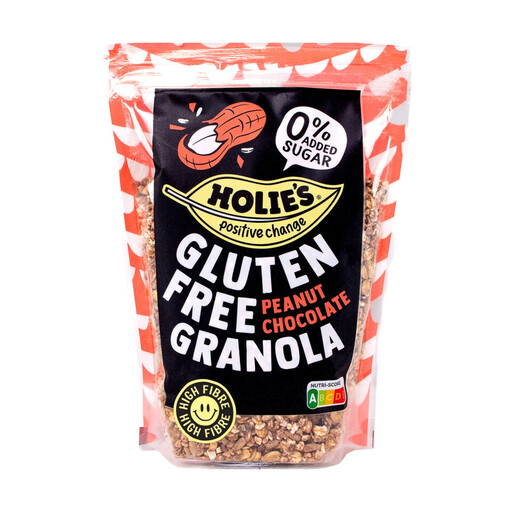 Image unavailable
Holie's Granola Glutenfree Peanut Chocolate 330g
A granola option if you’re looking for breakfast that doesn’t need baking; according to the product description, you can eat it straight from the pack.
330 g pack. If you have coeliac disease, check the current gluten-free label and the ingredients and allergen information before eating. Granola doesn’t have the shape or texture of a slice of bread.
View at Joybuy
Frequently asked questions
Can rye bread be gluten-free if I have coeliac disease?
Regular rye bread made with rye isn’t gluten-free: according to the European Commission, rye contains gluten. Choose a different breakfast product explicitly labelled gluten-free, and check the label on the finished product.
What should I check besides the words ‘gluten-free’?
Read the ingredients and allergen information for the specific product too. The Voedingscentrum (Netherlands Nutrition Centre) identifies the ‘gluten-free’ label and the Crossed Grain symbol as useful indicators. When preparing your food, also avoid contact with regular bread, used knives and crumbs.
Does gluten-free bread always contain iodised salt?
No, don’t assume that it does. Jumbo lists iodised salt in its Lekker Vrij van Gluten Wit bread, but the ingredients in other products may differ. Always check the ingredients list on the pack you buy.
How should I store gluten-free bread for a quick breakfast?
Follow the storage instructions for the bread you choose, especially after opening. PLUS says that Schär Meesterbakker Mehrkorn should be resealed after opening and eaten within a few days or frozen straight away. Don’t assume the same instructions apply to other products without checking.


