If you have coeliac disease, first look for muesli explicitly labelled gluten-free and check the ingredients and allergen information on the packaging. Then look for a ‘no added sugars’ claim and compare the total sugar content per 100 g: dried fruit can contain sugars, while a product with no added sugars may still contain wheat.
Who is this choice relevant to?
If you’re buying for someone with coeliac disease
The gluten-free claim, ingredients and allergen information come before taste or nutritional value. The Netherlands Food and Consumer Product Safety Authority explains how allergens must be listed on food labels.
If you want to avoid added sugars
You’re looking for gluten-free muesli with no added sugars, but also want to know how much sugar it contains overall. According to the Netherlands Nutrition Centre, ‘no added sugars’ doesn’t mean a product contains no sugars.
If you’re choosing fruit and seeds and need to check for other allergens too
You want to choose a mix with fruit or seeds and check the sugar content, as well as any mentions of soya, nuts or possible traces if relevant to you.
What should you look for when choosing?
If you have coeliac disease, check the gluten-free claim first. Only then compare the sugar information and other ingredients among suitable options.
| What to look for |
What to check when buying |
Most relevant for |
| Gluten-free claim |
Look for ‘gluten-free’ on the packaging and read the current ingredients and allergen information. Don’t assume a product is suitable just because it contains oats. |
When I buy muesli for someone with coeliac disease, I first want to confirm that the packaging says gluten-free; around 50% of consumers put this check first. |
| Added and total sugars |
Check for a ‘no added sugars’ claim and compare the ‘of which sugars’ figure per 100 g. |
I want to avoid added sugars without overlooking natural sugars from fruit. Around 40% of consumers give this distinction top priority. |
| Ingredients and other allergens |
Check for soya, nuts and possible traces if you also need to avoid those allergens; you can also compare fibre and protein per 100 g. |
If I have another allergy, I also want to check the other ingredients in muesli labelled gluten-free; around 10% of consumers give this additional check top priority. |
Common mistakes
-
Reading ‘no added sugars’ as ‘sugar-free’
According to the Netherlands Nutrition Centre, sugars can occur naturally. Consenza fruit muesli is listed by Jumbo as containing 15 g of sugars per 100 g, despite the ‘no added sugars’ claim.
Check both the sugar claim and the ‘of which sugars’ nutritional value, and compare muesli on a per-100 g basis.
-
Relying on the sugar claim alone
A product with no added sugars isn’t automatically suitable for someone with coeliac disease. Jumbo lists wheat flakes and wheat flour in Quaker Cruesli Zero Sugar Added Naturel.
Check for a gluten-free claim and look at the grains in the ingredients list before considering the sugar content.
-
Treating a product page as a permanent label
Albert Heijn warns that ingredient and allergen information can change. A product page you viewed earlier is therefore no substitute for checking the packaging of the product you’re using.
Check the gluten-free claim, ingredients and allergens on the packaging again.
-
Overlooking other allergens once you see ‘gluten-free’
Gluten-free doesn’t mean a product is suitable if you have another allergy. Albert Heijn lists soya in AH Glutenvrij Muesli and warns that the product may contain nuts.
If you have another allergy, also check for other allergens and any ‘may contain’ statements.
Brands to compare
AH Glutenvrij
Albert Heijn describes AH Glutenvrij Muesli as a 450 g mix containing, among other ingredients, gluten-free oats, soya, buckwheat, raisins and sunflower seeds.
- According to Albert Heijn, this muesli is labelled gluten-free and contains 0 g of added sugars per 100 g.
- The same product information lists 7.7 g of sugars per 100 g, soya and a warning that the product may contain nuts. Check the current packaging.
Consenza
Consenza Glutenvrije Bio Rijkgevulde Fruitmuesli, sold at Jumbo, is a fruit muesli made with gluten-free oats.
- Jumbo labels this variety ‘no added sugars’.
- According to Jumbo, the fruit muesli contains 15 g of sugars per 100 g. Compare this figure separately from the added sugars claim.
Schär
Albert Heijn describes Schär Müsli Fruit as gluten-free fruit muesli.
- The product information also says that this variety is wheat-free and lactose-free.
- Albert Heijn lists 26 g of sugars per 100 g for this fruit muesli. This figure alone doesn’t tell you whether sugars have been added, so check the current product information and packaging.
Quaker Cruesli
Quaker Cruesli Zero Sugar Added Naturel shows why a product name focused on sugar isn’t a substitute for a gluten-free claim.
- Jumbo says this variety contains no added sugars.
- Jumbo also lists wheat flakes, wheat flour and cereals containing gluten. This particular variety therefore isn’t suitable for a gluten-free selection for coeliac disease.
Related option at Joybuy
The option below is granola labelled gluten-free, not muesli. If you’re specifically looking for muesli, bear this difference in mind; if you have coeliac disease, also check the current packaging.
 No image available
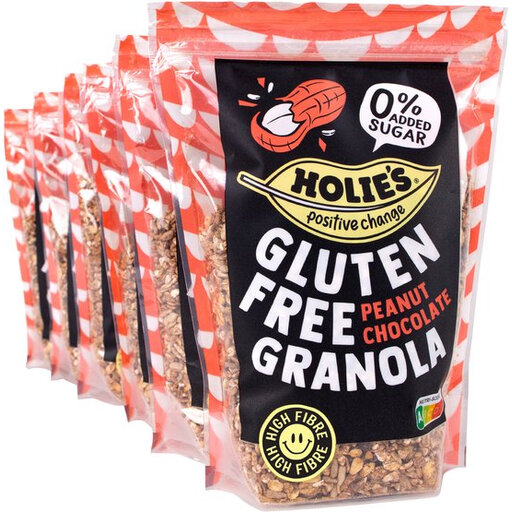
Holie's Granola Glutenfree Peanut Chocolate, 6 x 330g
This granola is labelled gluten-free and is worth considering if granola suits you better than muesli. If you have coeliac disease, check the gluten-free claim, ingredients and allergens on the packaging before use. To help you choose based on sugar content, also compare the nutritional information per 100 g.
View at Joybuy
Frequently asked questions
Where should I start when choosing muesli for coeliac disease?
Start by looking for an explicit gluten-free claim and checking the ingredients and allergens on the current packaging. The European Commission explains the EU rules on information about gluten in food; the presence of oats or buckwheat alone is no substitute for that claim.
Does ‘no added sugars’ mean muesli contains no sugars?
No. According to the Netherlands Nutrition Centre, sugars can occur naturally, even when none have been added. So, as well as checking this claim, compare the ‘of which sugars’ figure per 100 g.
Is muesli containing oats automatically suitable for coeliac disease?
No. The word ‘oats’ on its own isn’t a gluten-free claim. Check that the muesli is explicitly labelled gluten-free and read the other ingredients and allergens on the packaging.
What should I compare if both mueslis are labelled gluten-free?
First check whether both products meet your needs when it comes to avoiding added sugars, then compare the ‘of which sugars’ figures on the same per-100 g basis. Also read the ingredients and check for any other allergens relevant to you; fruit muesli and a plain mix may differ in this respect.


