Who is this choice relevant to?

Households where someone has coeliac disease

If you’re buying granola for someone with coeliac disease, checking that it’s gluten-free comes before choosing a larger bag. The Voedingscentrum points out that oats need particular attention because they may be contaminated with gluten-containing cereals.

Households that eat granola regularly

A multipack can be a good choice if you know how much granola you use and can store the bags according to the instructions on the packaging. If you use it less often, a single bag may be more practical.

Shoppers with additional dietary or allergen requirements

Ingredients and nutritional values vary even among gluten-free granolas. If you’re also keeping an eye on things such as sugar, fibre, protein, nuts or soya, compare the specific varieties and check the current packaging.

What should you look for when choosing?

First check that the product is suitable for someone with coeliac disease; only then consider the quantity and other product information. According to the Voedingscentrum, the ‘gluten-free’ label and, for oat products, the official Crossed Grain symbol are important checks.

What to consider What to check when buying Who is this most important for?
Suitable for coeliac disease Read the gluten-free label and, for oat products, check for the official Crossed Grain symbol on the packaging. When I’m buying granola for someone with coeliac disease, I want to be sure it’s gluten-free and check the oats first. For around 42% of consumers, this safety check comes first.
Quantity and how quickly you’ll use it Compare the number of bags and the amount in each with how much you use; also read the storage advice. If I eat granola for breakfast every day, I want to buy enough for it to be used while still storing it properly. Around 33% of consumers give the right stock-up quantity top priority.
Nutritional value and allergens Compare sugar, fibre and protein on the same basis, such as per 100 g, and read the ingredients and allergen information. If someone has a nut or soya allergy as well as coeliac disease, I want to know which specific variety is suitable. For around 25% of consumers, these additional product differences are the first thing they consider after checking that it’s gluten-free.

Common mistakes

  • Assuming a large pack is suitable gluten-free granola

    A larger pack doesn’t change the ingredients. For example, the Quaker Cruesli 4 nuts described by Albert Heijn contains wholemeal wheat and wheat flour, so it isn’t gluten-free granola suitable for someone with coeliac disease.

    First check the gluten-free label, the ingredients and, for oat products, the symbol on the packaging. Only then consider the pack size.

  • Reading only the front of the pack

    ‘Gluten-free’ doesn’t tell you whether a product contains other allergens. A variety may contain nuts or soya, for example, or carry a warning about possible traces.

    Each time you buy it, read the ingredients list and the allergen and trace information on the specific pack.

  • Buying more bags than your household will use

    A multipack isn’t automatically right for a household that only eats granola occasionally. Instructions for storing the product after opening also affect how much you should buy.

    Add up the total quantity, estimate how quickly you’ll use it and follow the storage advice on the packaging.

  • Assuming gluten-free means a particular nutritional value

    Gluten-free varieties can differ in their sugar, fibre and protein content. For example, the Holie's Protein Nuts and Free Of Gluten nuts and honey varieties described by Jumbo have different nutritional values.

    First choose a suitable gluten-free variety, then compare the nutritional information per 100 g against your own criteria.

Brands and product ranges to consider

AH Glutenvrij

Albert Heijn describes its 250 g gluten-free granola as being made in a completely gluten-free environment.

  • The product information lists 19 g of fibre and 14 g of protein per 100 g for this variety.
  • This variety contains oats and almonds, and may contain soya and other nuts; check the pack you buy.

Holie's

Jumbo describes Protein Nuts and Buckwheat & Nuts as separate gluten-free granola varieties.

  • Jumbo lists 22 g of protein and 13 g of fibre per 100 g for Protein Nuts, and 14 g of fibre per 100 g for Buckwheat & Nuts.
  • Both varieties described contain nuts; Protein Nuts also contains soya. The ingredients in one variety don’t necessarily apply to the other.

Free Of Gluten

Jumbo describes a 340 g gluten-free crunchy granola with nuts and honey, and lists a Crossed Grain symbol for this variety.

  • You can check the gluten-free label, ingredients and nutritional information for this specific variety.
  • The granola described contains hazelnuts and soya, and lists 21 g of sugar per 100 g.

Peak's

Jumbo describes Geroosterde Boekweit (Roasted Buckwheat) as a gluten-free granola variety containing oats, buckwheat, nuts and seeds, among other ingredients.

  • The product information for the variety described lists a Crossed Grain symbol.
  • When buying, check the current packaging, ingredients and availability of this exact variety.

Quaker Cruesli

Cruesli 4 nuts is a crunchy muesli. It’s included here only as a contrast with gluten-free granola, not as an option for someone with coeliac disease.

  • The ingredients information from Albert Heijn makes it possible to check for cereals containing gluten.
  • This variety contains wholemeal wheat and wheat flour, so it isn’t a suitable gluten-free option.

Granola from Joybuy to suit your needs

These two Holie's Peanut Chocolate packs let you choose between one 330 g bag and six 330 g bags. Both are sold as gluten-free; if you’re buying for someone with coeliac disease, also check the pack you receive and, as the product information mentions oats, look for the gluten-free certification.
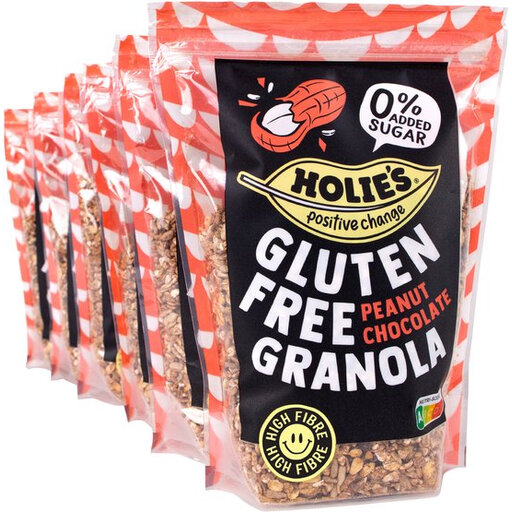
Holie's Granola Glutenfree Peanut Chocolate, six bags of 330 g

Holie's Granola Glutenfree Peanut Chocolate, 6 × 330 g

These six bags are a good choice for stocking up if you’ll use the total quantity and can store them according to the packaging.

The product name specifies gluten-free granola and 6 × 330 g. When your order arrives, check the oats, the Crossed Grain symbol and the information about peanuts and possible traces of nuts and soya on the packaging.

View at Joybuy
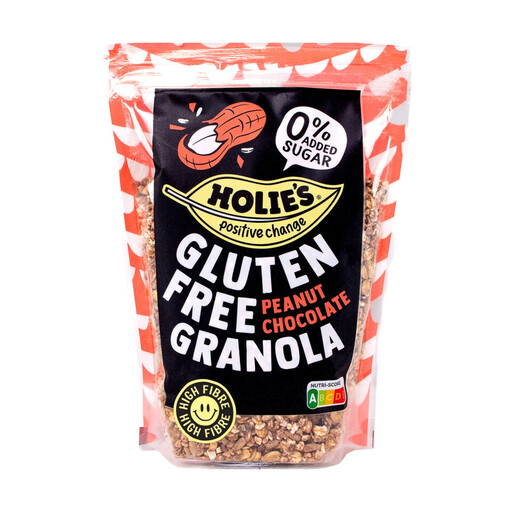
Holie's Granola Glutenfree Peanut Chocolate, 330 g bag

Holie's Granola Glutenfree Peanut Chocolate, 330 g

A single bag may be more practical if you’d like to try this granola first or keep less in stock.

The product name specifies gluten-free granola and 330 g. When it arrives, check the information about oats and the Crossed Grain symbol, and look for details of peanuts and possible traces of nuts and soya on the packaging.

View at Joybuy

Frequently asked questions

Is ordinary oat granola suitable for someone with coeliac disease?

Not without checking the specific product. According to the Voedingscentrum, oats can become contaminated with gluten during processing. For someone with coeliac disease, it’s important to look for the official Crossed Grain symbol on oat products. Also read the current ingredients and allergen information.

When should I choose one bag instead of a multipack?

Choose a quantity that suits how quickly you’ll use it and the product’s storage instructions. A single bag can be handy if you want to try a variety first; with a multipack, count all the bags before deciding how much to keep in stock.

Does ‘no added sugar’ mean granola is sugar-free?

No. The Holie's Protein Nuts described by Jumbo carries a no-added-sugar claim, but also lists 3.2 g of sugar per 100 g. So check the ‘of which sugars’ figure in the nutritional information for the specific variety.

Should I check for other allergens in gluten-free granola too?

Yes, if someone in your household has a relevant food allergy. ‘Gluten-free’ doesn’t tell you whether a product contains nuts or soya, for example. Read the ingredients list and check for any warning about possible traces on the pack you buy.

Can I rely on product information I saw online earlier?

Use it to narrow down your options, but check the packaging you receive before eating the product. Albert Heijn points out that the ingredients, nutritional values and allergen information for its gluten-free granola may change.
