What should you look for when choosing?
First, check the gluten-free label on the packaging. Then compare how you plan to take a portion with you, and consider which ingredients, nutritional values and other allergens matter to you.
| What to check |
Check when buying |
Who it matters to |
| Gluten-free label |
Look for ‘gluten-free’ on the current packaging. For products containing oats, also check that the oats are labelled gluten-free. |
If I have coeliac disease, I don’t want to rely on the flavour or type of grain; I want to see a clear gluten-free label. Around 50% of consumers give this check top priority. |
| Taking it with you |
Check the portion size and decide whether you can take a sealable container and a suitable drink or yoghurt with you. |
If I need to take breakfast with me, I want to be able to portion out the loose cereal in advance. For around 30% of consumers, this practical consideration comes first. |
| Nutritional information and allergens |
Compare sugars, fibre, protein and fat per 100 g and per portion; also read the allergen information. |
As well as gluten, I may need to avoid peanuts, nuts, soya or milk, or I may want to compare nutritional values. Around 20% of consumers prioritise these ingredients and values. |
Chocolate peanut granola on Joybuy
These products are two pack sizes of Holie's Peanut Chocolate granola. They’re suitable if you’re looking for gluten-free chocolate granola and can eat peanuts. For breakfast on the go, you’ll need to decide how to take the granola and any drink or yoghurt with you.
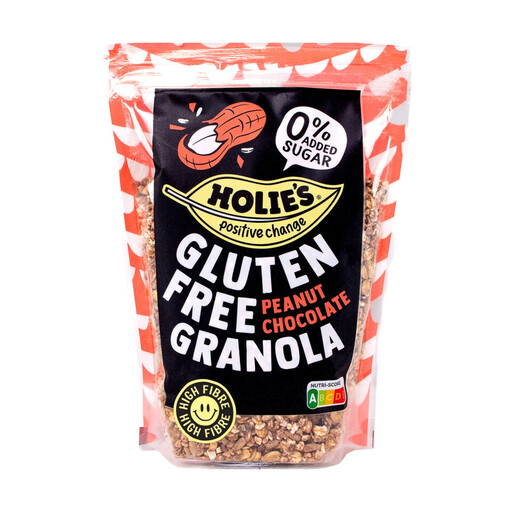 Image unavailable
Holie's Granola Glutenfree Peanut Chocolate, 330 g
This loose chocolate peanut granola is an option if you want to measure out your own portion for a quick breakfast and can eat peanuts.
- According to Albert Heijn, this granola contains 14 g of fibre and 15 g of protein per 100 g.
- Check the current packaging for peanuts and any other nuts and soya listed as potentially present.
- Check whether the packaging is suitable for the way you plan to take a portion with you.
View on Joybuy
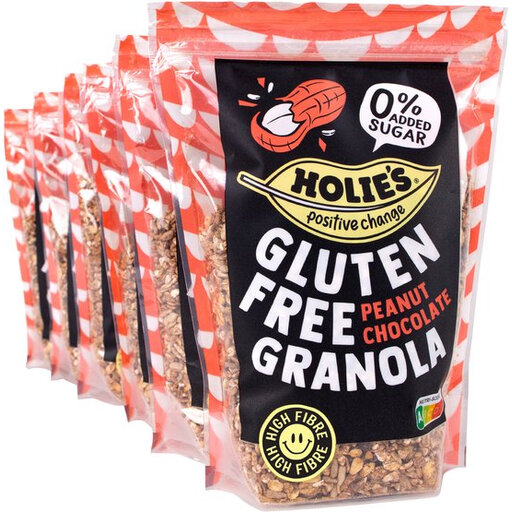 Image unavailable
Holie's Granola Glutenfree Peanut Chocolate, 6 x 330 g
This pack of six bags of the same chocolate peanut granola is a good fit if you want to measure out portions at home and can eat peanuts.
- The listed pack contains 6 x 330 g; these are packs, not individually measured breakfast portions.
- Albert Heijn lists 14 g of fibre and 15 g of protein per 100 g for this granola.
- Check the current packaging for peanuts and any other nuts and soya listed as potentially present, and consider how you can take a portion with you.
View on Joybuy
Frequently asked questions
What does ‘gluten-free’ mean on packaging if you have coeliac disease?
The label is an important first check: according to the European Commission, ‘gluten-free’ may only be used in the EU if the product for the final consumer contains no more than 20 mg/kg of gluten. Check the label on the pack you’re buying, even if you’ve used the product before.
Can I choose chocolate muesli or granola containing oats?
If you have coeliac disease, only choose a product containing oats if it is explicitly labelled gluten-free. Glutenvrij.nl points out that oats can come into contact with wheat, barley or rye during production, so check that the oats are labelled gluten-free too.
Is loose chocolate cereal convenient to take with you?
It can be, if you measure out a portion in advance and can take a sealable container and a suitable drink or yoghurt with you. A box of cereal, muesli or granola isn’t a complete ready-to-eat breakfast on its own. A small portion pack also doesn’t prove that its contents are gluten-free.
Which other allergens should I check for?
It depends on the product you choose. For the Holie's granola we reviewed, Albert Heijn lists peanuts and says it may contain nuts and soya. For the AH chocolate muesli we reviewed, it lists milk, soya, lactose and various nuts as potentially present. If you have other allergies, always check the current packaging.


