If you’re catering for someone with coeliac disease, choose chocolate cereal whose current packaging clearly says ‘gluten-free’ or carries the Crossed Grain trademark; regular chocolate flakes aren’t automatically suitable. A maize and rice cereal and a gluten-free oat granola each need different checks for ingredients and allergens. At Easter brunch, keep the gluten-free bowl free from bread crumbs and shared serving spoons.
Who is this choice for?
Brunch host catering for a guest with coeliac disease
You want to serve chocolate cereal without bread crumbs or shared serving spoons getting into the gluten-free bowl. The Dutch Nutrition Centre stresses that avoiding cross-contamination is important for people with coeliac disease.
Fan of maize and rice chocolate cereal
You’re looking for a product labelled gluten-free that doesn’t list oats, peanuts or nuts among its ingredients. Check the rest of the allergen information on the current packaging too; an ingredients list alone doesn’t rule out cross-contamination.
Choosing chocolate granola
You want to compare sugars, fibre and protein, while also taking allergens and the gluten-free label into account when choosing granola containing oats and peanuts.
What should you look for when choosing?
If you’re catering for someone with coeliac disease, first check the gluten-free label on the pack and consider how you’ll serve the product. Then compare the ingredients, allergens and nutritional information of the options that meet your needs.
| What to check |
What to look for when buying |
Who is this most important for? |
| Gluten-free labelling and serving |
Look for ‘gluten-free’ or the Crossed Grain trademark on the current packaging. Use a separate bowl and serving spoon, away from bread crumbs. |
When I’m hosting a guest with coeliac disease, I want to be confident that the product is labelled gluten-free and kept separate from the Easter bread. Around 50% of consumers put this gluten-free choice first. |
| Ingredients and allergens |
Read the ingredients and the ‘may contain’ statement. With oat granola in particular, look out for peanuts, possible traces of nuts and soya. |
For a brunch with guests who have different dietary requirements, I want to know whether the granola is suitable for everyone. For around 30% of consumers, ingredients and allergens are the top priority. |
| Nutritional information |
Compare sugars, fibre and protein per 100 g, and consider the portion you’ll actually serve. |
Once the gluten-free label and allergens are suitable, I want to compare the nutritional values of a cereal and a granola. For around 20% of consumers, this is the main next step. |
Common mistakes
-
Assuming chocolate flakes with rice are automatically gluten-free
A product containing rice may also contain grains that have gluten. For example, Kellogg’s lists wholegrain wheat and barley in Special K Pure Chocolade.
Check the ingredients on the exact pack and, for the gluten-free bowl, choose a product that is explicitly labelled gluten-free.
-
Assuming gluten-free granola is suitable for everyone
Holie’s Gluten Free Granola Peanut Chocolate contains peanuts. Jumbo’s product information also mentions possible traces of various nuts and soya.
Ask guests about any relevant allergies and check all the allergen information on the packaging before serving the granola.
-
Looking only for ‘vegan’ or a sugar claim
On their own, these labels don’t tell you whether a product is suitable for someone with coeliac disease or your guests’ allergies. Albert Heijn labels Freee Chocolate Stars as both gluten-free and vegan, and lists 24 g of sugars per 100 g.
Check the gluten-free label, ingredients, allergens and nutrition table together.
-
Using shared serving spoons for the gluten-free bowl
Gluten can get into the bowl on a serving spoon or in bread crumbs. The Dutch Nutrition Centre points out that even small amounts can matter for people with coeliac disease.
Set the bowl apart and provide a clean serving spoon just for it.
Brands as product examples
Freee
Freee Chocolate Stars is an example of chocolate cereal made with maize and rice. Albert Heijn labels this specific product as gluten-free.
- The ingredients listed by Freee for Chocolate Stars include maize flour and rice flour.
- Albert Heijn lists 24 g of sugars per 100 g. Check the current packaging and allergen information too.
Holie’s
Holie’s Gluten Free Granola Peanut Chocolate is a chocolate granola made with gluten-free oats and peanuts, according to Jumbo’s product information.
- Jumbo lists 14 g of fibre and 15 g of protein per 100 g for this product.
- The product contains peanuts and may contain various nuts and soya. Check the packaging to make sure it’s suitable for all your guests.
Kellogg’s
Special K Pure Chocolade shows why regular chocolate cereal shouldn’t go into the gluten-free bowl without being checked first.
- Kellogg’s lists wholegrain wheat and barley in this specific product. Don’t assume this applies to every product from the brand.
Chocolate granola on Joybuy
These products are a good fit if you’re looking for chocolate granola with oats and peanuts. If you’re catering for someone with coeliac disease, check the gluten-free label on the current packaging and read the allergen information before serving.
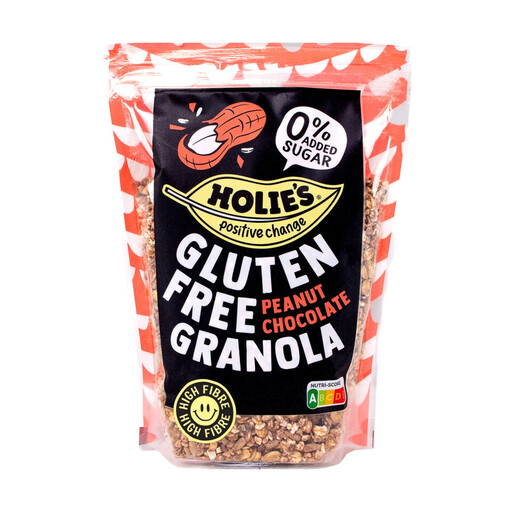 Image unavailable
Holie’s Granola Glutenfree Peanut Chocolate, 330 g
A pack of chocolate granola for anyone who wants to include oats and peanuts in their brunch. If you’re catering for someone with coeliac disease, check the gluten-free label on the pack. When serving, bear in mind that it contains peanuts and carries a warning about possible traces of nuts and soya.
View on Joybuy
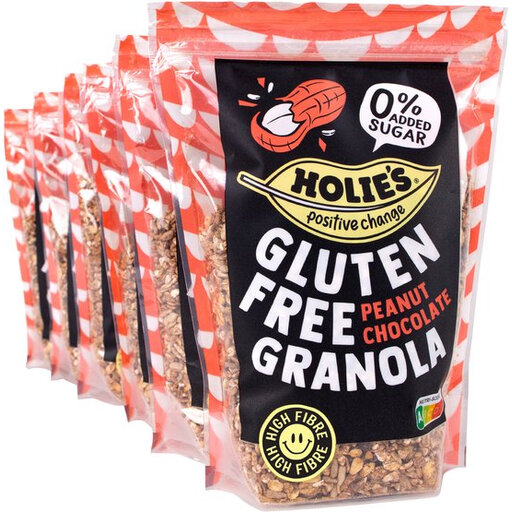 Image unavailable
Holie’s Granola Glutenfree Peanut Chocolate, 6 × 330 g
A multipack of six bags of chocolate granola for the same brunch menu featuring oats and peanuts. Check the gluten-free label and warnings about possible traces of nuts and soya on the current packaging.
View on Joybuy
Frequently asked questions
Is chocolate cereal without wheat automatically gluten-free?
No, avoiding wheat alone isn’t enough. Look for ‘gluten-free’ or the Crossed Grain trademark on the current packaging and read the ingredients. Barley and rye also contain gluten, while oats can come into contact with gluten during processing.
How should I serve gluten-free cereal alongside Easter bread?
Use a clean, separate bowl and serving spoon for the gluten-free cereal, and place it where bread crumbs can’t fall into it. The Dutch Nutrition Centre stresses the importance of preventing cross-contamination for people with coeliac disease.
Can someone with coeliac disease eat gluten-free oat granola?
Only choose oat granola whose packaging explicitly labels it as gluten-free. The Dutch Nutrition Centre explains that ordinary oats can become contaminated with gluten during processing. Also take the ingredients, allergens and any individual reaction to oats into account.


