If you have coeliac disease, first choose a breakfast cereal whose specific packaging says ‘gluten-free’ or carries the Crossed Grain symbol. Then pick a format that suits your morning routine: cornflakes are ready to serve, porridge oats need cooking or preparation, and with muesli or granola, the ingredients and nutritional information for the exact variety are especially important.
Who is this choice relevant to?
Breakfast eaters who need to account for coeliac disease
You want to check that the exact variety is suitable for a gluten-free diet, rather than relying on the type of grain. The Netherlands Nutrition Centre advises looking for ‘gluten-free’ on the packaging or the Crossed Grain symbol; this check is particularly important for oats.
Breakfast eaters short on time during the week
You’re looking for something you can serve straight away, such as cornflakes labelled gluten-free, or an oat product you can prepare the night before. Even with a quick option, the label on the variety you choose is what counts.
Breakfast eaters comparing nutritional content
Once you’ve checked that a product is gluten-free, you also want to compare its ingredients, fibre, sugars, salt and serving size. Compare the nutritional information for the products you’re actually considering.
What should you look for when choosing?
If you have coeliac disease, first check that the exact variety is labelled gluten-free. Then choose a type of breakfast cereal that fits the time you have, and compare the other nutritional information afterwards.
Gluten-free porridge oats or rolled oats
When: You want to enjoy oats warm or prepare them the night before as overnight oats.
Consider: They need cooking or preparation; according to the Netherlands Nutrition Centre, ordinary oats are not automatically suitable for people with coeliac disease.
Gluten-free cornflakes
When: You want to serve breakfast cereal without cooking or soaking it first.
Consider: Even with corn-based flakes, the packaging for the exact product must confirm that it’s gluten-free.
Gluten-free muesli or granola
When: You want a ready-made mix to eat with milk or yoghurt, for example.
Consider: Ingredients, allergens, serving sizes and nutritional values vary between mixes, so check the variety you choose.
| What to look for |
What to check when buying |
Who it matters to |
| Gluten-free suitability |
Look for ‘gluten-free’ or the Crossed Grain symbol on the current packaging. Always check the exact variety when buying oats. |
If I need to account for coeliac disease, I don’t want to assume a product is suitable just because it contains oats or maize. Around 50% of consumers prioritise verified gluten-free suitability. |
| Preparation time |
Choose between flakes that are ready to serve and a gluten-free oat product you can cook or prepare in advance. |
On a working day, I want to make breakfast without spending ages preparing it in the morning. For around 30% of consumers, convenience matters most. |
| Nutritional information |
Compare ingredients, allergens and nutritional values per 100 g and per serving, including fibre, sugars and salt. |
Once I’ve found suitable gluten-free varieties, I want to know how their nutritional content and my usual serving sizes compare. For around 20% of consumers, this comparison is the top priority. |
Common mistakes
-
Assuming ordinary oats are gluten-free enough
Oats can come into contact with cereals containing gluten. Quaker says it cannot guarantee that its regular oat products are completely gluten-free.
If you have coeliac disease, choose a specific pack of oats labelled gluten-free or carrying the Crossed Grain symbol.
-
Looking only at maize or rice as the main ingredient
The type of grain used as a base does not confirm that the whole product is gluten-free. Under Commission Implementing Regulation (EU) No 828/2014, a food can only be labelled ‘gluten-free’ if the finished product contains no more than 20 mg/kg of gluten.
First check that the exact pack is labelled gluten-free, then compare the different flakes or mixes.
-
Assuming gluten-free means the same nutritional value
Porridge oats, cornflakes, muesli and granola don’t automatically contain the same amounts of fibre, sugars or salt. A gluten-free label tells you nothing about these differences.
When comparing suitable varieties, read the nutritional information per 100 g and per serving.
-
Relying on a label you checked previously
Albert Heijn warns that product information and ingredients can change. So a similar-looking pack may not carry the same information as a variety you’ve bought before.
Before buying and using the product, check the gluten-free label, ingredients and allergens on the packaging again.
Brands to compare
AH Glutenvrij
Albert Heijn’s range includes porridge oats, rolled oats, cornflakes, muesli and granola labelled gluten-free.
- You can compare different types of breakfast cereal within the same own-brand range.
- Albert Heijn warns that product and allergen information can change, so check the packaging for the variety you choose.
Consenza
Consenza offers a gluten-free range that includes breakfast options such as muesli.
- A brand to consider if you’re looking for a breakfast mix within a gluten-free range.
- Check the ingredients, allergens and nutritional information for each product; the range as a whole doesn’t tell you what’s in an individual variety.
Schär
Albert Heijn describes the Schär Cornflakes shown as free from gluten, wheat and lactose.
- Cornflakes are ready to serve without any preparation.
- Check the labels and ingredients again on the packaging of the exact Schär variety you’re buying.
Quaker / Cruesli
Quaker is known for its oat products and Cruesli, but a brand name doesn’t automatically make a product suitable for people with coeliac disease.
- Oat products and crunchy mixes offer different ways to put together a breakfast.
- Quaker says it cannot guarantee that its oat products are completely gluten-free. If you have coeliac disease, don’t choose a product based on the type of grain or brand name alone.
Kellogg's
With Kellogg's, you need to check whether each breakfast cereal variety is suitable.
- The ingredients list helps you distinguish between varieties made with different grains.
- According to Kellogg's Netherlands, Special K Original contains wholegrain wheat and barley, so it isn’t a gluten-free option.
Granola for a quick weekday breakfast
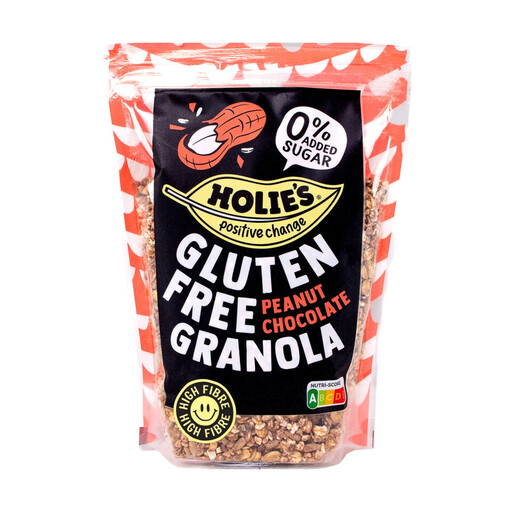
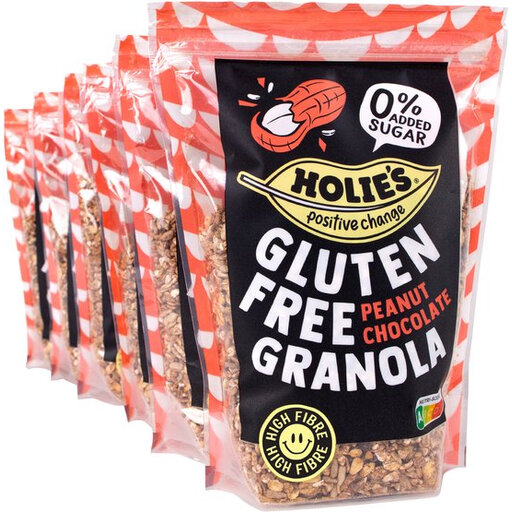
These products are two pack sizes of the same granola with peanuts and chocolate, labelled gluten-free. They’re a good fit for a breakfast that needs no cooking; if you want porridge oats or cornflakes, you’ll be choosing a different type of breakfast cereal.
 No image available
Holie's Granola Glutenfree Peanut Chocolate – 330 g
This granola, labelled gluten-free, is an option if you want to serve breakfast cereal without cooking it on weekdays.
330 g pack; this variety contains peanuts. Check the gluten-free label and allergen information on the current packaging.
View at Joybuy
 No image available
Holie's Granola Glutenfree Peanut Chocolate – 6 × 330 g
This granola, labelled gluten-free, is suited to the same no-cook breakfast, in a multi-pack.
Six packs of 330 g each; this variety contains peanuts. Check the gluten-free label and allergen information on the current packaging.
View at Joybuy
Frequently asked questions
What does ‘gluten-free’ mean on packaged breakfast cereals?
Under Commission Implementing Regulation (EU) No 828/2014, a food sold to consumers in the Netherlands can be labelled ‘gluten-free’ if it contains no more than 20 mg/kg of gluten. Check for this label on the packaging of the exact breakfast cereal variety.
Can I choose ordinary porridge oats if I have coeliac disease?
Don’t assume that ordinary porridge oats are suitable: oats can become contaminated with cereals containing gluten. For people with coeliac disease, the Netherlands Nutrition Centre recommends oats carrying the Crossed Grain symbol; check the specific packaging before choosing an oat product.
What if the ingredients in my usual breakfast cereal change?
Check the new packaging again, even if the product name is the same. Albert Heijn warns that ingredients, nutritional values and allergen information can change, so check the current gluten-free label and ingredients list before using the product.
Does gluten-free packaging mean the preparation is gluten-free too?
No. When storing and serving the cereal, you also need to prevent contact with products containing gluten. The Netherlands Nutrition Centre highlights the risk of cross-contamination for people with coeliac disease, so use clean utensils and keep the breakfast cereal separate from cereals containing gluten.


