
Hosting someone with coeliac disease
You want to serve bread labelled gluten-free and make sure it doesn’t come into contact with regular bread crumbs during preparation.


If someone at your table has coeliac disease, choose bread whose current packaging clearly states that it is gluten-free, and avoid contact with regular bread crumbs during preparation and serving. A loaf to slice and share works well for a meal together, while gluten-free ciabatta or small rolls are a good choice if you want to serve individual portions. Whichever you choose, check the allergen information and preparation instructions.
You want to serve bread labelled gluten-free and make sure it doesn’t come into contact with regular bread crumbs during preparation.
You’re looking for something to go with dips, soup or a meal to share, such as ciabatta, mini baguettes or small rolls.
You want to buy the bread in advance and check the packaging, storage instructions and availability at your local shop.
When someone has coeliac disease, checking that the bread is gluten-free and preparing it safely come before choosing between a loaf to share, small rolls or bread you bake yourself.
| What to consider | What to check when buying | Who it matters to |
|---|---|---|
| Serving gluten-free bread | Check the current packaging for a gluten-free label or the Crossed Grain symbol. Use clean utensils when serving. | If my guest has coeliac disease, I want to choose and serve bread without it coming into contact with regular crumbs. Around 33% of consumers put this check first. |
| How you serve it | Choose between a loaf to share, individual rolls or bread that you bake just before eating. | For a dinner with dips or soup, I want to be able to give everyone their own roll. Around 27% of consumers prioritise this way of serving. |
| Nutritional information | Compare the fibre per 100 g and check the ingredients list to see whether iodised salt has been used. | If I regularly replace regular bread, I also want to compare the nutritional information. For around 20% of consumers, the nutritional profile is their top priority. |
| Planning ahead | Check what’s available at your local shop and read the storage and preparation instructions. | If I’m shopping before dinner, I want to know whether I can keep the bread until it’s time to serve. For around 20% of consumers, planning ahead matters most. |
According to the Netherlands Nutrition Centre, a gluten-free label or the Crossed Grain symbol is a clear indicator to look for. ‘Wheat-free’ alone doesn’t mean the same thing as gluten-free.
Read the current label on the bread you’re actually buying, even if a product photo or shop category looks promising.
Even bread labelled gluten-free can come into contact with crumbs from regular bread while it’s being sliced, prepared or served.
Use a clean knife, a clean chopping board and a separate bread basket. If you’re baking it at home, make sure the baking tray and other utensils are clean too.
The Netherlands Nutrition Centre notes that bread made with baker’s salt can be a source of iodine in your diet. The ingredients in gluten-free breads and bread mixes vary from product to product.
Compare the nutrition table per 100 g and check whether iodised salt is listed in the ingredients. The ingredients in one loaf don’t tell you everything about your overall diet.
A product listing online doesn’t guarantee that the same type of bread will be available at your local shop when you need it.
Check what’s available locally in advance and read the storage instructions if you’re buying the bread ahead of time.
Albert Heijn has a gluten-free bread category and its own gluten-free multiseed bread.
Jumbo offers gluten-free bread, ciabatta and small rolls for different ways of serving.
PLUS offers gluten-free bread options, including brown bread, multiseed bread and sourdough.
Dirk’s search results include Schär gluten-free mini baguettes and ciabatta.
ALDI lists gluten-free options in a category that includes bake-at-home rolls and other bakery products.
Lidl describes a temporary range of additional gluten-free products alongside its regular selection.
These Joybuy products suit two ways of preparing bread for dinner: baking small rolls at home or making your own bread with a mix. If someone has coeliac disease, always check the current packaging and prepare the bread separately from anything containing gluten.
 Image unavailable
For anyone who wants to bake small rolls at home for dinner. Use a clean baking tray and clean utensils. Before buying, check the current label for the gluten-free statement, allergens and pack contents.
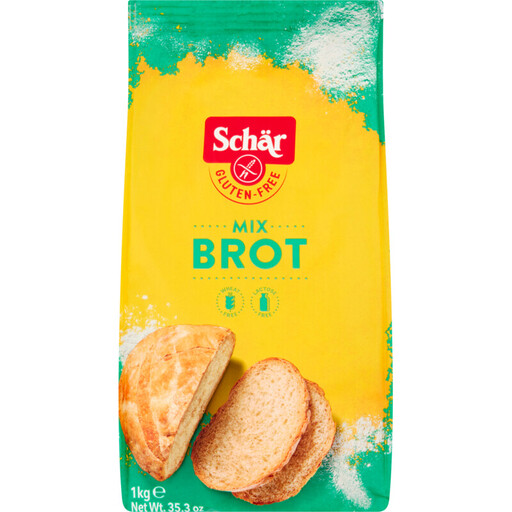 Image unavailable
For anyone who wants to bake their own gluten-free bread and can plan ahead. This is a 1 kg bread mix, not a ready-made loaf. Use clean, separate utensils and check the allergens on the current packaging.
Not on the basis of a ‘wheat-free’ label alone. Choose bread whose current packaging says it’s gluten-free or carries the Crossed Grain symbol, and avoid contact with regular bread crumbs when serving.
Keep the gluten-free bread separate and use a clean knife, a clean chopping board and a separate bread basket. If you’re baking it at home, take care with the baking tray and utensils too.
The Netherlands Nutrition Centre notes that bread made with baker’s salt can contribute iodine to your diet, and recommends using baker’s salt when baking gluten-free bread at home. For shop-bought bread, check the ingredients list for iodised salt, and consider the nutritional information as part of your overall diet.