If your child has coeliac disease, choose a biscuit whose current packaging says ‘gluten-free’. A familiar biscuit or a product that looks wheat-free is not a substitute for that label. Under Regulation (EU) No 828/2014, ‘gluten-free’ means the food as sold to the final consumer contains no more than 20 mg/kg of gluten. Also check for other allergens, whether your child tolerates oats, and how the school stores and shares food. Lotus Biscoff Original is not a gluten-free alternative: Lotus lists wheat flour and gluten.
Who is this choice relevant to?
Parents of a child with coeliac disease
They are looking for a biscuit with a current gluten-free label for school. Other allergens also matter, as do arrangements for crumbs, storage and sharing, as the Dutch Coeliac Society highlights for school occasions.
Families packing a snack
They want a product that is practical to pack in a school lunchbox. The packaging and allergens in the chosen variety are key; if it is an oat biscuit, you also need to consider whether your child tolerates oats.
Shoppers who want to know what is available
They want to be able to find a suitable biscuit again. Check a specific product and its current label rather than assuming every shop will always stock the same gluten-free biscuits.
What should you look for?
Start with the gluten-free label on the packaging of the exact biscuit you are considering. Then check whether the ingredients and the school’s arrangements are right for your child. Only after that should you decide which shop is most convenient.
| What to consider |
What to check when buying |
Who it matters most to |
| Gluten-free label |
Check the current packaging of the chosen variety for a ‘gluten-free’ label, and read the ingredients and allergen information. |
If my child has coeliac disease, I don’t want to rely on a biscuit’s name or appearance. Around 50% of consumers make checking the gluten-free label their top priority. |
| School lunchbox and tolerance |
If you are considering an oat biscuit, check that it is labelled gluten-free and that your child tolerates oats. Ask the school or after-school club how food from home is stored and shared. |
For a snack at school, I want to pack a biscuit that suits my child and is kept separate from other treats. For around 30% of consumers, how things work at school is the first consideration. |
| Availability |
Just before buying, check the specific product, stock at the shop and label; a general product range does not tell you which variety is available. |
If I pack a biscuit for school regularly, I want to know whether I can buy the same suitable product again. Around 20% of consumers put availability first. |
Common mistakes
-
Assuming a regular biscuit is a gluten-free alternative
Lotus Bakeries lists wheat flour as an ingredient and gluten as a present allergen in Lotus Biscoff Original. Its familiar name and flavour do not change that.
Check the gluten-free label and ingredients for the exact variety you are buying; don’t pack regular Biscoff for a child with coeliac disease.
-
Assuming every oat biscuit is suitable for someone with coeliac disease
According to the Dutch Coeliac Society, oats must come from a certified gluten-free supply chain. A small number of people with coeliac disease also react to pure, gluten-free oats.
Only choose an oat biscuit with a gluten-free label if your child tolerates oats. If you are unsure about their individual tolerance, speak to their healthcare professional.
-
Overlooking other allergens
‘Gluten-free’ says nothing about other allergens. The gluten-free oat biscuit with hazelnut described by Albert Heijn shows why the exact variety matters.
Read the full allergen information on the current packaging before packing it.
-
Not agreeing how food will be handled at school
A gluten-free biscuit can come into contact with crumbs from other food during a shared snack. The Dutch Coeliac Society suggests providing a separate lunchbox with suitable treats as a practical option at school.
Ask the school or after-school club how food is kept separate and what arrangements apply to sharing and treats.
Brands and places to shop for guidance
Schär
Jumbo describes Schär Digestive Landtaler as gluten-free biscuits, specially made for people with gluten intolerance.
- A familiar biscuit option if you are specifically looking for a product labelled gluten-free.
- Check other allergens for each variety too. The Digestive described contains soya and may contain lupin and egg.
AH Glutenvrij
Albert Heijn lists several gluten-free biscuits, including chocolate chip cookies and oat and almond biscuits.
- There are different types to compare by ingredients and packaging.
- Always read the label for the variety you choose. The oat biscuit with hazelnut described is not suitable for anyone who needs to avoid hazelnuts; if your child has coeliac disease, oats also require individual consideration.
Heerlijck Banket en Trader Joe's bij ALDI
ALDI Netherlands describes gluten-free coconut macaroons from Heerlijck Banket and gluten-free rice biscuits from Trader Joe's.
- Rice and coconut biscuits are alternative types to consider if you don’t need a traditional biscuit.
- Check the specific product’s availability, current packaging and allergens in store.
Lotus Biscoff
Lotus Biscoff Original is not a gluten-free choice for a child with coeliac disease.
- Lotus Bakeries lists wheat flour as an ingredient and gluten as a present allergen in Biscoff Original.
Lidl
A shop to consider if you can find a specific biscuit labelled gluten-free.
- Don’t plan your school lunchbox around a general product range page: check the specific product, its availability and its label.
Biscuits for the school lunchbox on Joybuy
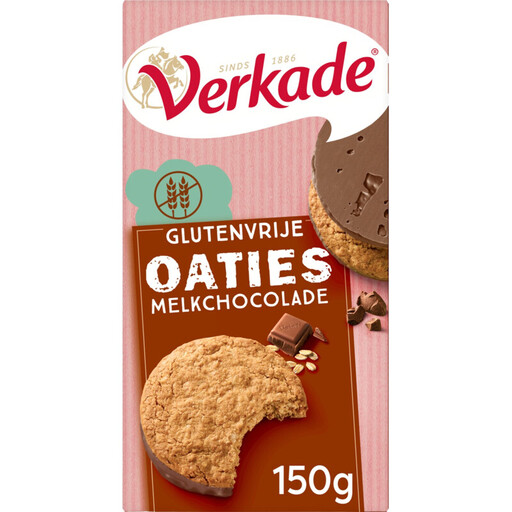
This product selection features a milk chocolate biscuit for the school lunchbox. If your child has coeliac disease, check before use that the current packaging says ‘gluten-free’, which allergens are listed and whether your child tolerates the ingredients.
 No image available
Verkade Gv Oaties Milk Chocolate 150 g
A biscuit to consider if you are looking for a milk chocolate treat for school. For a child with coeliac disease, check the gluten-free label and allergens on the current packaging; if the product contains oats, their individual tolerance matters too.
Pack size: 150 g. Check whether the way the biscuits are packaged works with your school lunchbox arrangements.
View at Joybuy
Frequently asked questions
When can a biscuit be labelled ‘gluten-free’?
Under Regulation (EU) No 828/2014, the label ‘gluten-free’ may be used if the food as sold to the final consumer contains no more than 20 mg/kg of gluten. If your child has coeliac disease, also read the current label on the chosen biscuit for other ingredients and allergens.
Can I pack regular Lotus Biscoff as a gluten-free school treat?
No. Lotus Biscoff Original is not a gluten-free treat for a child with coeliac disease. Lotus Bakeries lists wheat flour as an ingredient and gluten as a present allergen.
Is a gluten-free oat biscuit always suitable for someone with coeliac disease?
No. Even with an oat biscuit labelled gluten-free, you need to consider whether your child tolerates oats. The Dutch Coeliac Society points out that oats must come from a certified gluten-free supply chain, and that a small number of people with coeliac disease also react to pure oats. If you are unsure about your child’s individual tolerance, speak to their healthcare professional.
What should I agree with the school or after-school club about gluten-free biscuits?
Agree where food from home will be stored and how sharing and treats will be handled. The Dutch Coeliac Society suggests a separate lunchbox with suitable treats as a practical option; ask what arrangements apply at your child’s school or after-school club.


