If you have coeliac disease, first choose bread whose current packaging explicitly states that it is gluten-free, and avoid contact with gluten-containing crumbs at home. If you’re also looking for wholemeal ingredients or want to stock up on several packs, compare the ingredients, fibre, pack size and storage instructions for each product; a dark colour alone tells you nothing about these. Check separately whether baker’s salt is listed if that matters to you.
Who is this choice relevant to?
People with coeliac disease who buy bread to keep in stock
According to the Voedingscentrum, coeliac disease requires a lifelong gluten-free diet. Check the packaging every time you buy bread, and keep it separate from gluten-containing bread in a shared kitchen.
Consumers who also check the nutritional information
If you eat gluten-free bread regularly, you can compare wholemeal ingredients and fibre per 100 g. Also check whether baker’s salt is listed on the label if that is a factor in your choice.
Households that store bread in portions
If you buy several packs at once, match the pack size to how much you use and freeze the bread in portions for individual meals if needed. The Voedingscentrum recommends freezing bread in portions as soon as you buy it.
What should you look for when buying?
If you have coeliac disease, start by checking the gluten-free wording on the packaging. Then compare the nutritional profile and work out how much bread you can use or store before buying more.
| What to consider |
What to check when buying |
Who should pay particular attention? |
| Gluten-free choice |
Check the gluten-free wording and the current ingredients and allergen information. |
If I have coeliac disease, I want to be sure I’m choosing the right bread every time I buy it. Around 36% of consumers would make this their top priority. |
| Wholemeal ingredients and fibre |
Read the ingredients list and compare fibre per 100 g; if you’re checking iodine, also see whether baker’s salt is listed. |
When gluten-free bread is a regular part of my diet, I want to know what’s in it rather than judge it by its colour. For around 29% of consumers, the nutritional profile would be the most important factor. |
| Storage and freezing |
Check the storage instructions and see whether you have enough freezer space to freeze it in portions. |
If I’m buying bread that I won’t use quickly, I want to defrost only what I need each time. An estimated 21% of consumers would prioritise ease of storage. |
| Pack size |
Compare the weight and number of portions with how much you use for each meal. |
If a pack is too large for my household, there may be bread left over by the time I open the next one. For around 14% of consumers, choosing the right pack size would be the main consideration. |
Common mistakes
-
Assuming dark or seeded bread is wholemeal
The colour and product name don’t tell you which wholemeal ingredients have been used or how much fibre the bread contains. According to the Voedingscentrum, the nutritional values of gluten-free bread can vary between brands.
Read the ingredients list and compare the fibre listed per 100 g. To compare slices, check the serving size too.
-
Buying several packs without a storage plan
Bread that is left for too long or dries out after being frozen for an extended period may no longer be suitable for how you planned to use it.
Check the instructions on the packaging and, following the Voedingscentrum’s advice, freeze the bread in portions after buying it. Take out only the portion you need each time.
-
Assuming all bread contains baker’s salt
According to the Voedingscentrum, bakers aren’t required to use baker’s salt. So the type of bread alone won’t tell you whether it has been added.
Check the ingredients on the label or ask the baker if baker’s salt matters to you.
-
Overlooking cross-contamination at home
In a shared kitchen, gluten-free bread can come into contact with crumbs from ordinary bread.
Store it separately and use clean or separate knives, breadboards and toasters.
Brands to compare
AH Glutenvrij
A range of different types of gluten-free bread for anyone looking to compare pack sizes and contents.
- Albert Heijn lists, among other options, light and dark seeded bread in 480 g packs.
- Check the ingredients, nutritional information and current availability for each pack.
Jumbo Lekker Vrij van Gluten
A Jumbo range for anyone looking to compare larger packs of gluten-free everyday bread.
- Jumbo lists white and brown bread, each in a 500 g pack.
- White or brown doesn’t mean a loaf is wholemeal; check the ingredients list to find out.
Schär
A brand offering different types and pack sizes of gluten-free bread at Albert Heijn and Jumbo.
- The ranges shown include Meesterbakker Classic, Mehrkorn and Vital.
- A name such as Mehrkorn doesn’t tell you the fibre content or whether the product is suitable for people with other allergies.
Céréal
Worth considering if you want to compare gluten-free bread that explicitly lists wholemeal ingredients.
- Jumbo lists Céréal Gluten Free Lactose Free Wholemeal Bread in a 240 g pack, made with wholemeal buckwheat flour and containing 14 g of fibre per 100 g.
- The product may contain traces of egg, milk, mustard, sesame and soya, among other things. Check the current packaging if you have additional allergies.
Products to stock up on
These Joybuy products could suit a gluten-free bread supply in different ways: one is listed as mini baguettes, and the other is a bread mix for home baking. Check the current packaging for both before stocking up; neither product name confirms that it is wholemeal bread.
 Image unavailable
Gv Baguette Mini 7 Pieces
If you want to plan smaller portions of bread, this product is worth a closer look. Before buying, check whether the pack contains mini baguettes or a mix, and confirm the actual pack contents; the available product descriptions differ on this. If you have coeliac disease, also check the gluten-free wording on the current packaging.
View at Joybuy
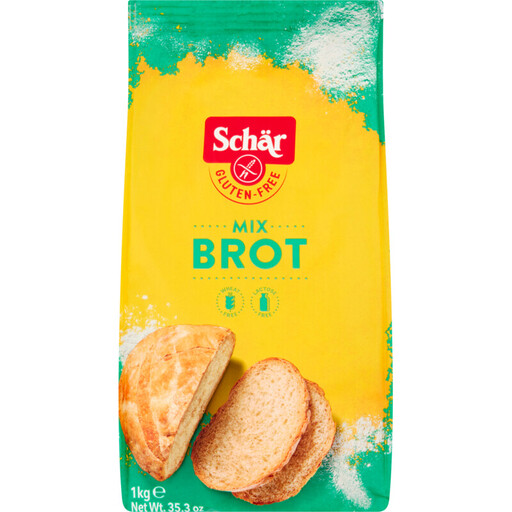 Image unavailable
Schär Bread Mix-Mix B Gluten Free, 1 kg
This 1 kg bread mix is suitable if you want to keep ingredients in stock and bake your own bread; it isn’t ready-made bread. Before use, check the gluten-free wording, ingredients and storage instructions on the current packaging. Don’t assume from the name that the bread you make will be wholemeal.
View at Joybuy
Frequently asked questions
What should I check first if I have coeliac disease?
Choose bread whose current packaging clearly states that it is gluten-free. The Voedingscentrum notes that coeliac disease requires a lifelong gluten-free diet; you should also avoid contact with gluten-containing bread at home.
Is dark gluten-free bread wholemeal too?
You can’t tell by the colour. Read which ingredients have been used and compare the fibre in the nutritional information per 100 g; according to the Voedingscentrum, the nutritional values of gluten-free bread vary between brands.
Does bread in the Netherlands always contain baker’s salt?
No. According to the Voedingscentrum, bakers aren’t required to use baker’s salt. Check the label or ask the baker if this matters to you.
How should I store several packs of gluten-free bread?
Freeze the bread in portions after buying it and take out what you need each time, as the Voedingscentrum recommends. For packaged bread, also follow the product-specific storage instructions and keep gluten-free bread separate from gluten-containing bread.
Can I choose bread containing oats if I have coeliac disease?
Choose bread containing oats only if the packaging explicitly labels it as gluten-free. EU rules for this label set conditions for oats to avoid contamination with wheat, rye and barley; always check the label on the bread you buy.


