What should you look for when buying?
Start by checking the gluten-free label on the pack. Then see whether the bread is available and can be stored during your stay, and whether its format and nutritional information suit your meals.
| What to consider |
What to check when buying |
Who is this most important for? |
| Gluten-free status and cross-contamination |
Look for ‘gluten-free’ on the pack, read the allergen information, and use clean or separate kitchen utensils in the holiday home. |
If I have coeliac disease, I don’t just want to buy the right bread; I also want to prevent crumbs from ordinary bread getting onto it. This check is a top priority for around 36% of shoppers. |
| Availability and storage |
Check whether it’s available at your destination, the use-by date and the storage advice on the packaging. |
I don’t want to rely on an unfamiliar shop shelf when I arrive, and I need to be able to store my supplies properly. This planning is the top priority for around 29% of shoppers. |
| Bread format and portions |
Check whether you’re buying half a loaf, a whole loaf or bake-at-home bread, and whether you have the facilities needed to prepare it. |
For a short stay, I want a quantity and type of bread that suit our meals and the kitchen. Around 21% of shoppers consider this practical choice the most important factor. |
| Nutritional information |
Compare fibre and salt per 100 g, and check the ingredients list to see whether iodised salt has been used. |
I want to know what the bread adds to my meals and plan the rest of the menu accordingly. For around 14% of shoppers, this is the key question when buying. |
Brands and shops to consider
Compare a specific pack of bread, not just the supermarket name: bread format, allergens and storage advice can vary from one product to another.
Albert Heijn
Albert Heijn lists AH Glutenvrij Wit brood half in its gluten-free bread range.
- Half a loaf may be a suitable quantity for a short stay.
- Albert Heijn warns that ingredients, nutritional values and allergen information can change, so check the pack.
Jumbo
Jumbo lists Lekker Vrij van Gluten Wit as a 500 g packaged loaf.
- The stated pack size makes it easier to match the quantity to the length of your stay.
- The product information lists soya and possible traces of egg, milk and nuts; check the current packaging if these allergens are relevant to you.
PLUS
PLUS lists PLUS Wit glutenvrij as a separately packaged product.
- The product listing provides ingredients and nutritional information to help you plan your shopping.
- PLUS says this information can change. Check the allergen information on the pack before use.
Dirk
Dirk lists Schär Meisterbäckers Classic gluten-free bread in a 300 g pack.
- The stated weight helps you compare pack sizes.
- Don’t assume from ‘Classic’ that the product is sliced white bread or meets other allergy requirements; check the pack.
ALDI
ALDI lists gluten-free options among its bake-at-home rolls and snacks.
- A bake-at-home product may be suitable if the holiday home has the oven you need.
- Check the specific pack for a gluten-free label, allergens and preparation instructions; a bake-at-home roll isn’t the same as sliced white bread.
Lidl
Lidl provides separate information about gluten-free products and the ingredients in its freshly baked bread.
- You can assess any product you find by checking its packaging.
- Don’t treat ordinary white bread or a general ingredients list as confirmation that a specific loaf is gluten-free.
A bread mix for baking at home
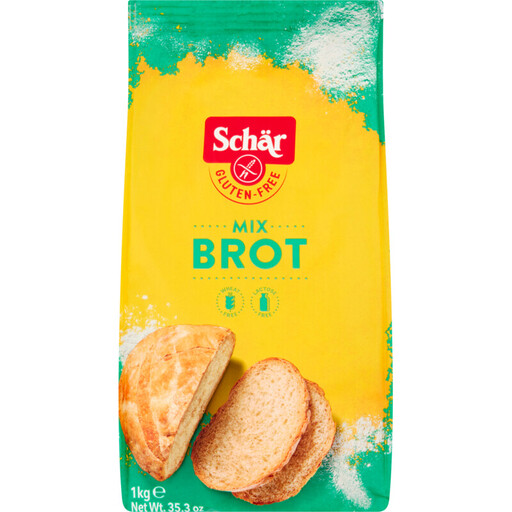
This option is for anyone who wants to bake gluten-free bread in their holiday home. A bread mix isn’t a substitute for ready-to-eat white bread, so check before buying that you have the facilities you need to prepare it.
 No image available
Schär Bread Mix-Mix B Gluten Free, 1 kg
For anyone who can make their own bread in a holiday home instead of bringing ready-to-eat white bread.
1 kg gluten-free bread mix; check the pack for preparation instructions, allergens and the ‘gluten-free’ label.
View at Joybuy
Frequently asked questions
Is ‘wheat-free’ enough when buying bread if I have coeliac disease?
No. ‘Wheat-free’ doesn’t mean the same as ‘gluten-free’. Choose a pack that is explicitly labelled gluten-free and check the label. Under EU Implementing Regulation (EU) No 828/2014, a product can be labelled ‘gluten-free’ in the EU if it contains no more than 20 mg/kg of gluten.
How can I keep gluten-free bread separate in a holiday home?
Keep it sealed and separate from ordinary bread, and use clean or separate kitchen utensils. Watch out for crumbs in a shared toaster or on a chopping board, too; according to the Netherlands Nutrition Centre, even a stray breadcrumb can cause symptoms for someone with coeliac disease.
Should I bring gluten-free bread with me or buy it locally?
If it’s essential, it’s best to bring it with you, or check before you travel whether you can buy it at your destination. The Netherlands Nutrition Centre advises checking availability before a trip and taking essential products with you if necessary.
Does all gluten-free bread in the Netherlands contain iodised salt?
No, you can’t assume this is the case for every loaf. Dutch food legislation on the addition of micronutrients permits iodine to be added to bread through baker’s salt, but check the ingredients list for each product. The gluten-free white breads mentioned from Jumbo and PLUS list iodised salt.
What nutritional information is useful for a longer stay?
Compare fibre and salt per 100 g, among other things, and consider how the bread fits into the rest of your meals. According to the Netherlands Nutrition Centre, some gluten-free flour mixes can be low in fibre, iron, vitamin B1 and folic acid; the nutritional information on the pack can help you compare products.


