Who is this relevant to?

Camper with coeliac disease

You need gluten-free bread and may be eating alongside people who have brought regular bread. So don’t just check for the ‘gluten-free’ label: make sure crumbs can’t get into your bread or onto your spread. The Voedingscentrum (Netherlands Nutrition Centre) warns that even a stray bread crumb can cause symptoms if you have coeliac disease.

Camper who plans lunches in advance

You want to bring bread for breakfast or lunch without having to visit a bakery every day. Compare the pack size with how much you expect to use, and check how to store the bread after opening.

Shopper comparing nutritional information

As well as checking that it is gluten-free, you want to compare fibre and ingredients. Check the label per 100 g or per serving, and see whether iodised salt or baker’s salt is listed in the ingredients; this varies between breads.

What should you look for when choosing?

If you have coeliac disease, first choose bread labelled ‘gluten-free’ and avoid contact with regular bread crumbs. Then decide whether you want ready-to-eat bread or have the time and facilities to bake a loaf from a mix.

What to consider What to check when buying Who it matters to
Eating gluten-free without cross-contamination Check the ‘gluten-free’ label on the packaging and read the allergen information. Pack your bread and clean utensils separately. If I have coeliac disease and others are eating regular bread, I want to make sure crumbs don’t get into my food. For around 50% of consumers, this assurance that the food is gluten-free comes first.
Preparation and storage Check whether the bread is ready to eat, how much the pack contains and what the storage instructions are after opening. For a lunch that doesn’t involve baking, I want to take bread I can eat as soon as I get to the campsite. Around 30% of consumers give this practical convenience top priority.
Fibre and ingredients Compare fibre on the same basis, for example per 100 g, and check whether iodised salt or baker’s salt is listed. If I’m taking bread for several meals, I want to compare the nutritional information on different packs. Around 20% of consumers prioritise checking the label in this way.

Common mistakes

  • Judging by the colour of the bread or looking only for ‘wheat-free’

    Regular white bread is not suitable for someone with coeliac disease. Under the EU implementing regulation on food information for people with gluten intolerance, a product can only be labelled ‘gluten-free’ if its gluten content is no more than 20 mg/kg.

    Look for the ‘gluten-free’ label on the current packaging, and read the ingredients and allergen information too.

  • Making a sandwich with gluten-free bread among regular bread crumbs

    The Voedingscentrum (Netherlands Nutrition Centre) warns that even a stray bread crumb can cause symptoms if you have coeliac disease. So take care when using a shared chopping board, knife or jar of spread.

    Keep the gluten-free bread sealed and use your own clean knife and a clean surface.

  • Assuming all gluten-free bread has the same nutritional value

    The term ‘gluten-free’ doesn’t in itself tell you how much fibre the bread contains or whether it uses iodised salt. The Voedingscentrum (Netherlands Nutrition Centre) says that bakers are not required to use baker’s salt.

    Compare the nutritional information for the products you’re considering, and look for iodised salt or baker’s salt in the ingredients list.

  • Assuming an online range is available as camping provisions

    A product listing doesn’t tell you what will be in stock at a particular shop when you set off. The information on packaging can also change.

    Check the exact product shortly before you leave, and take enough portions that you’ve checked in advance if it won’t be easy to find an alternative while you’re away.

Brands to consider

Jumbo Lekker Vrij

Jumbo lists a 500 g pre-packed white gluten-free loaf, alongside gluten-free bread mixes.

  • The ingredients list for Jumbo Lekker Vrij van Gluten Wit includes iodised salt.
  • Check the current label and availability of your chosen product before you set off.

AH Glutenvrij

Albert Heijn lists AH Glutenvrij Wit brood half as a white bread option.

  • The ‘half’ designation helps distinguish this option from other loaf sizes.
  • Albert Heijn recommends checking the packaging, as ingredients and allergen information may change.

PLUS

PLUS lists its own product under the name PLUS Wit glutenvrij.

  • The product name makes it clear which white gluten-free option to look for.
  • Check the packaging for the ingredients, nutritional information and storage instructions for the product you buy.

Schär

Schär has a range of gluten-free bread products, including Meesterbakker Classic and another variety, Meesterbakker Mehrkorn.

  • PLUS describes Meesterbakker Classic as gluten-free white bread with millet, quinoa and sourdough.
  • Ingredients and storage instructions for one Schär variety don’t automatically apply to another.

Consenza

Consenza’s range includes fresh gluten-free bread and rolls for baking at home.

  • Bake-at-home rolls are an alternative for anyone who can bake before setting off or at their destination.
  • Check that the product format and preparation method suit your camping plans.

Bread mix for baking your own bread

This Joybuy option is a gluten-free bread mix, not a ready-to-eat white loaf for a campsite lunch. Choose this option only if you can prepare and bake the bread before you want to eat it.
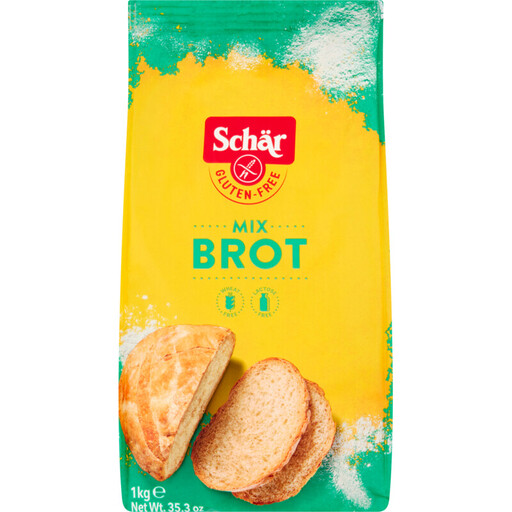
Schär Bread Mix-Mix B Gluten Free, 1 kg pack

Schär Bread Mix-Mix B Gluten Free, 1 kg

For anyone who wants to bake their own gluten-free bread before a campsite lunch; this mix is not ready to eat. Check the preparation steps, the baking facilities you’ll need and the current allergen information on the packaging.

View at Joybuy

Frequently asked questions

When can bread be labelled ‘gluten-free’?

Under EU Implementing Regulation 828/2014, bread for consumers can only carry this label if its gluten content is no more than 20 mg/kg. The separate label ‘very low gluten’ has a limit of no more than 100 mg/kg, so if you have coeliac disease, check the exact wording on the packaging.

Can someone with coeliac disease eat regular white bread at a campsite?

No. Regular wheat white bread is not a gluten-free alternative. The Voedingscentrum (Netherlands Nutrition Centre) also stresses that even a stray bread crumb can cause symptoms if you have coeliac disease, so keep gluten-free bread separate while preparing food too.

How do I keep gluten-free bread away from regular bread crumbs?

Keep the bread in a sealed pack and use your own clean knife and chopping board. Take care with shared spreads too, so crumbs don’t end up on the gluten-free bread.

Does gluten-free white bread always contain iodised salt?

No. The Voedingscentrum (Netherlands Nutrition Centre) says that bakers are not required to use baker’s salt, so check the ingredients list for the bread you choose. Jumbo specifically lists iodised salt in Jumbo Lekker Vrij van Gluten Wit, but that doesn’t tell you anything about other products.

How should I store an opened pack of gluten-free bread while camping?

Follow the instructions on the pack you bring. For Schär Meesterbakker Mehrkorn, PLUS recommends storing it in a cool, dry place, resealing the pack after opening and using the bread within a few days or freezing it straight away. These instructions don’t automatically apply to other varieties.
