What should you look for when choosing?
First, find out what gluten-free precautions your guests need. Then compare the shape with your planned toppings and check for any other allergens.
| What to consider | What to check when buying | Who is this most important for? |
|---|
| Serving gluten-free food |
Check the gluten-free statement on the packaging. If you’re serving someone with coeliac disease, also keep knives, serving dishes and toppings separate from regular toast. |
If I’m serving someone with coeliac disease, I want to stop a suitable toast from coming into contact with crumbs. This precaution would be the main priority for around 42% of consumers. |
| Shape and toppings |
Compare bread-shaped toast, seasoned toasts and crackers with the toppings you plan to serve. If the toppings are heavy or moist, check whether the base stays intact. |
When serving generously topped snacks, I want to know whether the shape I choose will be easy to serve. Around 33% of consumers are expected to prioritise how well the base goes with the toppings. |
| Other allergens |
Read the ingredients list and allergen warnings on the packaging you buy, even if the product is gluten-free. |
If a guest also needs to avoid egg or soya, a gluten-free label alone isn’t enough. These additional requirements would be the main concern for around 25% of consumers. |
Brands to consider
These examples show a range of product types. Always check the gluten-free statement and any other allergens for each individual product, not just the brand.
Schär
Schär describes Zwieback as small, bread-shaped gluten-free toasts for snacks and other occasions; Snackers are small savoury crackers.
- Zwieback offers a bread-shaped toast option alongside the Snackers crackers.
- Check the latest allergen information: according to the brand, Zwieback may contain soya and Snackers may contain egg.
Gluten Free Bakery Holland
Jumbo describes the 100 g Toastjes Italiaans Gekruid as toasts with an Italian herb blend.
- An option if you’d like the toast itself to add herbs to your snack.
- The listed ingredients include egg and gluten-free oat flour; also check the warnings for nuts and sesame.
Laurieri
Albert Heijn describes Scrocchi sea salt as gluten-free savoury crackers, rather than bread-shaped toast.
- According to Albert Heijn, these crackers contain no milk or egg.
- The ingredients include soya, so check the packaging if this matters for one of your guests.
AH Glutenvrij
AH Glutenvrij white rolls are a larger bread option for your menu, rather than small toasts.
- A different product type if small toasts aren’t right for the snack you have planned.
- Check the ingredients and allergens for the rolls separately before choosing them for your guests.
ALDI
ALDI Netherlands’ regular toast range includes wheat toast and Melba toast, among other products.
- The range can help you compare different toast shapes.
- Don’t assume these regular products are suitable for a gluten-free diet. Check the individual packaging for an explicit gluten-free statement.
Rice toast at Joybuy
This rice toast could be a crisp base for a drinks party spread. If you’re serving someone with coeliac disease, your choice should depend on the gluten-free statement on the current packaging, as well as keeping preparation separate.
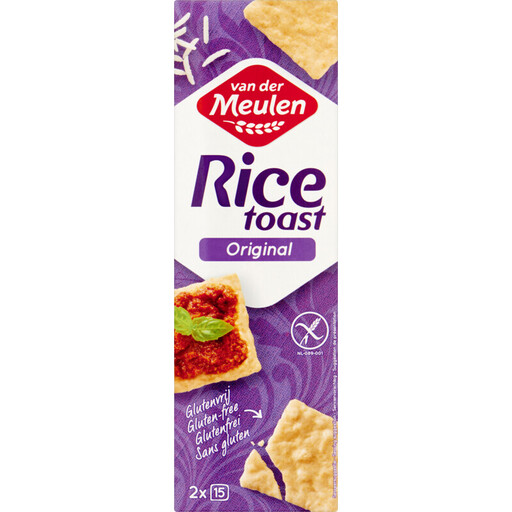 Image unavailable
Van Der Meulen Rice Toast Natural, 65 g
Rice toast to consider as a crisp base for dips or small toppings. If you’re serving someone with coeliac disease, check the gluten-free statement on the packaging. If anyone has a soya or sesame allergy, check the latest allergen information too.
Pack weight: 65 g. If you’re using heavier toppings, check whether the toast stays intact when served.
View at Joybuy
Frequently asked questions
When can toast be labelled ‘gluten-free’?
Under Commission Implementing Regulation (EU) No 828/2014, food may be labelled ‘gluten-free’ if it contains no more than 20 mg/kg of gluten when sold to the final consumer. If you’re serving someone with coeliac disease, check the statement on the packaging of the product you buy.
Can gluten-free toast still contain other allergens?
Yes. A gluten-free statement says nothing about ingredients such as egg, soya, nuts or sesame. If a guest needs to avoid other ingredients too, read the full ingredients list and allergen warnings for the specific product.
How should I serve gluten-free toast alongside regular toast?
Prepare the gluten-free snacks separately and use clean, separate knives, serving dishes and spoons for toppings and dips. This helps limit contact with crumbs from regular toast, which the Netherlands Nutrition Centre says is particularly important for people with coeliac disease.
Does gluten-free toast always contain iodised baker’s salt?
You can’t tell from the ‘gluten-free’ label. The Netherlands Nutrition Centre explains that iodised baker’s salt is used in bread. For a specific toast product, check the ingredients list to see whether iodised salt is included.


