Who is this choice relevant for?

Older people with coeliac disease

If you need to avoid gluten, the current packaging is your starting point. The Netherlands Nutrition Centre recommends looking for the ‘gluten-free’ statement and the Crossed Grain symbol; when serving, take care to avoid bread crumbs too.

Hosts and carers

If you’re serving ordinary bread as well as gluten-free toast, you’ll need a separate crumb-free space and clean cutlery. That way, you’re not relying solely on what’s stated on the packaging.

Older people looking for a different texture or flavour

A small piece of toast can go well with sweet or savoury toppings, while a seasoned cracker offers a different flavour. Ask beforehand whether a crisp, dry product is comfortable to eat, as this varies from person to person.

What should you look for when choosing?

First, check for a gluten-free statement and avoid contact with bread crumbs. Then compare the texture, flavour and other information on the label for the person who’ll be eating it.

What to consider What to check when buying Who it matters to
Gluten-free and served without crumbs Look for ‘gluten-free’ or the Crossed Grain symbol on the current packaging. Use a clean plate and separate cutlery. When I’m serving someone with coeliac disease, I want a clearly identifiable gluten-free product that won’t come into contact with ordinary bread crumbs. For around 50% of consumers, this reassurance comes first.
Texture, flavour and toppings Check whether the product is plain or seasoned, and whether its crisp texture is comfortable to eat. With coffee, I’m looking for a small piece of toast to go with sweet or savoury toppings, but it shouldn’t be unpleasantly hard or dry. Around 30% of consumers give this eating experience top priority.
Salt, fibre and other ingredients Compare the nutritional information per 100 g and per portion; check the allergen and ingredient information separately. If salt, fibre or another allergen is also a consideration, I want to know what’s in this particular toast or cracker. For around 20% of consumers, this label information matters most.

Common mistakes when buying and serving

  • Assuming a piece of toast is gluten-free based on its name

    Toast, Melba toast and crackers can contain gluten-containing cereals. So the type of product doesn’t tell you whether a particular variety is suitable for someone with coeliac disease.

    Check the current packaging for an explicit ‘gluten-free’ statement or the Crossed Grain symbol.

  • Serving gluten-free toast with the same cutlery as ordinary bread

    The Netherlands Nutrition Centre notes that even a bread crumb can matter to someone with coeliac disease. Suitable packaging won’t prevent contact during serving.

    Place the toast on a clean, crumb-free plate and use separate, clean cutlery for the toppings.

  • Overlooking other allergens and salt

    A gluten-free statement tells you nothing about allergens such as soya, egg or sesame. Salt content also varies between products: Jumbo lists 6.6 g of salt per 100 g for Gluten Free Bakery Holland Toastjes Italiaans Gekruid.

    Read the allergen information for the variety you’ve chosen and compare the salt per 100 g as well as per portion served.

  • Assuming gluten-free status or Dutch origin tells you whether iodised salt is used

    A gluten-free statement doesn’t tell you what type of salt is used in a piece of toast.

    If this information matters to your choice, check the ingredients list on the specific packaging for a statement such as ‘iodised salt’.

Brands and product ranges to consider

Schär

Schär presents Zwieback as small gluten-free pieces of toast for sweet or savoury toppings.

  • According to Schär, Zwieback contains 8.1 g of fibre and 1.8 g of salt per 100 g.
  • Schär notes that the product may contain traces of soya. Also check whether the crisp texture is comfortable to eat.

Laurieri

Laurieri Scrocchi is a gluten-free salted cracker for a savoury coffee-table spread.

  • Albert Heijn lists cornflour, soya flour and chickpea flour for this variety; according to the product information, no milk or egg has been added.
  • The cracker contains soya. The product information lists 3 g of salt per 100 g.

Gluten Free Bakery Holland

The Italian-seasoned gluten-free toast is an option if you’re looking for a bold, savoury flavour.

  • Jumbo lists a 100 g pack of the Italian-seasoned toast.
  • According to Jumbo, this variety contains egg and oats, may contain nuts and sesame, and provides 6.6 g of salt per 100 g.

Jumbo Lekker Vrij van Gluten

The seed crackers are an alternative if you don’t need the shape of a piece of toast.

  • Jumbo lists the Crossed Grain symbol and 7.8 g of fibre per 100 g for these crackers.
  • According to Jumbo, this variety contains oats, egg and sesame, may contain nuts, and lists 3.63 g of salt per 100 g in its nutritional information.

Rice toast on Joybuy

This rice toast is a suitable product type for enjoying with coffee. Before serving it to someone with coeliac disease, check the current packaging for a gluten-free statement, and assess the allergens and texture separately.
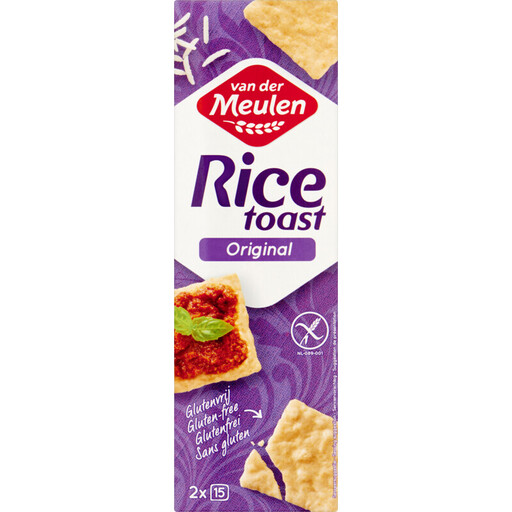
Van Der Meulen Rice Toast Natural, 65 g

Van Der Meulen Rice Toast Natural, 65 g

Rice toast for anyone who’d like to serve plain toast with coffee. If serving it to someone with coeliac disease, rely on the current packaging only if it explicitly says ‘gluten-free’.

Pack size: 65 g. If you have other allergies, check the allergen information and make sure the crisp texture is comfortable to eat.

View on Joybuy

Frequently asked questions

When can toast be called ‘gluten-free’?

Under Commission Implementing Regulation (EU) No 828/2014, the statement ‘gluten-free’ may be used if the food sold to the final consumer contains no more than 20 mg of gluten per kg. Check the current packaging of the variety you’re buying for this statement.

Is ordinary Melba toast suitable for someone with coeliac disease?

Not based on the name ‘Melba toast’ alone. The Netherlands Nutrition Centre points out that gluten is often found in bread and crispbread, so choose a variety whose current packaging explicitly says ‘gluten-free’ or carries the Crossed Grain symbol.

How should I serve gluten-free toast alongside ordinary bread?

Use a clean, crumb-free plate and separate, clean cutlery for the toast and toppings. The Netherlands Nutrition Centre notes that a bread crumb can matter to someone with coeliac disease.

Can gluten-free toast contain other allergens?

Yes. A gluten-free statement tells you nothing about other allergens: Albert Heijn lists soya for Laurieri Scrocchi, while Jumbo lists oats, egg and sesame for the seed crackers mentioned above. Always read the allergen information on the specific packaging.

Does Dutch toast automatically contain iodised salt?

No. The origin of the toast doesn’t confirm what type of salt is used in the specific product. If it matters to your choice, check the ingredients list for a statement such as ‘iodised salt’.
