If you’re hosting someone with coeliac disease, choose toast whose current packaging clearly states ‘gluten-free’. Then make sure it doesn’t come into contact with gluten-containing crumbs or shared dips while you prepare and serve it, as advised by the Dutch Coeliac Association. Plain rice toast lets the toppings take centre stage; seasoned gluten-free toast adds flavour of its own, but you’ll also need to check for other allergens.
Who is this choice of toast important for?
Anyone cooking for a guest with coeliac disease
You want to serve toast labelled gluten-free and keep it separate from gluten-containing products during preparation. The Dutch Coeliac Association points out that shared dips can also cause cross-contamination.
Anyone putting together a sharing platter
You’re looking for a crisp base for snacks and choosing between plain rice toast and toast that’s already seasoned. Whichever you choose, the gluten-free label on the specific pack is essential.
Anyone keeping an eye on other allergens
As well as gluten, you may need to consider egg, oats, or warnings about sesame, soya and nuts. Check the ingredients and allergen information on the pack you’re actually serving.
What should you look for?
Start by checking for a gluten-free label and planning how to serve the toast without cross-contamination. Then choose between plain and seasoned toast, and check which other ingredients may matter to your guests.
| What to consider |
What to check |
Who it matters most to |
| Choosing and serving gluten-free toast |
Look for ‘gluten-free’ on the current packaging. Use clean utensils and keep the toast and dips separate from snacks containing gluten. |
If my guest has coeliac disease, I want to choose both the toast and how it’s served carefully; around 50% of consumers put this first. |
| Flavour and toppings |
Decide whether plain rice toast or seasoned toast will go better with the toppings. Check the label on the exact variant you choose. |
For a dinner with snacks, I want the toast’s flavour to complement the toppings; around 30% of consumers put this pairing first. |
| Other allergens and nutritional information |
Read the allergen information and, if needed, compare salt and fibre per 100 g as well as the portion you plan to serve. |
If there’s another allergy to consider or I want to compare nutritional values, I look beyond gluten; for around 20% of consumers, this is the main additional consideration. |
Common mistakes when choosing gluten-free toast
-
Assuming a rice base means the product is labelled gluten-free
Rice as an ingredient doesn’t confirm that the finished product is suitable for someone with coeliac disease. The Netherlands Food and Consumer Product Safety Authority explains that ‘gluten-free’ is a regulated claim with specific conditions; according to the Dutch Coeliac Association, the product must contain less than 20 mg of gluten per kg.
Check that the current packaging for your chosen toast says ‘gluten-free’.
-
Putting all the toast and dips together on the table
Even gluten-free toast can come into contact with crumbs from ordinary bread or crackers during preparation or serving. The Dutch Coeliac Association warns, among other things, against dipping gluten-containing products into gluten-free dips.
Use clean utensils and set aside separate toast and dips for your gluten-free guest.
-
Overlooking other allergens and salt
For Gluten Free Bakery Holland Toastjes Italiaans Gekruid, Jumbo lists egg and oats, possible traces of nuts and sesame, and 6.6 g of salt per 100 g. So ‘gluten-free’ doesn’t tell you anything about these separate considerations.
Read the allergen information on each pack and compare nutritional values using the same unit and the portion you plan to serve.
-
Assuming every bread alternative provides iodine
Baker’s salt contains iodine, but according to the Netherlands Nutrition Centre, using it to bake bread isn’t compulsory. So don’t assume that a product contains iodine simply because it’s in the ‘toast’ category.
Check the ingredients of your chosen toast if you want to know whether baker’s salt has been used.
Brands and products to consider
Gluten Free Bakery Holland
Jumbo sells this brand’s Toastjes Italiaans Gekruid as seasoned gluten-free toast for savoury snacks.
- The product information lists gluten-free oat flour and Italian herbs for this specific variant.
- According to Jumbo, this variant contains egg and oats, may contain nuts and sesame, and has 6.6 g of salt per 100 g.
Van der Meulen / Melba Toast
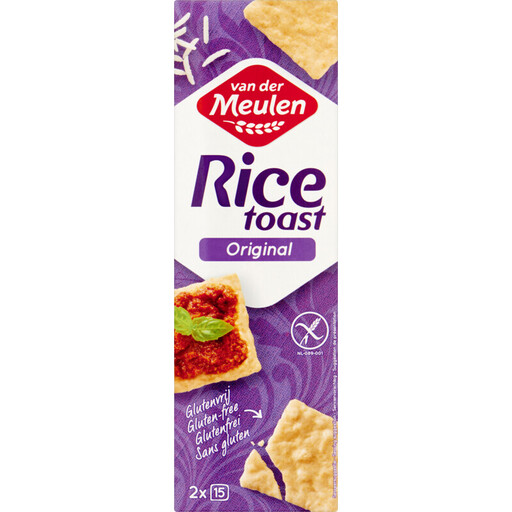
Jumbo presents Van der Meulen Rice Toast Original as plain, gluten-free rice toast.
- The Original variant is a plain base for when you want the toppings to provide the flavour.
- Check the pack for information about sesame and soya. The gluten-free claim on this rice toast doesn’t automatically apply to other melba toast products.
Albert Heijn
Albert Heijn stocks gluten-free toast options alongside products that don’t carry that label.
- Its toast range includes gluten-free Laurieri Scrocchi variants.
- According to Albert Heijn, AH Melba toast naturel contains wheat and barley malt flour. Choose based on the individual pack, not the shop or product category.
Bolletje
Bolletje Ciabatta Crackers Tomaat & Kruiden show why a cracker for snacks isn’t automatically a gluten-free alternative.
- Bolletje lists wheat flour and wheat as an allergen for this product. Don’t choose these crackers for a guest with coeliac disease.
Rice toast for snacks on Joybuy
This plain rice toast is a good match for snacks where the toppings provide the flavour. If you’re serving it to someone with coeliac disease, always check that the current packaging says gluten-free.
 No image available
Van Der Meulen Rice Toast Natural – 65 g
Plain rice toast for snacks where the toppings provide the flavour.
If someone has coeliac disease, check that the current packaging says gluten-free. If they have a sesame or soya allergy, pay close attention to the allergen information: statements about whether these are present or may be present vary.
View on Joybuy
Frequently asked questions
Is rice toast automatically suitable for someone with coeliac disease?
No. Choose rice toast whose current packaging clearly says ‘gluten-free’; rice as the main ingredient isn’t enough to confirm that it’s suitable. The Dutch Coeliac Association explains that products carrying this claim must contain less than 20 mg of gluten per kg.
Can gluten-free toast contain other allergens?
Yes. For example, Jumbo lists egg and oats, as well as possible traces of nuts and sesame, for Gluten Free Bakery Holland Toastjes Italiaans Gekruid. If there’s another allergy to consider, check the current packaging for the variant you plan to serve.
How should I serve gluten-free toast alongside ordinary toast?
Prepare and serve the gluten-free toast using clean, separate utensils, and keep it away from crumbs from ordinary toast. Set out separate dips too: the Dutch Coeliac Association advises against dipping gluten-containing products into gluten-free dips.
Does toast always contain iodine from baker’s salt?
No. The Netherlands Nutrition Centre says that baker’s salt contains iodine, but that using it in bread isn’t compulsory. Check the ingredients of the specific toast rather than assuming what type of salt has been used based on the product category.


