
Shoppers looking to save
You regularly buy gluten-free toast or crackers and want to choose a pack you’ll actually use up. Suitability for coeliac disease must always come first.


If you have coeliac disease, start with toast or crackers whose current packaging explicitly says ‘gluten-free’ or displays the Crossed Grain symbol; a product isn’t suitable just because of its name. Then choose a pack size that suits how much you use, check for any additional allergens and avoid contact with ordinary bread crumbs.
You regularly buy gluten-free toast or crackers and want to choose a pack you’ll actually use up. Suitability for coeliac disease must always come first.
As well as gluten, you may need to avoid ingredients such as egg, soya, sesame or nuts. So remember to check the ingredients and allergen information for the specific product.
If others at home eat ordinary bread, you’ll also need to take care when storing and toasting gluten-free toast. Keep it away from bread crumbs and shared food preparation surfaces.
First, check that the toast or crackers are suitable for coeliac disease. Only then choose the type and pack size that suit how often and how you plan to use them.
| What to consider | What should you check? | Who is this most important for? |
|---|---|---|
| Gluten-free labelling | Look for ‘gluten-free’ or the Crossed Grain symbol on the current packaging; don’t rely on the product name alone. | When I buy toast for someone with coeliac disease, I want to be able to check its suitability on the packaging. This is the top priority for around 36% of shoppers. |
| Pack size | Check the weight, number of portions and storage instructions, especially if you don’t eat toast every day. | If I use it regularly, I want to have enough at home without leaving any unused toast. Choosing the right amount is the top priority for around 29% of shoppers. |
| Additional allergens | Read the ingredients list and allergen information for the product you’ve chosen, even if it’s gluten-free. | If I also need to avoid egg or soya, I want to know what else is in my toast. Additional allergens are the top priority for around 21% of shoppers. |
| Using it in the kitchen | Work out how to store and prepare your gluten-free toast separately when others eat ordinary bread. | In a shared kitchen, I want to stop ordinary bread crumbs getting onto my toast. Keeping food separate is the top priority for around 14% of shoppers. |
The name Melba toast, party toast or rice toast doesn’t, by itself, confirm that a product is suitable for coeliac disease.
Every time you buy, check the current packaging for ‘gluten-free’ or the Crossed Grain symbol before comparing other product features.
According to Jumbo, Gluten Free Bakery Holland’s Toastjes Italiaans Gekruid contains egg and may also contain nuts and sesame. Albert Heijn lists soya in Laurieri Scrocchi Zeezout.
If you have an additional allergy, check the ingredients and warnings for the exact product you’re buying.
Even gluten-free toast can come into contact with ordinary bread crumbs in a shared kitchen.
Store it separately and use a clean, separate way to toast it. A toaster bag or similar accessory doesn’t make ordinary toast gluten-free.
Jumbo lists Toastjes Italiaans Gekruid as gluten-free toast for small bites.
Schär offers gluten-free crackers, among other products; these are a different type of product from small party toasts.
Albert Heijn describes Laurieri Scrocchi Zeezout as thin, crunchy gluten-free crackers.
The gluten-free range is a starting point for exploring different types of everyday groceries.
Jumbo has a dedicated gluten-free category, including listed toast and crackers.
This selection features rice toast as a crunchy alternative if you’re not specifically looking for classic party toasts. If you have coeliac disease, check the gluten-free labelling on the current packaging.
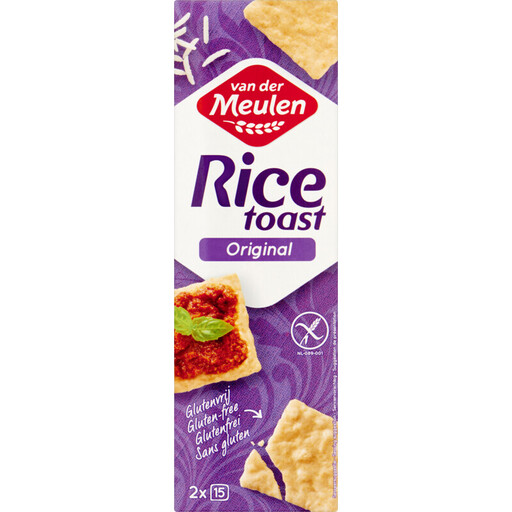 Image unavailable
An option if you’d like to use rice toast instead of classic toast. The pack contains 65 g. If you have coeliac disease, check the gluten-free labelling on the current packaging, and read the allergen information if you have additional allergies.
You can’t tell from the name. According to the Netherlands Nutrition Centre, check the current packaging for ‘gluten-free’ or the Crossed Grain symbol; even if you trust the brand, don’t rely solely on a previous purchase.
No, they provide different information. Check the gluten-free labelling when choosing a product for coeliac disease, and read warnings about the possible presence of other allergens separately if they’re relevant to you.
Store it away from ordinary bread and avoid contact with crumbs while preparing it. Use a clean, separate way to toast it; a toaster accessory is no substitute for a gluten-free product.
You can’t tell from the type of product. Check the ingredients for the specific toast or crackers if the type of salt used matters to you.