If you have coeliac disease, choose toast or crackers whose current packaging explicitly states that they are gluten-free, and avoid contact with ordinary toast crumbs when serving. With coffee and cake, a plain cracker offers a different flavour to seasoned toast; also check for other allergens and, if you often eat the product as a bread substitute, compare the nutritional information.
Who is this choice relevant to?
Coffee guests with coeliac disease
For you, it’s not just what the packaging says that matters, but also how the toast is served. According to the Voedingscentrum, even a stray crumb containing gluten can cause symptoms if you have coeliac disease. So keep gluten-free products separate from ordinary toast and shared spreads.
Looking for a plain, crunchy base
You want something crunchy to enjoy with coffee and cake, perhaps with a sweet or savoury topping. Bear in mind the difference between a cracker and a small piece of toast: Schär, for example, describes Fette Croccanti as a cracker to serve with both sweet and savoury toppings, not as Melba toast.
People who often replace bread
If crackers or toast regularly take the place of bread, fibre, salt and other allergens become more important when comparing packaging. The Voedingscentrum also points out that bread does not have to be made with iodine-enriched baker’s salt, so consider your diet as a whole, not just the toast.
What should you look for when choosing?
If you have coeliac disease, start by checking that the product is labelled gluten-free and taking steps to prevent cross-contact. Then choose a flavour that works with cake or savoury toppings, and if you eat it regularly, compare the nutritional information and allergens too.
| What to consider |
What to check before buying |
Who should pay particular attention? |
| Gluten-free suitability |
Check the gluten-free label on the current packaging and read the ingredients. When serving, avoid contact with ordinary toast. |
If I have coeliac disease, I want to be sure that crumbs from ordinary toast are kept away from my portion too. Around 50% of consumers put gluten-free suitability first. |
| Flavour and product type |
Check whether you’re buying a cracker or toast, and whether the ingredients suggest a plain or seasoned flavour. |
With coffee and cake, I’m looking for something crunchy that won’t clash with the sweet flavours. This is the main consideration for around 30% of consumers. |
| Nutritional information and allergens |
Compare fibre and salt per 100 g, and check the information about allergens present and possible traces. |
If I often eat toast instead of bread, I want to know what I’m typically getting from it and whether there are any other allergens to consider. This is the most important factor for around 20% of consumers. |
Common mistakes
-
Assuming Melba toast is gluten-free
The product type tells you nothing about the ingredients. Albert Heijn lists wheat flour and barley malt flour in AH Melba toast naturel, so it is not a gluten-free option.
If you have coeliac disease, check the current packaging of each product for an explicit gluten-free label and read the ingredients.
-
Reading only the front of the packaging
A gluten-free label doesn’t tell you which other allergens may be relevant. For example, Jumbo lists egg and oats in Gluten Free Bakery Holland Toastjes Italiaans Gekruid, as well as warnings about allergens including nuts and sesame.
Read the full, current allergen information, especially if you need to avoid anything besides gluten.
-
Choosing seasoned toast as a plain accompaniment
Italian-seasoned toast adds a savoury flavour. That can work well with savoury toppings, but may not go with cake or a sweet topping.
Choose a plain variety if you want the cake to take centre stage; opt for a seasoned variety when you’re deliberately serving a savoury combination.
-
Regularly eating toast instead of bread without comparing the options
Nutritional values vary by product. Schär lists 2.3 g of fibre per 100 g for Fette Croccanti; Jumbo lists 6.6 g of salt per 100 g for Gluten Free Bakery Holland Toastjes Italiaans Gekruid. The Voedingscentrum also points out that bread does not have to be made with iodine-enriched baker’s salt.
Compare the nutritional information per 100 g. If you eat little bread, also consider the place bread and other foods have in your overall diet.
Brands to consider
Schär
Schär offers products including Fette Croccanti, a cracker that the brand says can be served with sweet and savoury toppings.
- Schär describes this particular product as gluten-free, lactose-free and wheat-free, with rice flour and maize flour as its base.
- It isn’t a small piece of Melba toast. Schär lists 2.3 g of fibre per 100 g and possible traces of soya; check the packaging if this matters to you.
Gluten Free Bakery Holland
This brand’s Toastjes Italiaans Gekruid are small, savoury seasoned toasts, which Jumbo sells as a gluten-free product.
- The small toast format may suit you if you’re also serving savoury toppings with coffee.
- For this variety, Jumbo lists egg and oats, warnings about allergens including nuts and sesame, and 6.6 g of salt per 100 g. Its seasoned flavour isn’t a plain accompaniment to cake.
AH Glutenvrij
Albert Heijn’s range includes both crunchy bread substitutes and sweet snacks and cakes.
- You can check each product to see whether you’re looking for something crunchy or a sweet treat to enjoy with coffee.
- Check each product individually. According to Albert Heijn, regular AH Melba toast naturel contains wheat flour and barley malt flour, so it isn’t a gluten-free option.
Toast on Joybuy
This rice toast is a crunchy option to consider with coffee and cake. If you have coeliac disease, check the gluten-free label on the current packaging before eating it, and keep it separate from products containing gluten when serving.
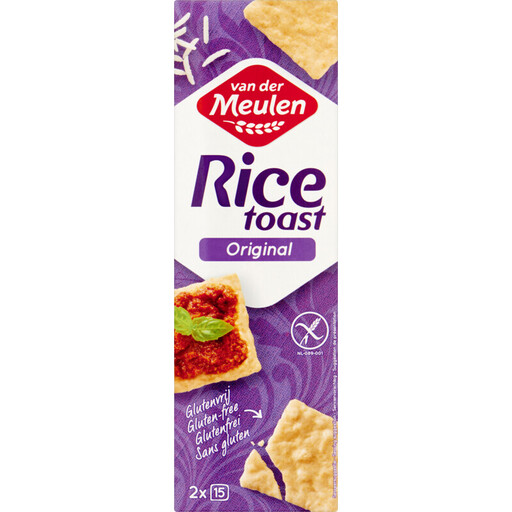 Image unavailable
Van Der Meulen Rice Toast Natural, 65 g
Rice toast to consider if you’re looking for something crunchy to enjoy with coffee. If you have coeliac disease, check the current packaging for a gluten-free label, and if you have an allergy, read the information about sesame and soya.
View on Joybuy
Frequently asked questions
Can I serve ordinary Melba toast to someone with coeliac disease?
Not without checking that the specific product is gluten-free. According to Albert Heijn, AH Melba toast naturel contains wheat flour and barley malt flour, so it isn’t suitable. If you choose a gluten-free alternative, also take care to avoid crumbs when serving.
Is lactose-free or vegan toast also gluten-free?
No. Those labels alone tell you nothing about gluten. If you have coeliac disease, look for an explicit gluten-free label on the current packaging and read the ingredients list too.
What should I look for in gluten-free toast containing oats?
Check that the specific product is labelled gluten-free and read the allergen information. For example, Jumbo lists oats and egg in Gluten Free Bakery Holland Toastjes Italiaans Gekruid. A gluten-free label doesn’t remove the need to check for other allergens.
Does gluten-free toast have to contain iodine-enriched baker’s salt?
No, that isn’t a general feature of gluten-free toast. The Voedingscentrum says that bread does not have to be made with baker’s salt. So if you often replace bread, toast isn’t the only product to consider when assessing the make-up of your diet.


