What should you look for when buying?
Start by checking the gluten-free label and the full preparation process. Then choose a product format to suit the lunch, and compare the other allergens and nutritional information for the exact variety.
| What to consider |
What to check when buying |
Who it is most relevant to |
| Gluten-free labelling and cross-contamination |
Check the current gluten-free label or product specification. Set out how storage, preparation and serving will be kept separate from ordinary bread products. |
When buying for students with coeliac disease, I need to make sure their toast will not come into contact with bread crumbs after the pack is opened. This assurance is the top priority for around 36% of consumers. |
| Lunch format and portion size |
Compare the number of pieces or slices, pack weight, and suitability for the intended preparation and serving method. |
For a lunch with toppings, I want to know whether small toast portions will do or whether larger slices would suit the menu better. Around 29% of consumers prioritise portion format above all else. |
| Other allergens |
Check the ingredients, allergen information and any warnings about possible traces for the exact variety; include the toppings too. |
When putting together lunches for people with different dietary requirements, I must not let the gluten-free label obscure the need to check for allergens such as soya or egg. These additional allergens are the main concern for around 21% of consumers. |
| Nutritional information and the menu |
Compare factors such as fibre and salt per 100 g and per portion. For bread products, check the label if the presence of iodised baker’s salt is relevant. |
If toast becomes a regular part of lunch, I want to assess its nutritional value alongside the toppings and other lunch items. This menu consideration matters most to around 14% of consumers. |
Relevant brands and suppliers
These examples show why the product variety and current packaging matter more than the brand name alone.
Melba / Van der Meulen
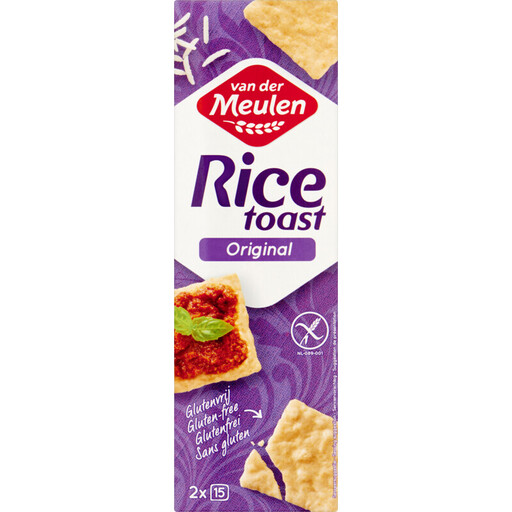
Van der Meulen Rice Toast Original is a rice toast for small, crisp lunch portions.
- Jumbo labels this specific variety as gluten-free.
- Jumbo also warns that it may contain sesame and soya; check the pack for the guests you are catering for.
Laurieri
Scrocchi Sea Salt is a gluten-free toast or cracker-style option for small topped portions.
- Albert Heijn describes this variety as gluten-free and free from milk and egg.
- The product information lists soya and 3 g of salt per 100 g. Consider the actual portion size and the other ingredients in the lunch.
Schnitzer
Bread'n toast rustic is pre-sliced gluten-free bread for a lunch with larger slices.
- Albert Heijn describes it as ready to eat or suitable for toasting.
- The product page warns of possible traces of sesame, soya, lupin and egg, and says that the product has been discontinued. Check current packaging and availability before adding it to the menu.
Albert Heijn
A supplier of product information for the Laurieri toast and Schnitzer bread mentioned above.
- The product pages provide ingredient and allergen information for each variety.
- Use the current packaging for your final purchasing decisions and allergen information: product details and ranges can change.
Jumbo
A supplier of product information for Van der Meulen Rice Toast Original and Gluten Free Bakery Holland Italian Herb Toasts.
- The two toast varieties offer a choice between rice toast and herbed toast portions for small servings.
- The allergens differ: Jumbo lists egg and oats for the herbed toast portions, and warns that they may contain nuts and sesame. Check each variety separately.
Rice toast on Joybuy
This rice toast is suited to small topped portions or as a crisp addition to a canteen lunch. Check the current allergen information and preparation method before serving it to students with specific dietary requirements.
 No image available
Van der Meulen Rice Toast Natural 65 g
A rice toast for small topped portions or as an addition to lunch.
65 g pack. The available product information about sesame and soya is inconsistent; check the current packaging before using this variety for a specific allergen profile.
A gluten-free product label does not replace separate preparation and serving procedures in the canteen.
View on Joybuy
Frequently asked questions
Does the canteen have to provide allergen information for unpackaged topped toast?
Yes. According to the Netherlands Food and Consumer Product Safety Authority, information about allergens present must be available for unpackaged foods. For cereals containing gluten, it must be clear which type of grain is involved. Information can be provided in writing, electronically or, under certain conditions, verbally.
Is wheat-free toast suitable for someone with coeliac disease?
Not on the basis of ‘wheat-free’ alone. Check that the exact product is labelled gluten-free, and prevent contact with products containing gluten during preparation and serving. The Netherlands Nutrition Centre warns that even a stray bread crumb can cause symptoms for someone with coeliac disease.
Can gluten-free toast go in the same toaster as ordinary toast?
Not unless you have procedures in place to prevent contact with gluten crumbs. Assess whether a separate toaster is needed, and include tongs, work surfaces and serving in your food safety procedure; the Netherlands Nutrition Centre highlights the risk of cross-contamination for people with coeliac disease.
Does gluten-free toast automatically contain iodine from baker’s salt?
No. The Netherlands Nutrition Centre explains that baker’s salt contains added iodine, but its use is not compulsory. Check the ingredients list for the specific product or ask the supplier which type of salt has been used.


