
Coffee guests with coeliac disease
They need an alternative labelled gluten-free, prepared and served separately from ordinary bread crumbs. The Voedingscentrum warns that even a stray bread crumb can cause symptoms in someone with coeliac disease.


If you’re having coffee with someone who has coeliac disease, ordinary tiger bread is not a substitute for bread that is clearly labelled gluten-free. Choose a suitable gluten-free loaf or rolls, and avoid contact with ordinary bread crumbs during preparation and serving. Mini rolls are ideal for individual snacks, while sliced bread works well for a selection of topped pieces. You can bake your own bread with a bread mix, but this takes longer and requires a clean work surface.
They need an alternative labelled gluten-free, prepared and served separately from ordinary bread crumbs. The Voedingscentrum warns that even a stray bread crumb can cause symptoms in someone with coeliac disease.
They’re looking for bread or mini rolls for topped snacks without having to bake a whole loaf themselves. Albert Heijn, Jumbo and PLUS offer a range of packaged gluten-free bread options; check the packaging of the product you choose.
They want to choose the shape of their own loaf using a gluten-free bread mix and have time to bake. The worktop and utensils must be kept free from ordinary flour and bread crumbs.
Start by checking that the product is labelled gluten-free and can be prepared without bread crumbs. Then choose a type of bread to suit your snacks and the time you have before serving.
| What to consider | What to check before buying | Who it matters to |
|---|---|---|
| Gluten-free options and crumbs | Read the current gluten-free labelling and allergen information. Keep clean, separate utensils ready for serving. | If I’m hosting someone with coeliac disease, I want to make sure the bread doesn’t come into contact with ordinary crumbs. Around 50% of consumers prioritise a gluten-free option and how it is served. |
| Portions and preparation | Choose between sliced bread and smaller bread shapes; check whether the rolls need to be baked off. | For a small coffee spread, I want to serve individual snacks, while for a selection of topped pieces I’d rather slice a loaf. Around 30% of consumers prioritise convenient serving options. |
| Nutrition information and baking from scratch | If you use it regularly, compare the fibre per 100 g. If you’re baking from scratch, check the ingredients required by the recipe, including baker’s salt if needed. | If I regularly serve gluten-free bread or bake it myself, I want to be able to compare the nutrition information and the recipe. This is the main consideration for around 20% of consumers. |
The name and appearance of tiger bread don’t tell you whether it’s suitable for someone with coeliac disease.
Choose a product that is clearly labelled gluten-free on the current packaging.
The Voedingscentrum says that even a stray bread crumb can cause symptoms in someone with coeliac disease.
Use a clean surface and separate or thoroughly washed utensils. Take care to avoid contact with ordinary bread crumbs when toasting, too.
Ingredients and allergen information can change, and the range may vary between shops and over time.
Check availability before buying, and read the packaging of the product you’ve bought before serving it.
The label alone tells you nothing about the fibre content or whether iodised salt has been used.
If you use it regularly, compare the nutrition information. For homemade gluten-free bread, the Voedingscentrum recommends considering baker’s salt.
Offers packaged gluten-free loaves and smaller bread shapes, including Italian rolls.
Offers gluten-free white and brown bread, as well as products from other brands.
Offers gluten-free options in white, brown and multiseed varieties.
Offers packaged gluten-free bread products from Schär, including Meisterbäckers Classic and Mini Baguette.
Lists gluten-free options in its bake-at-home rolls and snacks category.
Publishes ingredient and allergen information for oven-fresh bread.
These products suit two ways of preparing bread for your coffee spread: baking off mini baguettes or making your own bread with a bread mix. Both need to be prepared before serving.
 No image available
These mini baguettes are ideal for individual snacks with coffee, but they need to be baked off first.
The product description labels them gluten-free. Check the labelling and contents on the packaging, and prepare and serve them separately from ordinary bread.
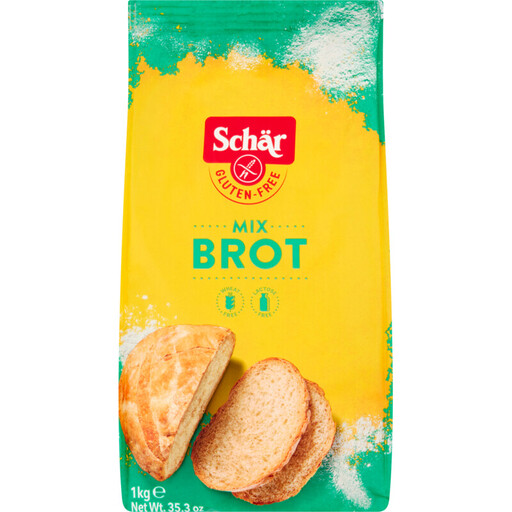 No image available
This mix is for anyone who wants to bake their own bread and has time to prepare it; it isn’t ready to serve straight away.
Check the current packaging and follow your chosen recipe. Keep the mix away from ordinary flour and bread crumbs while preparing it.
Not based on its name or crust. Choose bread that is clearly labelled gluten-free on the current packaging. The Voedingscentrum stresses that people with coeliac disease need to avoid gluten.
Keep the gluten-free bread and its utensils separate from ordinary bread crumbs. Use a clean plate and surface, and avoid contact with crumbs when toasting, too. The Voedingscentrum says that even a stray crumb can cause symptoms in someone with coeliac disease.
Choose a bread mix if you want to shape your own loaf and have time to prepare and bake it. Bake-at-home rolls also need time in the oven, but you don’t have to mix and shape a loaf. For both options, check the gluten-free labelling and avoid contact with ordinary flour.
For homemade gluten-free bread, the Voedingscentrum recommends baker’s salt as a way to use iodised salt. Check what the recipe and ingredient packaging say; the gluten-free label alone tells you nothing about the salt used.