
People with coeliac disease who need bread quickly
When you’re doing a quick top-up shop, you’re looking for something to eat instead of rye bread. As rye contains gluten, an alternative clearly labelled as gluten-free is the place to start.


If you have coeliac disease, don’t choose ordinary rye bread: rye contains gluten, as the Netherlands Nutrition Centre explains. For a quick top-up shop, look for packaged bread clearly labelled as gluten-free and check the current label. A dark or seeded loaf can fill the same role, but it isn’t rye bread. At home, also take care to avoid contact with crumbs from ordinary bread.
When you’re doing a quick top-up shop, you’re looking for something to eat instead of rye bread. As rye contains gluten, an alternative clearly labelled as gluten-free is the place to start.
If you’re buying for several meals, it’s worth checking the ingredients, fibre content and storage instructions on the pack, as well as the gluten-free label.
If you usually choose gluten-free bread, check the label to see whether baker’s salt or iodised salt has been used. According to the Netherlands Nutrition Centre, bakers are not required to use baker’s salt.
For something ready to eat, start by looking for packaged gluten-free bread; bake-at-home rolls and bread mixes need to be prepared first. Then check the pack for the details that matter for your meal.
| What to consider | What to check when buying | Who it matters to |
|---|---|---|
| Gluten-free suitability | Look for the gluten-free label on the pack. If you have other allergies, also read the current ingredients and allergen information. | If I have coeliac disease, I want to choose bread without relying on its dark colour or where it’s placed on the shelf. For around 39% of consumers, gluten-free suitability would be the top priority. |
| Availability | Check what’s available at your chosen shop or in your delivery area, and keep another type of gluten-free bread in mind if needed. | For a quick top-up shop, I don’t want to depend on a product my shop may not stock. Availability would come first for around 23% of consumers. |
| Nutritional information and ingredients | Compare the fibre per 100 g on the exact pack and check whether baker’s salt or iodised salt is listed in the ingredients. | If I often replace ordinary bread, I want to know what’s in the bread I’m switching to. This information would be the main priority for an estimated 23% of consumers. |
| Portions and storage | Check how much is in the pack and follow the storage instructions, especially if you don’t eat bread every day. | If I only use it occasionally, I want to be able to eat or store what I buy. Portion size and ease of storage would be the main consideration for around 15% of consumers. |
The colour and the presence of seeds don’t tell you whether bread is suitable for someone with coeliac disease. According to the Netherlands Nutrition Centre, rye contains gluten.
Choose bread based on the gluten-free label on the pack, not its appearance or where it’s placed in the bread aisle.
A gluten-free label doesn’t automatically answer questions about other food allergies, and ingredients can vary from product to product.
If you have allergies in addition to coeliac disease, read the current label every time you buy.
According to the Netherlands Nutrition Centre, bakers are not required to use baker’s salt. So the ingredients in one gluten-free loaf won’t necessarily be the same as those in another.
Check the ingredients list for baker’s salt or iodised salt, particularly if you’re replacing most of your ordinary bread.
A bread product shown online may not be available at the shop where you’re doing your top-up shop.
Check your chosen shop or delivery area in advance, and think about another type of gluten-free bread that would work for you.
Albert Heijn’s online range includes own-brand bread in light and dark seeded varieties, as well as products from Schär.
Jumbo’s online Schär range includes gluten-free bread, ciabatta and mini baguettes.
PLUS’s online range includes own-brand gluten-free white, brown and seeded bread.
Dirk’s online search results include Schär Classic, Vital and Mini Baguette.
ALDI lists gluten-free options among its bake-at-home rolls in shops with an in-store bakery.
Lidl has a page for additional gluten-free products, but noted that they weren’t available at the time.
These options are for anyone who wants to prepare gluten-free rolls at home or bake their own bread. They’re not ready-to-eat alternatives for a quick top-up shop, so check what’s in the pack and how it needs to be prepared before buying.
 No image available
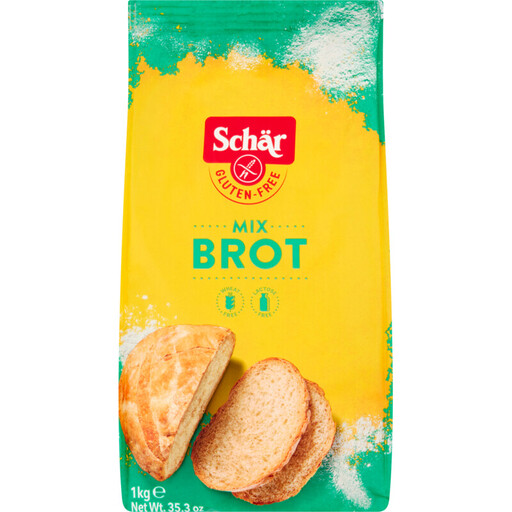
For anyone who wants to prepare rolls at home rather than buy bread that’s ready to eat. Check the current pack for the gluten-free label, exact contents, preparation instructions and any allergens.
 No image available
For anyone who wants to bake their own bread and needs a bread mix; this isn’t ready-to-eat bread. Check the preparation instructions, and if you have allergies or questions about iodised salt, read the current label.
No. Ordinary rye bread isn’t a gluten-free alternative: rye contains gluten, according to the Netherlands Nutrition Centre. Choose bread that’s clearly labelled as gluten-free on the pack.
No. Dark gluten-free bread can take the place of rye bread at breakfast or lunch, but its colour doesn’t make it rye bread. Check the gluten-free label and compare the ingredients of the exact variety.
Store and prepare gluten-free bread separately from ordinary bread. When using a chopping board, knife, toaster or spreads, check for any crumbs left behind; the Netherlands Nutrition Centre highlights how important this is for people with coeliac disease.
No. According to the Netherlands Nutrition Centre, bakers are not required to use baker’s salt. Check the label to see whether baker’s salt or iodised salt is listed in the ingredients; don’t assume it’s present just because it’s in another loaf.
Follow the storage instructions on the pack and check whether freezing is recommended. Instructions can vary between types of bread, so don’t automatically follow the storage advice for a product you bought before.