What should you look for when choosing?
Start by checking for a gluten-free label. Then decide which size, nutritional information and storage method will work for your weekly shop.
| What to consider |
What to check when buying |
Who is this important for? |
| Gluten-free label |
Look for an explicit gluten-free label or an appropriate gluten-free logo on the packaging. Don’t rely on the colour or name of the bread. |
If I’m replacing rye bread because of coeliac disease, I want to know that my bread choice is explicitly labelled gluten-free, even if the taste or texture is different. This certainty comes first for around 36% of consumers. |
| Weekly stock-up |
Compare the pack weight, storage instructions and availability at your shop or in your delivery area. |
I want enough bread for my planned breakfasts and lunches, without buying more than I can store. For around 29% of consumers, planning for the week comes first. |
| Fibre and salt |
Compare the fibre on a like-for-like basis in the nutritional information, for example per 100 g, and check whether baker’s salt or iodised salt is listed in the ingredients. |
Once I’ve chosen a gluten-free option, I want to see how it differs from my usual bread in terms of fibre and ingredients. This comparison matters most to around 21% of consumers. |
| Practical portions |
Consider how much bread you’ll use within the stated storage period and whether you have room to freeze portions. |
If how much bread I eat varies, I don’t want to be left with unused portions. Around 14% of consumers prioritise reducing waste. |
Joybuy products to consider
These products offer two different ways to plan gluten-free bread for the week: a pack described as mini baguettes and a bread mix you prepare yourself. Before counting the mini baguettes as part of your weekly stock, check the product format and preparation method.
 No image available
Gv Baguette Mini, 7 pieces
An option to consider if you’re looking for gluten-free bread rolls for several mealtimes; check for a gluten-free label on the current packaging.
The name states 7 pieces. Before buying, check whether these are ready-to-eat rolls, part-baked rolls or a mix, what preparation is required and the net weight.
If you have relevant allergies, check the label for ingredients and information about soya and possible traces of lupin and mustard.
View on Joybuy
 No image available
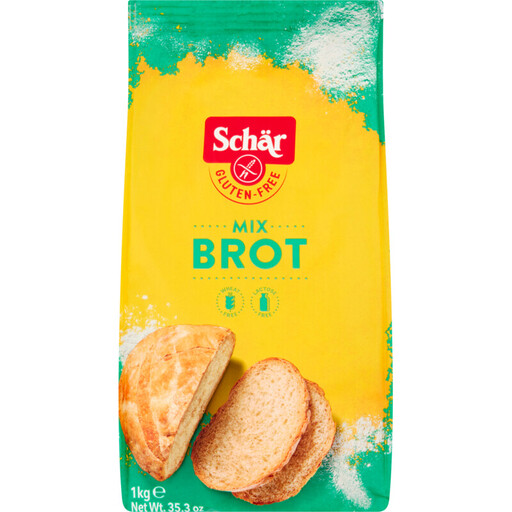
Schär Bread Mix-Mix B, gluten-free bread mix, 1 kg
For anyone who’d rather make their own gluten-free bread than buy ready-made bread for the week.
This is a 1 kg bread mix, so allow for the time and ingredients needed to prepare it. The pack weight isn’t the weight of the baked bread.
Check the current gluten-free label, the allergen information if you have a soya allergy, and the ingredients list to find out which salt has been used.
View on Joybuy
Frequently asked questions
Is rye bread gluten-free?
No. The Dutch Coeliac Association says that rye contains gluten. Rye bread is therefore not a gluten-free alternative for someone with coeliac disease, whatever its colour or fibre content.
When can bread be labelled gluten-free?
Under Commission Implementing Regulation (EU) No 828/2014, the term ‘gluten-free’ may be used if the gluten content of the product as sold to the final consumer is no more than 20 mg/kg. Check the label on the bread you choose.
Should I also check for oats in gluten-free bread?
Yes. If a bread contains oats, check that the product is labelled gluten-free. The Dutch Coeliac Association points out that oats can become contaminated with gluten and advises looking for an appropriate gluten-free claim or a gluten-free certification mark on products containing oats.
Does gluten-free bread always contain iodised baker’s salt?
No, a gluten-free label doesn’t tell you this. According to the Netherlands Nutrition Centre, bakers aren’t required to use baker’s salt. Check the ingredients list for the specific bread to see whether it contains baker’s salt or iodised salt.
How can I avoid having unused portions after my weekly shop?
Choose a pack that suits how often you plan to eat bread and the storage space you have. If you want to freeze bread, check the instructions on the packaging and plan how many portions you’ll need.


