Who is this choice important for?

Parents of children with coeliac disease

They’re looking for a clearly gluten-free alternative to rye bread and want to prevent it coming into contact with gluten-containing crumbs when it’s spread or at school. The Voedingscentrum confirms that rye contains gluten, while the Dutch Coeliac Society highlights the importance of avoiding cross-contamination.

Parents looking for a dark-coloured lunch base

They want to keep the familiar look of a dark slice of bread, but colour or the name ‘multiseed’ won’t tell them whether a product is gluten-free or has the same nutritional value as rye bread. The label on each product is what matters.

Families who can’t always buy the same product

They’re looking for a lunch base that fits their shopping routine, as well as an alternative for days when their usual product isn’t available. With any substitute, you’ll need to check the gluten-free labelling and allergen information again.

What should you look for when choosing?

For a school lunch for a child with coeliac disease, start by checking that the product is labelled gluten-free and can be prepared without contact with gluten-containing crumbs. After that, you can compare the nutritional information and how practical it is to use.

What to look forWhat to check when buyingWho it matters to
Gluten-free labelling Look for an explicit ‘gluten-free’ statement or the Crossed Grain symbol, and read the ingredients and allergen information. If my child has coeliac disease, I want to be sure the lunch base is suitable for a gluten-free diet first. This product choice comes first for around 36% of consumers.
Cross-contamination Look for packaging that can be kept separate; at home, use clean hands, work surfaces and utensils. When making and packing lunch, I want to prevent crumbs from ordinary bread getting onto it. Avoiding cross-contamination is the biggest concern for around 29% of consumers.
Nutritional information Compare factors such as fibre and salt per 100 g on the individual labels. If you regularly replace bread, also check the ingredients for baker’s salt. For an everyday lunch, I want to know how the alternative’s nutritional value compares with what my child would otherwise take to school. This comparison matters most to around 21% of consumers.
Lunch routine Check the preparation and storage instructions, and think about which checked alternative you can take along. If our usual bread isn’t available, I want another lunch base I can pack without choosing an unfamiliar product at the last minute. This practical reassurance is the top priority for around 14% of consumers.

Common mistakes

  • Assuming dark or multiseed bread is gluten-free

    Dark bread can still contain gluten. ‘Wheat-free’ doesn’t automatically mean gluten-free either: rye, for example, also contains gluten, according to the Voedingscentrum.

    First, check for gluten-free labelling or the Crossed Grain symbol. Then compare the other ingredients and nutritional information.

  • Contaminating a gluten-free product while preparing it

    The Dutch Coeliac Society explains that gluten-containing crumbs can get onto a gluten-free lunch from hands, a work surface or shared kitchen utensils.

    Prepare and pack the lunch using clean equipment, keep it separate from ordinary bread, and agree with the school how the food will be stored and handed out.

  • Assuming it will have the same nutritional value as rye bread

    A dark gluten-free loaf or cracker won’t automatically have the same ingredients as rye bread. Colour and product name are no substitute for comparing labels.

    Read the nutritional information per 100 g for the products you’re considering. If dietary restrictions apply long term, ask a specialist dietitian to assess your overall diet if needed.

  • Relying on a single, changing range

    A temporary range can be inconvenient if you need the same suitable lunch base every school day. Lidl, for example, reported that its extra gluten-free products were unavailable at the time.

    Check the current product before buying, and keep a second, equally well-checked lunch base as a backup.

Brands and shops to consider

Albert Heijn

An option if you’re looking for a packaged dark multiseed loaf to make sandwiches for school lunches.

  • Albert Heijn lists its AH Glutenvrij Brood donker meerzaden half and says it’s baked in a dedicated gluten-free bakery.
  • Albert Heijn warns that ingredients, nutritional values and allergen information may change. So check the packaging of the product you actually buy.

Jumbo

A shop option for families looking for packaged gluten-free bread for several lunches.

  • Jumbo lists Lekker Vrij van Gluten Bruin in a 500 g pack.
  • Check the allergen and nutritional information for each loaf; these aren’t the same for every variety.

PLUS

A shop option for exploring different types of gluten-free lunch base.

  • PLUS lists gluten-free white, brown and multiseed bread, as well as rolls and crackers.
  • Ingredients and availability vary by product and over time; check the packaging of the variety you choose.

Dirk

A shop option for exploring packaged bread and crispbread as possible lunch bases.

  • Dirk lists gluten-free bread from Schär and gluten-free crispbread from Wasa, among other products.
  • Check the label of the specific product and its availability at the shop where you’re buying it.

Lidl

An additional shop option when a specific gluten-free product is available.

  • You can consider a product as a lunch base once you’ve checked its current packaging.
  • Lidl reported that its extra gluten-free range was unavailable at the time. Don’t rely on this range alone for everyday lunches.

ALDI

A shop option if you’d like to bake gluten-free rolls at home.

  • ALDI lists gluten-free rolls in its bake-at-home range.
  • For the specific product, check the packaging, allergens, preparation method and local availability.

Products for a gluten-free lunch base

These Joybuy products are intended for preparing a lunch base at home. Before buying either product, check the current gluten-free labelling, allergens and preparation method; a bread mix isn’t a ready-to-eat school lunch.

Gv Baguette Mini, 7 pieces

Gv Baguette Mini, 7 pieces

An option to consider if you’d like to prepare a bread-style lunch base at home. Before buying, check whether you’ll receive rolls or a baking mix, and what preparation is needed; the product information doesn’t clearly specify the format.

Check the current gluten-free labelling and allergen information on the packaging, especially if soya, lupin or mustard are relevant to your child. Keep the product away from gluten-containing crumbs during preparation.

View on Joybuy
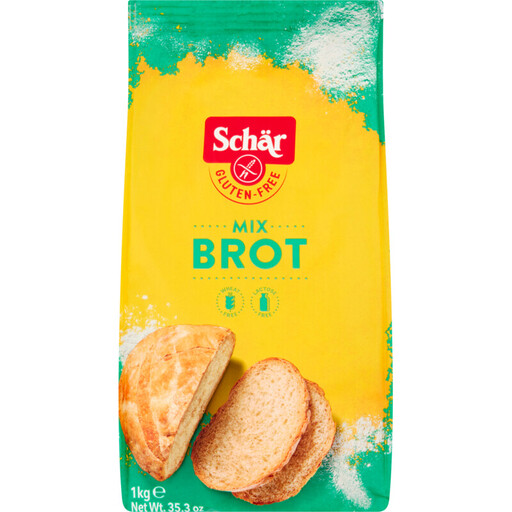
Schär Mix B gluten-free bread mix, 1 kg

Schär Mix B gluten-free bread mix, 1 kg

For families who want to bake a lunch base at home in advance: Schär Mix B is a bread mix, not a ready-made loaf to put in a lunchbox. Allow time for preparation and use clean equipment to prevent contact with gluten-containing crumbs.

Check the current packaging for gluten-free labelling and allergen information, including details about soya.

View on Joybuy

Frequently asked questions

Is ordinary rye bread gluten-free?

No. Rye contains gluten, according to the Voedingscentrum. So ordinary rye bread isn’t a gluten-free lunch base for a child with coeliac disease.

Is ‘wheat-free’ enough for coeliac disease?

No. ‘Wheat-free’ on its own doesn’t confirm that a product is gluten-free. According to the Voedingscentrum, gluten can also come from other grains, including rye and barley. Look for an explicit gluten-free statement or the Crossed Grain symbol, and read the ingredients and allergen information.

How can I keep gluten-containing crumbs out of a school lunch?

Prepare the gluten-free lunch with clean hands, a clean work surface and clean utensils, and pack it separately from ordinary bread. The Dutch Coeliac Society also advises parents to make practical arrangements with the school. Discuss how the lunch and any treats will be handled.

Does all gluten-free bread contain iodine from baker’s salt?

You can’t tell from the ‘gluten-free’ label. The Netherlands Food and Consumer Product Safety Authority explains that iodine compounds may be present in bread and bread substitutes through baker’s salt; that doesn’t mean every individual product contains it. Check the ingredients list and, if you’re regularly replacing bread, ask a specialist dietitian for advice on your overall diet if needed.
