If you have coeliac disease, choose rusks whose current packaging clearly states that they are gluten-free. Ordinary rusks are not a suitable substitute just because they’re on the same shelf or come from a particular brand. For a quick top-up shop, availability matters too, but always check the gluten-free label and any other allergens on an alternative product.
Who is this relevant to?
People with coeliac disease who need to restock on rusks
If you need rusks in a hurry, ordinary rusks are not a suitable stopgap. When storing and topping them, take care to avoid contact with gluten-containing products, as the Netherlands Nutrition Centre advises.
Households restocking their gluten-free supplies
You may be looking for rusks to replenish your supplies, but if they’re unavailable, you could consider another product such as gluten-free bread or crackers, provided it is clearly labelled as gluten-free. The shape and preparation may be different.
Shoppers checking for more than just gluten
If you have an additional allergy or want to check ingredients and nutritional information, read the label on the exact product. Gluten-free does not, in itself, mean that a product is free from allergens such as egg or milk.
What should you look for when choosing?
Start by checking the gluten-free label on the packaging. Then check whether the product is available for your top-up shop and whether the other ingredients suit your needs.
| What to check | What to look for when buying | Who is this important for? |
|---|
| Gluten-free label |
Check the current packaging to make sure the exact product is clearly labelled as gluten-free. Under Commission Implementing Regulation (EU) No 828/2014, this label may only be used if the finished product contains no more than 20 mg/kg of gluten. |
If I need rusks because of coeliac disease, I don’t want to rely on a brand name or where the product is placed on the shelf. Around 42% of consumers prioritise whether a product is suitable for a gluten-free diet. |
| Availability now |
Check just before buying whether the rusks are available to order or in store. If they aren’t, check the packaging of any alternative separately. |
When I need to top up quickly, I don’t want to find out only when I place my order that my choice is unavailable. Around 33% of consumers consider immediate availability the most important factor. |
| Other ingredients |
Read the ingredients list and allergen information on the current packaging. Check the type of salt used if iodine is a consideration in your diet. |
If I’m also checking for other allergens or ingredients, the product needs to meet more than just gluten-free requirements. This additional check is the top priority for around 25% of consumers. |
Common mistakes
-
Assuming ordinary rusks are a suitable gluten-free stopgap
The fact that rusks are next to gluten-free products says nothing about whether that particular pack is suitable.
If you need to avoid gluten, choose only a product that is clearly labelled gluten-free on its current packaging.
-
Assuming a product page means the item is currently in stock
On the product pages for Damhert Gluten-Free Rusks and Jumbo Lekker Vrij van Gluten Rusks, Jumbo states that these products are no longer part of its online range.
Check just before buying whether you can place an order, and if necessary, have a separately checked gluten-free alternative in mind.
If you only find out later that a product is unavailable, you may need to make an extra trip to the shops.
-
Checking only the gluten-free label
A gluten-free product may contain other allergens. For example, Jumbo lists egg and milk as allergens for Damhert Gluten-Free Rusks. The Netherlands Food and Consumer Product Safety Authority explains how allergens must be listed on labels.
Whenever you buy a new pack, check the ingredients list and allergen information for that exact product.
-
Assuming rusks always contain iodised salt
Baker’s salt contains iodine, but according to the Netherlands Nutrition Centre, bakers are not required to use it.
Check the ingredients if the type of salt used matters for your diet.
Brands to consider
Schär
PLUS lists Schär Zwieback as gluten-free rusks in a 175 g pack. The product is also included in Albert Heijn’s brand directory.
- PLUS labels this specific Zwieback product as gluten-free.
- Before buying, check the current packaging and make sure the product is available at your chosen shop.
Damhert
Damhert Gluten-Free Rusks Biscottes is a rusk product listed on the Jumbo and Albert Heijn product pages.
- The Jumbo product page lists the ingredients and allergens for these rusks.
- Jumbo and Albert Heijn state on their respective pages that the product is no longer in their range. Jumbo also lists egg and milk as allergens.
Bolletje
Bolletje is included here as a reference for ordinary rusks, including Echte and Volkoren Rusks on the brand page.
- The brand page makes clear which ordinary rusk products are being referred to.
- Don’t assume a product like this is gluten-free unless the packaging for the specific variety clearly says so.
Products at Joybuy
These products are not rusks: they are lentil wafers and mini baguettes that could be alternatives if you can’t find rusks. If you need to avoid gluten, check the current packaging to make sure your chosen product is clearly labelled as gluten-free.
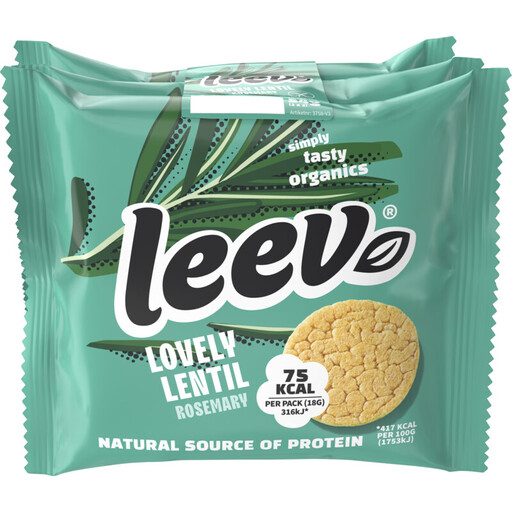 Image unavailable
Leev Organic Rosemary Lentil Wafers, 54 g
An option if you’re looking for lentil wafers instead of rusks. Before eating, check the gluten-free label on the packaging. If you have other allergies, also check the current ingredient information for milk and soya.
View at Joybuy
 Image unavailable
Gv Baguette Mini, 7 pieces
A bread alternative if you don’t specifically need rusks. Bear in mind that these need to be baked before eating, and check the current packaging for a gluten-free label and information about soya, lupin and mustard if these are relevant to you.
View at Joybuy
Frequently asked questions
Does ‘wheat-free’ mean the same as gluten-free?
No. If you need to avoid gluten, look for the words ‘gluten-free’ on the exact product. Under Commission Implementing Regulation (EU) No 828/2014, this label is only permitted if the finished product contains no more than 20 mg/kg of gluten.
If I have coeliac disease, should I also avoid contact with ordinary bread products?
Yes. When storing or topping gluten-free rusks, make sure they don’t come into contact with crumbs from products containing gluten. The Netherlands Nutrition Centre highlights the importance of avoiding cross-contamination if you have coeliac disease.
Are gluten-free rusks also free from egg and milk?
Not necessarily. Jumbo lists egg and milk as allergens for Damhert Gluten-Free Rusks Biscottes. Always read the allergen information on the current packaging of the product you’re buying.
Do gluten-free rusks always contain iodine?
No. The gluten-free label doesn’t tell you whether a product contains iodine. According to the Netherlands Nutrition Centre, baker’s salt contains iodine, but bakers aren’t required to use it. If the type of salt matters to you, check the ingredients of the product you choose.


