
Host serving a guest with coeliac disease
You’re looking for a suitable toast and a way to serve it without crumbs from ordinary toast or shared dips. The Dutch Coeliac Society highlights the importance of preventing cross-contamination.


For a guest with coeliac disease, choose toast or a crunchy alternative with an explicit gluten-free claim on the current packaging; ordinary melba toast is not automatically a suitable alternative. Check for any other relevant allergens too, and keep gluten-free nibbles separate from ordinary toast, crumbs and shared dips during preparation and serving.
You’re looking for a suitable toast and a way to serve it without crumbs from ordinary toast or shared dips. The Dutch Coeliac Society highlights the importance of preventing cross-contamination.
As well as gluten, ingredients such as egg and oats, or warnings about nuts and sesame, may be important. Jumbo lists these for Gluten Free Bakery Holland Toastjes Italiaans Gekruid, so check the packaging of the product that will actually be served.
If toast doesn’t suit your shopping list or nibbles, you could also consider a gluten-free cracker, crispbread or flatbread. Albert Heijn features these types of products in its gluten-free range; they each make a different kind of base for nibbles.
First, choose a product with an explicit gluten-free claim. Then check for other allergens and decide how to serve it separately. The European Commission sets a maximum limit of 20 mg of gluten per kg for foods sold to final consumers that are labelled ‘gluten-free’.
| What to consider | What should you check? | Who is this most important for? |
|---|---|---|
| Choosing gluten-free and serving separately | Look for the ‘gluten-free’ claim on the packaging. Use clean serving utensils and a separate dip if you’re also serving ordinary toast. | When I’m preparing nibbles for someone with coeliac disease, I want to stop ordinary crumbs or a shared dip from getting onto the gluten-free toast. This is the main concern for around 50% of consumers. |
| Other ingredients and allergens | Read the ingredients list, allergen information and any warnings about the possible presence of other allergens. | If my guest has another allergy too, I need to know whether ingredients such as egg, oats, nuts or sesame are relevant to them. This is the first concern for around 30% of consumers. |
| Product type and availability | Check whether toast, crackers or flatbread suit the topping you have in mind, and check the packaging of the alternative you choose. | If I’m making nibbles at short notice, a different gluten-free base for drinks may be more useful than the specific toast I had planned. This practical choice matters most to around 20% of consumers. |
Bolletje Lichte Crackers Volkoren product information lists wheat and barley malt extract; Delverde Classic Melba Toast on Joybuy also lists wheat and barley. So a crunchy texture doesn’t tell you whether a product is suitable for someone with coeliac disease.
Choose a product with an explicit gluten-free claim and read the label on the pack you’re serving.
The Dutch Coeliac Society says that crumbs and shared kitchen utensils can cause cross-contamination. A dip that ordinary toast has been dipped into should not be served with the gluten-free nibbles you’ve kept separate.
Keep gluten-free products and dips separate, and use clean knives and serving tongs.
A gluten-free claim doesn’t tell you whether a product contains other allergens. Jumbo lists egg and oats for Gluten Free Bakery Holland Toastjes Italiaans Gekruid and warns that it may contain, among other things, nuts and sesame.
Ask your guest which allergens and warnings are relevant, and check the current label together if needed.
Crackers, crispbread or flatbread can offer a different base for topped nibbles if the toast you planned isn’t available. Albert Heijn features these types of gluten-free products in its range.
Think in advance about which type of product will suit your nibbles, and check the gluten-free claim and allergens on any alternative too.
Jumbo lists its 100 g Toastjes Italiaans Gekruid as a toast option to consider.
This range includes crackers, crispbread and borrelbrood, offering different bases for nibbles.
Albert Heijn stocks gluten-free Schär Flatbreads and Baguettini, among other products, for anyone looking for a different base to toast.
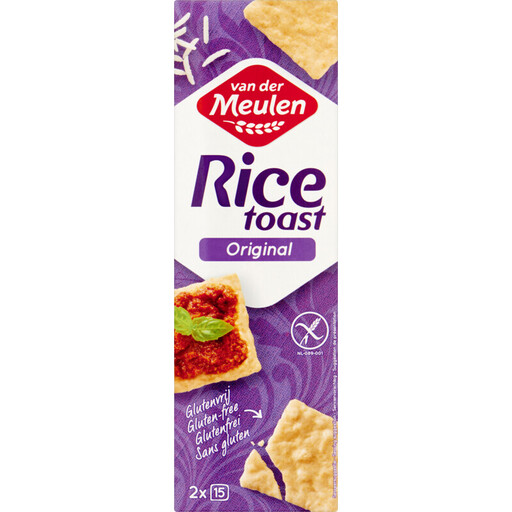
This rice toast fits the search for a gluten-free, crunchy base for nibbles. Treat the claim in the product description as a prompt to check the current packaging, especially if other allergies are involved.
 No image available
For drinks with a guest who has coeliac disease, the product description calls this rice toast gluten-free. Check the claim on the current packaging before serving it.
Pack size: 65 g. The information about sesame and soya is contradictory. If these allergies are relevant, check the label and keep the toast separate from ordinary nibbles when serving.
According to the European Commission, the ‘gluten-free’ claim can be used if the food sold to the final consumer contains no more than 20 mg of gluten per kg. Look for this explicit claim on the current packaging of the toast you plan to serve.
Yes, as long as you prevent crumbs, kitchen utensils or shared dips from contaminating the gluten-free nibbles. The Dutch Coeliac Society advises preventing cross-contamination; keep gluten-free products separate and use clean cutlery and a separate dip.
A gluten-free claim doesn’t tell you whether a toast is suitable for someone with other allergies. For Gluten Free Bakery Holland Toastjes Italiaans Gekruid, Jumbo lists egg and oats and notes that it may contain, among other things, nuts and sesame. Check what’s relevant for your guest.
No. The Netherlands Food and Consumer Product Safety Authority explains that iodine compounds may be present in bread, bread substitutes and other bakery products as a result of adding baker’s salt, with a maximum of 65 mg of iodine per kg of salt. That doesn’t mean every toast contains this type of salt; check the ingredients on the packaging if it’s relevant to your choice.
Crackers, crispbread or flatbread can make a good base for nibbles if the packaging explicitly says ‘gluten-free’ and the other ingredients are suitable for your guest. Albert Heijn features these alternatives in its gluten-free range; choose the type that best suits your topping or dip.