
Parents of a toddler with coeliac disease
A clear gluten-free label is essential for them. The Dutch Coeliac Society advises checking that oats carry a gluten-free claim or suitable certification mark. Check the other allergens on the pack, too.


If your toddler has coeliac disease, choose only muesli clearly labelled gluten-free or carrying a gluten-free certification mark, and check the ingredients and allergens on the pack. For toddlers’ breakfasts, the Netherlands Nutrition Centre suggests wholegrain muesli with no added sugar or salt as one option for variety. Also check whether whole nuts and hard pieces are suitable for your child to chew safely.
A clear gluten-free label is essential for them. The Dutch Coeliac Society advises checking that oats carry a gluten-free claim or suitable certification mark. Check the other allergens on the pack, too.
They are looking for a breakfast option with wholegrains and keeping an eye on added sugar and salt, as recommended by the Netherlands Nutrition Centre for children aged 1 to 3.
If a toddler still finds hard or large pieces difficult to chew, whole nuts need particular attention. The Netherlands Nutrition Centre warns that whole nuts can pose a choking risk.
If you’re considering muesli for your toddler’s breakfast, check the gluten-free label first if they have coeliac disease. Then assess the ingredients and texture for your child.
| What to look for | What should you check? | Who is this important for? |
|---|---|---|
| Gluten-free label | Check the gluten-free claim or certification mark, and make sure oats are labelled gluten-free. | If my toddler has coeliac disease, I want to know whether the muesli is suitable for a strict gluten-free diet. This reassurance is the top priority for about 42% of consumers. |
| Wholegrain base and added ingredients | Check the grains used as the base and compare the sugar and salt values per 100 g in the nutritional information. | For a regular toddler’s breakfast, I want to choose a wholegrain option and check what has been added. These ingredients matter most to about 33% of consumers. |
| Texture | Look for whole nuts and large, hard pieces; consider what your child can chew safely. | If my toddler can’t yet chew hard pieces properly, the texture determines which muesli I give them. About 25% of consumers put this consideration first. |
A product with no added sugar can still contain sugars. For the Consenza fruit muesli reviewed, Jumbo lists 15 g of sugars per 100 g, despite the ‘no added sugar’ label.
Compare the ‘of which sugars’ figure in the nutritional information and check the ingredients list.
The ingredients listed by Albert Heijn for Quaker Cruesli Luchtig include wheat flour and barley malt. A crunchy texture or a claim about sugar says nothing about whether it’s suitable for a gluten-free diet.
If you have coeliac disease, look for an explicit gluten-free label and read the current allergen information.
A gluten-free label says nothing about the size or hardness of the pieces. The Netherlands Nutrition Centre warns that whole nuts can pose a choking risk.
Check the contents and choose a texture your toddler can chew safely. Make sure your child eats sitting down and is supervised.
When choosing food for someone with coeliac disease, the ingredients and allergens on the pack you’re actually using are what matter.
Check the pack before you buy, then check it again before serving the muesli.
This range includes muesli labelled gluten-free.
The fruit muesli reviewed is labelled gluten-free and contains oats and dried fruit.
The Wholegrain Cereal Breakfast reviewed is a hot cereal option, not muesli.
The varieties reviewed are crunchy breakfast cereals, not gluten-free alternatives to muesli for people with coeliac disease.
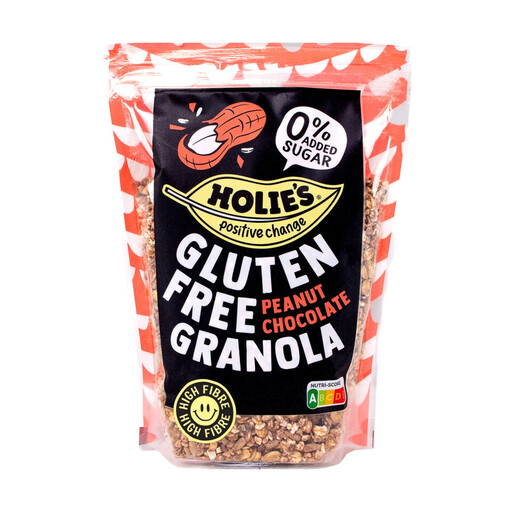
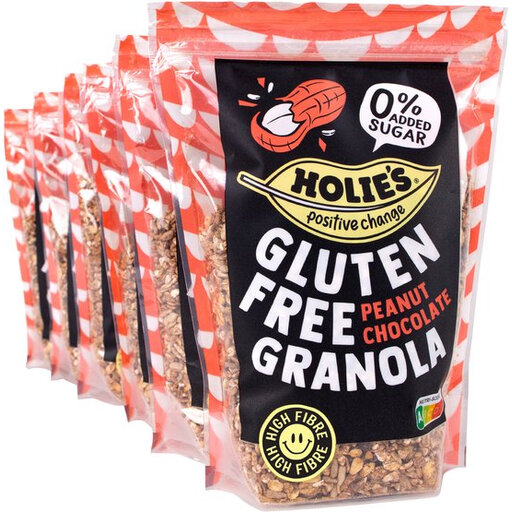
These two pack sizes of Holie's are granola with peanuts and chocolate, not muesli. If you’re considering them for a toddler, check the allergens and texture as well as the gluten-free label on the pack.
 No image available
This granola is a crunchy breakfast cereal with peanuts. Check whether the texture is suitable for your toddler.
Before serving, check the gluten-free label and allergens on the pack, and make sure any peanut pieces are safe to chew.
 No image available
This pack contains six bags of crunchy granola with peanuts. The texture is still an important consideration for a toddler.
Before serving, check the gluten-free label and allergens on the pack, and assess any peanut pieces for size and hardness.
No. Ordinary muesli may contain cereals with gluten. If you have coeliac disease, look for a clear gluten-free label or certification mark, and check the allergens on the current pack.
Yes, muesli can add variety to breakfast if the ingredients and texture are suitable for your child. For children aged 1 to 3, the Netherlands Nutrition Centre suggests wholegrain breakfast cereals with no added sugar or salt as an alternative to bread at breakfast.
Choose oats labelled gluten-free or carrying a suitable certification mark. According to the Dutch Coeliac Society, oats can come into contact with wheat, barley or rye during production, so check the label on the specific product.
The Netherlands Nutrition Centre says whole nuts need extra care because they can pose a choking risk for young children. Check the pieces in the product, choose a finer texture if needed, and stay with your child while they eat.
Ask in advance about the school or nursery’s arrangements for allergens, storage and serving. Also check that the product you send is labelled gluten-free and has a texture suitable for your child.