What should you look for when choosing?
Start with the gluten-free label and safe, clean preparation. Then choose between bread that’s ready to serve and bread you’d like to bake for your Mother’s Day brunch.
| What to consider | What to check when buying | Especially relevant for |
|---|
| Serving gluten-free food |
Look for an explicit ‘gluten-free’ label, read the current allergen information and plan to use separate or thoroughly cleaned utensils. |
When I’m serving someone with coeliac disease, I want to make sure regular bread crumbs don’t end up on the gluten-free bread. For around 42% of consumers, this reassurance matters most. |
| Preparation and presentation |
For bake-at-home rolls, check the instructions on the packaging and make sure you have enough oven space and a clean baking surface. |
For a special brunch, I want to choose bread that fits the time and oven space I have just before serving. For around 33% of consumers, presentation and ease of serving come first. |
| Nutritional information |
Compare fibre and salt per 100 g, and read the ingredients list if iodised salt or other allergens are relevant to your choice. |
If I’m considering seeded bread, I want to compare the nutritional information without overlooking the ingredients. For around 25% of consumers, these product differences are the deciding factor. |
Brands and shops to compare
Check the current packaging of each bread: a gluten-free label alone tells you nothing about other allergens, preparation or nutritional information.
Albert Heijn
Albert Heijn lists online both bread under its own gluten-free label and products from brands including Schär and Consenza.
- You can compare different types of bread and their ingredients lists side by side.
- Check the current packaging and whether the specific variety is available in your shop.
Jumbo
Jumbo lists gluten-free bread under its Lekker Vrij van Gluten label, alongside branded products and rolls.
- There are different types of bread to compare for your brunch.
- Even for a gluten-free product, read the information about other allergens on the packaging you choose.
PLUS
PLUS lists gluten-free white, brown and multiseed bread under its own label, as well as bake-at-home options.
- If you want to bake the bread just before brunch, PLUS gives an oven instruction of 5–7 minutes at 200 °C for Schär Mini Baguette.
- Check the instructions on the packaging and keep the baking tray and work surface free from regular bread.
Dirk
At Dirk, you can browse individual gluten-free branded products, including Schär Meisterbackers Classic.
- The product information gives you a starting point for comparing a specific type of bread.
- Check which variety is available in your shop and read the current packaging.
ALDI
ALDI mentions gluten-free bread as part of the range at shops with an in-store bakery.
- This could be an option if you’re looking for bread for brunch in store.
- Check the label, ingredients and allergen information of the specific product in store.
Lidl
Lidl describes its additional gluten-free products as a limited-time range.
- Check what’s available locally if Lidl is a convenient shop for you.
- Don’t plan your Mother’s Day brunch around a specific variety without checking its availability and packaging in advance.
A bread mix for baking at home
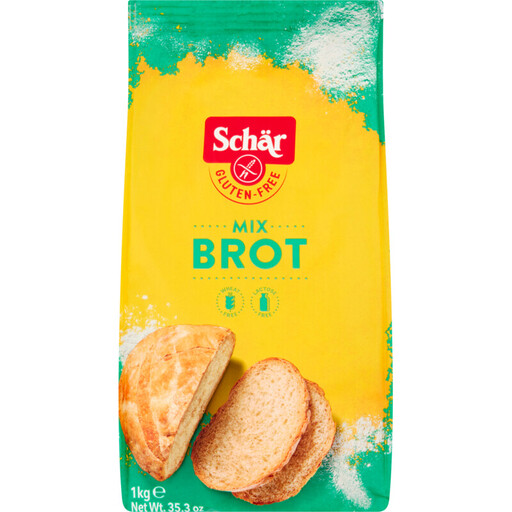
This Joybuy pick is a gluten-free bread mix for anyone who wants to bake their own bread for brunch, rather than serve sliced bread or a bake-at-home roll. Factor in the preparation time and check the current packaging before baking for a guest with coeliac disease.
 No image available
Schär Bread Mix-Mix B gluten-free bread mix, 1 kg
For anyone who wants to bake gluten-free bread before brunch instead of serving ready-made bread.
Check the preparation instructions and allergen information on the current packaging. When baking, make sure your utensils and work surface don’t come into contact with regular bread.
View on Joybuy
Frequently asked questions
Is ‘wheat-free’ enough for someone with coeliac disease?
No. Choose a product explicitly labelled gluten-free and read the current packaging; wheat-free alone doesn’t rule out other gluten-containing grains.
How can I serve gluten-free bread alongside regular bread?
Keep the gluten-free bread and its toppings free from crumbs from regular bread. Use separate or thoroughly cleaned knives, chopping boards and serving tongs; the Netherlands Nutrition Centre points out that even a crumb can cause symptoms in someone with coeliac disease.
Can I choose gluten-free seeded bread with oats for a guest with coeliac disease?
Check that the specific product is explicitly labelled gluten-free. Also read the current ingredients, allergen and may-contain information, rather than relying on the name ‘seeded bread’ alone.
Does gluten-free bread always contain iodised salt?
No, don’t assume that it does. The Netherlands Nutrition Centre describes bread as an important source of iodine in the Netherlands; check the ingredients list of the specific gluten-free bread to see whether iodised salt is included.
Can I buy gluten-free bread before the Mother’s Day brunch?
Yes, as long as the best-before date and storage instructions for your chosen product fit your plans. For bake-at-home rolls, also check when and how to prepare them, and store the gluten-free bread separately from regular bread.


