What should you look for when choosing?
Start by checking for a gluten-free label and planning to serve the food separately. Then choose between mini toasts and crackers based on the size you want, the packaging and the other ingredients.
| What to consider |
What to check when buying |
Who is this most important for? |
| Gluten-free labelling and serving separately |
Check that the current packaging says ‘gluten-free’. If ordinary bread products are also being served, plan to use a clean, separate platter and separate utensils. |
If a guest has coeliac disease, I want to prevent crumbs getting into their food. This precaution is the top priority for around 42% of consumers. |
| Shape and ease of serving |
Compare mini toasts and crackers, and check whether the packaging makes it easier to keep a portion separate. |
For the sharing platter, I want something that suits the dinner and can also be kept separate. Ease of serving comes first for around 33% of consumers. |
| Other ingredients |
Read the allergen information, including any warnings about traces. Compare the nutritional information per 100 g if it’s relevant to your choice. |
If someone also needs to avoid egg, oats or soya, I want to look beyond the words ‘gluten-free’. This extra check is the top priority for around 25% of consumers. |
Rice toast for a separate platter
This rice toast can be used as the base for a separate dinner platter if the current packaging says ‘gluten-free’. If there are other dietary restrictions, check the allergen information too, and use clean, separate serving utensils.
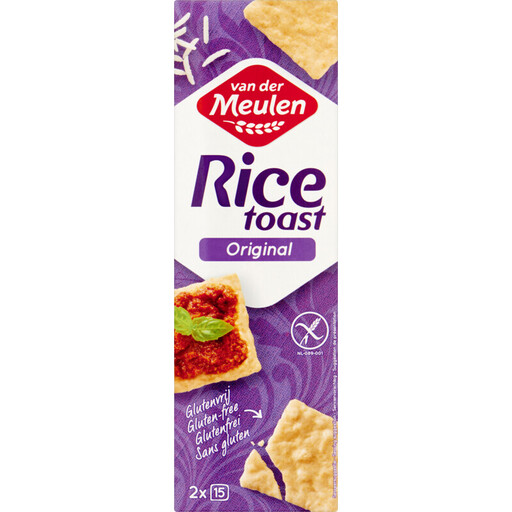 Image unavailable
Van Der Meulen Rice Toast Natural, 65 g
Rice toast for a separate platter at your family dinner. If a guest has coeliac disease, check that the current packaging explicitly says ‘gluten-free’.
If there are additional allergies, check the label carefully for soya and sesame, and keep the toast separate from ordinary bread products.
View at Joybuy
Frequently asked questions
When can packaging say ‘gluten-free’?
Under Commission Implementing Regulation (EU) No 828/2014, the label can be used in the Netherlands for a food that contains no more than 20 mg of gluten per kg as sold to consumers. When buying, check the current packaging rather than relying on a description such as ‘wheat-free’.
Is one gluten-free product on the table enough for someone with coeliac disease?
No. Preparation and serving must also be kept separate from ordinary bread products. The Nutrition Centre points out that even a bread crumb can cause symptoms for someone with coeliac disease, so use a clean platter and separate utensils.
Are gluten-free mini toasts also free from egg, oats, soya or nuts?
Not necessarily. Jumbo lists egg and oats in Gluten Free Bakery Holland’s Toastjes Italiaans Gekruid, while Albert Heijn lists soya in Schär Crackers. If there are additional allergies, read the full information on the current packaging.
Does gluten-free toast always contain iodised baker’s salt?
No, that isn’t required by Dutch rules on baker’s salt. The Netherlands Food and Consumer Product Safety Authority explains that iodine compounds may be present in certain bakery products through baker’s salt. Check the ingredients list for a specific product.
Can I rely on online allergen information when choosing food for dinner?
Use online information to compare products, but check the packaging you actually bought before serving. Albert Heijn says that information such as ingredients and allergen details can change.


