
People with coeliac disease who check labels carefully
You’re looking for granola with a clear gluten-free label for your weekly shop. Check the current ingredients and allergen information, even when it contains oats.


If you have coeliac disease, choose granola with a clear gluten-free label on the current packaging, then check the ingredients and allergen information. For your weekly shop, pack size, nutritional information and any additional allergies also matter. Regular Cruesli Original and the Zonnatura Almond Cashew product reviewed here both contain wheat, so neither is a gluten-free alternative.
You’re looking for granola with a clear gluten-free label for your weekly shop. Check the current ingredients and allergen information, even when it contains oats.
You want to compare sugar, fibre and protein across the range of gluten-free granola. These nutritional values don’t, by themselves, tell you whether a product is labelled gluten-free.
You’re checking how much granola is in each bag and whether the size suits how much your household uses, without choosing regular granola containing gluten as a substitute.
First, check that the granola is suitable for your gluten-free diet and any other allergies you have. Then compare pack sizes and nutritional information for your weekly shop.
| What to consider | What to check when buying | Who it matters to |
|---|---|---|
| Gluten-free label | Check the label and ingredients on the current packaging; also look out for oats and cereals containing gluten. | If I have coeliac disease, I want to know whether the granola I buy is clearly labelled gluten-free. This check comes first for around 42% of consumers. |
| Pack size and weekly supplies | Check the weight of each bag or multipack and choose an amount that suits how much your household uses. | For my weekly shop, I don’t want to buy more bags than my household can use. Around 33% of consumers put planning their supplies first. |
| Nutritional information and other allergens | Compare sugar, fibre and protein per 100 g; check separately which allergens the product contains or may contain. | If I’m also watching my sugar intake or have a nut, peanut or soya allergy, the gluten-free granola I choose must meet those needs too. This is the main additional consideration for around 25% of consumers. |
Oats as an ingredient don’t, by themselves, mean a product is labelled gluten-free. If you have coeliac disease, it matters how the oats have been processed and how the finished product is labelled.
Check the gluten-free label and ingredients on the packaging of the bag you’re buying.
Zonnatura lists 21 g of fibre per 100 g for its Almond Cashew granola, but it also lists spelt, wheat and gluten. Nutritional information alone doesn’t tell you whether this granola is gluten-free.
Check the gluten-free label and allergens first; then compare the nutritional values.
The AH, Holie’s and Free Of Gluten packs discussed here come in different weights. A bigger bag won’t automatically be a better fit for your weekly supplies.
Think about how much granola your household uses and check the packaging of the product you choose.
A smaller bag may run out sooner if you use the same amount, meaning you’ll need to shop again sooner.
Ingredients and allergen information can change. This is particularly important if you need to avoid ingredients other than gluten too.
Check the information on the physical packaging every time you buy the product.
These examples show why you should check the exact granola and variety, rather than relying on the brand name alone.
Albert Heijn describes AH Glutenvrij Granola as gluten-free granola in a 250 g bag.
Jumbo lists several Holie’s granolas labelled Gluten Free, including Buckwheat & Nuts.
Jumbo describes Free Of Gluten Crunchy Granola Nuts-Honey as gluten-free, in a 340 g bag.
The Cruesli Original reviewed here is a regular granola and isn’t a gluten-free alternative if you have coeliac disease.
The Zonnatura Granola Almond Cashew reviewed here isn’t a gluten-free option.
These two packs of Holie’s Glutenfree Peanut Chocolate mainly differ in quantity: a multipack of six bags or a single 330 g bag. Choose based on how much you use, and if you have coeliac disease or other allergies, always check the current packaging.
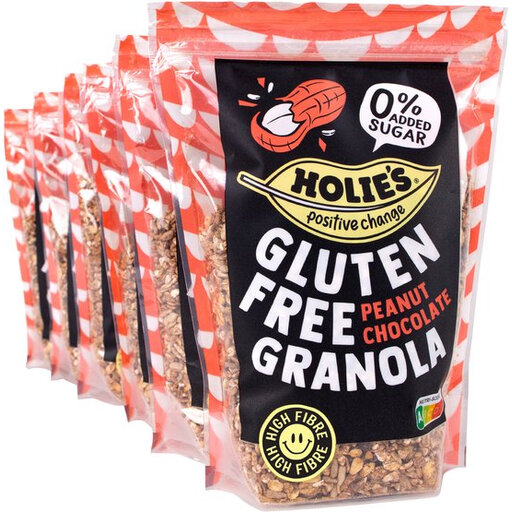 Image unavailable
The six-bag multipack may suit a household that wants to plan its granola supplies for several weeks.
According to the product information, this variety contains peanuts and oats and may contain traces of other nuts and soya, among other things. Check the gluten-free label and allergens on the current packaging.
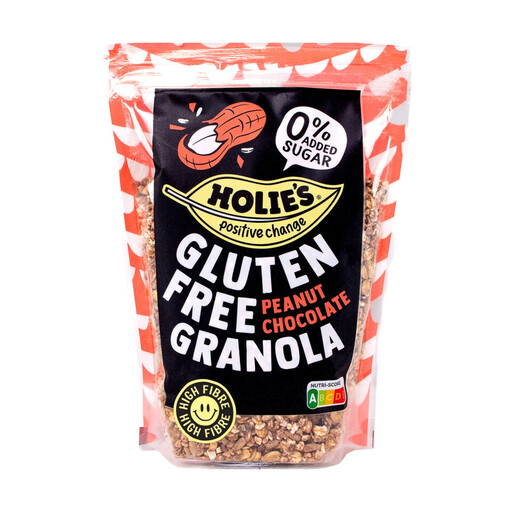 Image unavailable
The single 330 g bag gives you a smaller size to suit how much your household uses.
According to the product information, this variety contains peanuts and oats and may contain traces of other nuts and soya, among other things. Check the gluten-free label and allergens on the current packaging.
Not automatically. Choose a product with a clear gluten-free label and check the current packaging. Under European rules, oats in food labelled gluten-free must also meet requirements designed to prevent contamination with cereals containing gluten.
No, the Quaker Cruesli Original reviewed here isn’t a suitable alternative. Albert Heijn lists wholegrain wheat and wheat flour in the ingredients of this variety.
Check the allergen information separately from the gluten-free label. The AH, Holie’s Buckwheat & Nuts and Free Of Gluten varieties discussed here list different ingredients or warnings relating to nuts, peanuts and soya. Always check the exact variety and packaging.
No, don’t rely on the shop or product category alone. ALDI lists gluten-free breakfast cereals as a category, but that doesn’t mean every individual granola is labelled gluten-free. Check the current range and the label on the specific pack, including at Lidl.