Who are these choices important for?

Parents of a toddler with coeliac disease

For them, the gluten-free label on the current packaging comes first. If the granola contains oats, this ingredient also needs careful consideration: according to the Dutch Coeliac Society, most people with coeliac disease can tolerate pure gluten-free oats, but not everyone can.

Parents looking to vary breakfast

The Netherlands Nutrition Centre lists wholegrain breakfast cereals with no added sugar or salt as one way to vary breakfast for children aged 1 to 3. So, when choosing granola, the ingredients list matters just as much as the name on the front of the pack.

Parents checking texture and allergens

Crunchy granola may contain whole nuts, peanuts or large, hard chunks. The Netherlands Nutrition Centre warns that young children can choke on whole nuts and peanuts; also check the allergen information if your child has a food allergy.

What should you look for when choosing?

If your child has coeliac disease, start by checking for a gluten-free label on the packaging. Then assess the texture and allergens, and only after that compare the ingredients to see what suits your breakfast routine.

What to consider What should you check? Who is this most important for?
Gluten-free status Look for an explicit gluten-free label on the current packaging. If the product contains oats, check whether the product itself is labelled gluten-free. If my toddler has coeliac disease, I don’t want to assume a product is suitable just because it contains oats. For around 36% of consumers, confidence that a product is gluten-free matters most.
Ingredients Read the ingredients list and check whether it has a wholegrain base and contains added sugar or salt. I’m looking for breakfast options to vary my toddler’s meals, but I also want to know what has been added to the granola. Around 29% of consumers prioritise what goes into their breakfast.
Texture and allergens Check whether the granola contains whole nuts, peanuts or large, hard chunks, and read the allergen information. When choosing a crunchy breakfast, I want to be able to assess whether my child can eat the chunks safely and which allergens are present. For around 21% of consumers, this is their main concern.
Practical choice Check the packaging again next time you buy it, even if you choose the same product name. I want to be able to keep buying a granola without relying on the packaging from a previous purchase. Around 14% of consumers give this practical consideration top priority, once the necessary product checks are done.

Common mistakes

  • Assuming oats mean a product is certified gluten-free

    Granola containing oats is not automatically suitable for someone with coeliac disease. Under EU rules, oats in a food labelled gluten-free must be produced and processed in a way that prevents contamination with wheat, rye and barley.

    Check for a gluten-free label on the product itself, then read the current ingredients list.

  • Assuming gluten-free means suitable for every toddler’s breakfast

    A gluten-free label doesn’t tell you whether the granola contains added sugar or salt. The Netherlands Nutrition Centre lists wholegrain breakfast cereals with no added sugar or salt as one possible breakfast option for children aged 1 to 3.

    Assess the gluten-free status and ingredients separately.

  • Serving crunchy chunks without checking them first

    Gluten-free granola can still contain whole nuts or peanuts. The Netherlands Nutrition Centre points out that young children can choke on them.

    Check the texture before serving and, if in doubt, choose a finer breakfast option. Removing visible nuts does not make a product suitable for someone with a nut allergy.

  • Relying on an old product page

    Albert Heijn says that product ingredients, nutritional values and allergy information can change. So, a previous purchase is no substitute for checking the packaging you have in your hands now.

    Read the label again, especially if your child has coeliac disease or a food allergy. If you want to send granola to nursery or school, also ask about their policy.

Brands to consider

Albert Heijn

Albert Heijn lists an own-brand product called AH Glutenvrij Granola.

  • The product name makes it easy to identify the variety to look for on the label.
  • Albert Heijn says product information can change, so check the current ingredients, allergens and gluten-free label on the packaging.

Holie's

Jumbo lists products including Holie's Gluten Free Granola Buckwheat & Nuts, as well as other granola varieties with ‘gluten-free’ in the name.

  • The individual varieties give you specific product names to check on the packaging.
  • For a variety containing nuts, the size and hardness of the chunks are still a separate consideration for a toddler.

Free Of Gluten

Jumbo lists Free Of Gluten Crunchy granola nuts-honey with a crossed-grain symbol.

  • The product name and the symbol shown make the gluten-free label easy to identify.
  • For this nut variety, check the current allergen information and texture before giving it to a toddler.

Zonnatura

Zonnatura Granola Amandel Cashew is an example of why the exact variety name matters.

  • For this variety, Zonnatura lists wheat and gluten, as well as almonds, cashew nuts and soya. Don’t choose it as gluten-free granola if your child has coeliac disease.
  • Check other varieties individually against their own labels; the ingredients in this variety don’t tell you anything about the brand as a whole.

Quaker Cruesli

Quaker Cruesli is a range of crunchy breakfast cereals you may come across in the supermarket.

  • If your child has coeliac disease, don’t assume a Cruesli variety is gluten-free unless the current packaging explicitly says so.
  • Albert Heijn advises customers to read the packaging, as dietary and allergy information can also change.

Granola options at Joybuy

These two pack options of Holie's Peanut Chocolate are for anyone looking for granola labelled gluten-free. If your child has coeliac disease, check the current packaging and also assess the peanut variety for allergens and texture before serving it to your toddler.
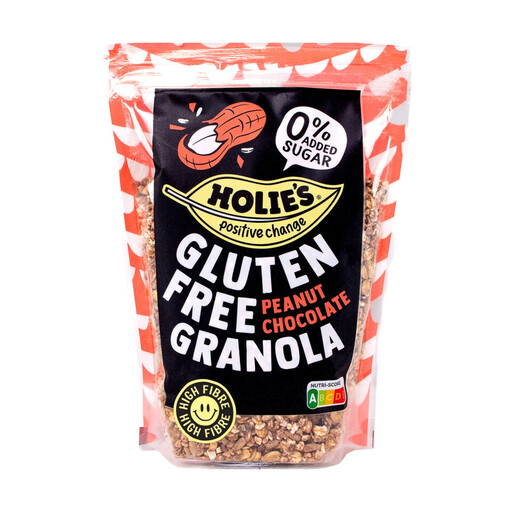
Holie's Glutenfree Peanut Chocolate granola, 330 g

Holie's Glutenfree Peanut Chocolate granola, 330 g

A 330 g pack for anyone considering this granola with ‘gluten-free’ in the product name. Check the gluten-free label on the packaging and, for this peanut variety, assess the allergens and the size of the crunchy pieces before serving.

View at Joybuy
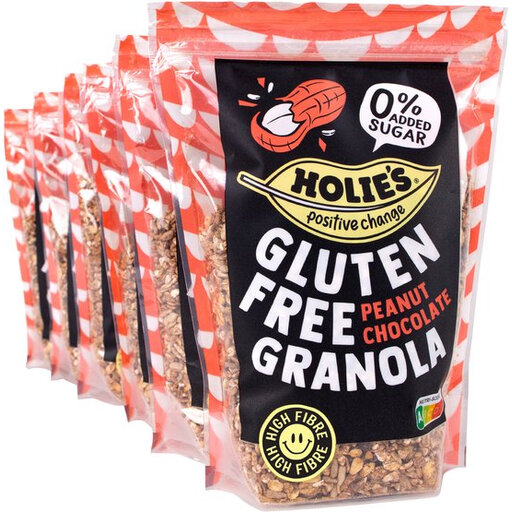
Holie's Glutenfree Peanut Chocolate granola, 6 × 330 g

Holie's Glutenfree Peanut Chocolate granola, 6 × 330 g

A multipack of six 330 g packs of the same granola variety. For this multipack too, the current gluten-free label, allergen information and size of the crunchy pieces are key when choosing granola for your toddler.

View at Joybuy

Frequently asked questions

Can a toddler with coeliac disease eat ordinary granola containing oats?

Don’t assume so based on the oats alone: check whether the granola itself is explicitly labelled gluten-free. The Dutch Coeliac Society says that most people with coeliac disease can tolerate pure gluten-free oats, but this is not the case for everyone.

Can granola be an alternative to bread at breakfast for a toddler?

Yes, breakfast cereals can add variety. For children aged 1 to 3, the Netherlands Nutrition Centre suggests porridge oats, muesli or other wholegrain breakfast cereals with no added sugar or salt. If your child has coeliac disease, also check separately for a gluten-free label.

What should I look for in granola with nuts for a toddler?

Check whether it contains whole nuts, peanuts or large, hard chunks. The Netherlands Nutrition Centre warns that young children can choke on whole nuts and peanuts; if in doubt, choose a finer breakfast option, and if your child has a food allergy, check the allergen information too.
